LBJ: A Life by Irwin and Debi Unger

President #36, C-SPAN Historians’ Ranking #11

In Treatment
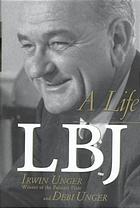
lbjLyndon Baines Johnson was President for just a little over five years. However, if you try to read some of the biographies that have written about him, you may feel like you need five years to get through all of them.

Robert Caro has written three volumes of a biography on Johnson, and he hasn’t even gotten Johnson into the White House. That’s 2,555 pages just to get you through the 1950s. I read an excerpt from the third volume once on a flight home from New York to L.A. I don’t even think I had enough time to finish. Or, quite possibly, there was a good in-flight movie.

Robert Dallek managed to fit Johnson’s life into two volumes. Dallek’s works stretch for 1,456 pages.

Randall Bennett Woods opted to go the one volume route. That book is just a little over 1,000 pages long.

Johnson’s own memoirs (ghost written by a young Doris Kearns, who had not yet married former Johnson aide Richard Goodwin) for the time of his Presidency are a piddling 636 pages.

My choice for finding an LBJ (the man loved those initials) biography involved the following criteria:

  1. Was the book more or less objective?
  2. Was the book about all of Johnson’s life?
  3. Would I experience severe and/or potentially disabling back pain while carrying it around?

The book LBJ: A Life by Irwin and Debi Unger passed all three tests, especially the important third test. This book runs for just 586 pages. It covers Johnson from his birth to his death. Although it’s somewhat  sympathetic to Johnson,  it’s not a hagiography. Still, you get the feeling that there is so much more that can be said about one of the most potent forces in 20th Century American politics.

Lyndon Baines Johnson was born on August 27, 1908 in a city his ancestors founded in the Texas Hill Country. As people with great imagination, they called the town “Johnson City.” Lyndon’s father was Sam Ealy Johnson, Jr., a member of the Texas State Legislature. His mother was named Rebekah Baines, which provided him with his middle name.

Young Lyndon did well in the Johnson City schools, but didn’t wish to go to college at first. He ran away from home, and found work in places like San Bernardino, California. He hoped that a family friend would be able to get him to pass the bar in Nevada, which had rather low standards in the 1920s. But, Lyndon Johnson ended up back in Johnson City when that plan failed.

Reluctantly, Johnson enrolled at Southwest Texas State Teachers College (now called Texas State University) in San Marcos, Texas. While it wasn’t nearly as prestigious as the nearby University of Texas, it was a school that Johnson’s parents could afford. And, even with its lower admission standards, Johnson still needed a full year of preparatory classes.

In college, Johnson would first demonstrate one of his ways of getting ahead. He would find an older authority figure (in this case, the university president), befriend him, and then use those connections for personal advancement.

Johnson graduated from college in 1930.  He had been deeply involved in campus politics.  But before he could make politics his career, he needed to get a job first to establish himself in the community. So, he worked as a high school history teacher in Houston. From this position, he parlayed that connection into a job in Washington as a secretary for a Texas House member named Richard Kleberg.

After making himself indispensable to Kleberg (who wasn’t very interested in doing much work), Johnson got himself appointed to be the head of the National Youth Administration work program in Texas. The NYA was a Roosevelt New Deal program that employed thousands of college age men and women in a variety of public works projects. Along the way, he met a woman named Claudia Taylor. Everybody called her “Lady Bird,” a nickname she picked up at birth.

Johnson was attracted to Lady Bird for a variety of reasons. She had access to money. She understood politics. She was intelligent, a University of Texas graduate. She would improve his station in life. The two were married in 1934. She would always be called be Lady Bird Johnson from then on, so she could have the same initials as her husband. They would have two daughters, Lynda Byrd and Luci Baines.

In 1937, Representative James P. Buchanan (no relation to the former childless President) passed away. This left an opening for Johnson to run for a House seat back in his home district in the Hill Country. Johnson won the special election and became the youngest member of Congress at the time, just 27 years old.

Johnson caught the attention of President Franklin D. Roosevelt, who was looking for more sympathetic members of Congress from the South. Some New Deal programs were starting to face opposition from conservative Southern Democrats. Roosevelt took Johnson under his wing, helping out with projects back in his district. Johnson, in turn, became one of Roosevelt’s staunchest supporters in Congress. Johnson also became friends with Sam Rayburn, who would soon become Speaker of the House. Both Roosevelt and Rayburn took something of a paternal interest in the young Texas representative.

In 1941, Johnson decided to run in a special election to fill a Senate seat left vacant by the death of Morris Shepard. Governor W. Lee “Pappy” O’Daniel appointed Andrew Houston, an 87-year old descendant of Sam Houston, to hold on to the seat until an election could be held. Johnson assumed O’Daniel himself wouldn’t run for the seat, but that was not the case. Johnson seemed to have won the election when the polls closed. However, O’Daniel had enough connections throughout the state to get enough counties to change their vote totals just enough to push him over the top. Lieutenant Governor Coke Stevenson, who wanted to move up to the Governor’s office, massaged the vote totals.  O’Daniel would win by about 1300 votes.

Since it was a special election, Johnson held on to his House seat. When World War II began, Johnson temporarily left his office in the hands of Lady Bird while he served in the Navy. (Johnson was a member of the Naval Reserve and had served on the Naval Affairs Committee.) Johnson spent most of his time on the West Coast, but was sent out in 1942 to do some observation in Australia, where he was invited on a bombing run. One of the two planes sent up was shot down and Johnson’s plane was damaged, but landed safely. General Douglas MacArthur awarded Johnson a Silver Star for his efforts. Roosevelt ordered all members of Congress in the Armed Forces back to Washington soon after.

By 1948, Johnson felt it was time to make another go at the Senate. He knew he couldn’t wait around in the House to move up the ladder. O’Daniel wasn’t going to run for reelection as he turned about to be something of a joke. Johnson would face off against the incumbent governor, Coke Stevenson. (Coke was his given name. Texas politicians had very cool names at this time. There was also a governor named Beaufort Jester around this time. ) This election would be epic. Caro and Dallek both devote hundreds of pages each to the event. I will try to be more brief because you have likely already stopped twice while reading this to go to the bathroom.

The election was a battle between the conservative establishment of Texas in Stevenson and a more progressive style favored by Johnson.

Johnson toured the state by helicopter, a novel method at the time. His face was omnipresent. At the same time, Johnson was suffering from a painful attack of kidney stones. Somehow, Johnson was able to work through the pain for most of the campaign. Eventually, he would go to the Mayo Clinic for the still experimental treatment of having the stones removed with a cytoscope. This was actually the second method tried. The first was to drive Johnson over a lot of bumpy roads with the aim of dislodging the stones. In the end, Johnson missed two weeks of the campaign, although the normal recovery time during that time for kidney stone surgery was six weeks.

In the primary, no candidate got a majority, although Stevenson led. There would be a runoff between Stevenson and Johnson one month later on Saturday, August 28, 1948. The race was extraordinarily close. On August 30, Stevenson led by 119 votes. On September 2, the lead moved up to 351. But, Johnson, remembering his defeat to O’Daniel in 1941, knew what needed to be done. The counties close to the Mexican border reported their votes last. And Johnson controlled (i.e., bought off) those counties. When they reported, Johnson ended up winning by 87 votes. And so was born “Landslide Lyndon.” (By comparison, Al Franken won his Senate seat in Minnesota by 312 votes over Norm Coleman.)

Johnson quickly worked his way up the ladder in the Senate. He befriended Georgia Senator Richard Russell, who had no family (similar to Rayburn), and learned from him. Russell would prove to be far more conservative than Johnson on civil rights issues, but the two men remained friends until the late 1960s.

After just two years in the Senate, Johnson was voted Minority Whip. And in 1952, when Democratic Senate Leader Ernest McFarland was defeated for reelection in Arizona by Barry Goldwater, Johnson was chosen as Senate Minority Leader.

Johnson developed a reputation as a forceful leader who was able to work well with Republican President Dwight Eisenhower. In 1955, the Democrats regained control of the Senate and Johnson became Majority Leader at the age of 46.

Many historians consider Johnson to be the most effective Majority Leader in the Senate’s history (the position didn’t exist until the 1930s). The Majority Leader sets the agenda for the Senate and has great control over its actions. Johnson strongly believed that Congress should get things done. He did not wish to obstruct the Eisenhower Administration, although he did always keep an eye out for the interests of the Democratic Party.

Johnson was an adept vote counter and master of persuasion. He developed a way of speaking to people known as “the treatment.” He would get very close to a person and speak directly to their face. He was not afraid to touch other Senators or lean into them. The linked illustration shows Johnson giving “the treatment” to Rhode Island Senator Theodore Green in 1957. Green was 90 years old at the time.

After his first session as Majority Leader, Johnson had worked himself so hard, he ended up suffering a heart attack.  He rested for the second half of 1955, but made a triumphant return to the Senate in 1956. In 1957, he was able to push through the first major civil rights bill through Congress since Reconstruction. Although the Civil Rights Act of 1957 was far from revolutionary, it served notice to Northern politicians that Johnson was not a typical Southern segregationist. Southerners looked at Johnson’s actions in the Senate as an act of betrayal.

Johnson was constantly driven to seek higher office in part because he feared dying young, like his grandfather and father. So, in 1960, Johnson made a bid for the Presidency. However, Johnson, the master politician, didn’t understand that Presidential nominees weren’t going to be chosen exclusively in backroom deals as they had before. Johnson’s younger Senate colleague, John Kennedy, ran in primaries and used his success in them to make himself a viable national candidate. It also had the effect of eliminating the competition, in particular Minnesota Senator Hubert Humphrey.

When the Democratic Convention convened in Los Angeles in 1960, Johnson still thought he had enough delegates that he could win nomination on a second or third ballot. But, Kennedy’s forces were better organized and outmaneuvered Johnson to get the nomination for the young Bostonian on the first ballot.

Then, for reasons that are still debated, Kennedy offered Johnson the Vice Presidential slot on the ticket. Did Kennedy offer Johnson the spot figuring that he’d be turned down anyway? Did Kennedy think that Johnson would help him with Southern voters? Nobody seems to know for certain. But, Johnson accepted the spot, and became Vice President on January 20, 1961.

Johnson hated the Vice Presidency. He found out that there was little to do. He wanted to serve as the head of the Democratic Senate Caucus, but was told by his old colleagues that such an arrangement could not work. Even worse, Johnson felt marginalized and belittled by the Easterners in the Kennedy Administration.

John Kennedy was a Harvard-educated Bostonian with a glamorous wife who went to school in France. Johnson felt like Kennedy’s advisers treated him like a country bumpkin. The greatest amount of animus was between Johnson and Attorney General Robert Kennedy, who had angered each other during the Los Angeles Convention. The two men, both with short tempers and huge egos, never saw eye to eye. (And that’s putting it politely.)

Everything changed on November 22, 1963. John Kennedy was assassinated in Dallas, Texas. Prior to the trip, Johnson was hoping that Kennedy would take him off the ticket in 1964. Now, he was President.

After the initial mourning period for Kennedy, Johnson set to work to implement some of Kennedy’s policies, most importantly a civil rights bill. Johnson wanted Kennedy’s Civil Rights Bill to be adopted in part as a memorial to the slain President.

Johnson used his Senate connections to avoid a Southern filibuster. Most importantly, Johnson got Republican Senate Leader Everett Dirksen to back the bill. The Civil Rights Act of 1964 prohibited discrimination in any public facility, in employment, and in government. Although the Act still had many loopholes and would be toughened up throughout the years (including today), it was a landmark bill nonetheless. Johnson’s biggest fear about the Civil Rights Act was that it would be eventually turn Southern whites from reliably Democratic to reliably Republican voters.

However, Johnson knew that to be elected President in his own right in 1964, he would need to have accomplishments of his own. Johnson was both realistic, in that he knew that it was impossible to ride into office on the memory of John Kennedy, and proud, in that he wanted to show the Kennedy people that he could do more than their leader.

Johnson’s bold legislative plan was announced on May 22, 1964 in a commencement address at the University of Michigan. In that speech, Johnson said:

We are going to assemble the best thought and broadest knowledge from all over the world to find these answers. I intend to establish working groups to prepare a series of conferences and meetings—on the cities, on natural beauty, on the quality of education, and on other emerging challenges. From these studies, we will begin to set our course toward the Great Society

The Great Society was supposed to be Johnson’s legacy to the United States. There would be hundreds of government programs established in the fields of education, welfare, conservation, agriculture, and, most importantly, health care.

But, the Great Society had a counterpart when it came to government spending:  the Vietnam War.

On August 2, 1964, a Navy destroyer, the U.S.S. Maddox, was fired upon by North Vietnamese forces in the Gulf of Tonkin. (A second attack on a different ship supposedly took place, but that has been denied by the Vietnamese.) Johnson knew that in an election year, he could not allow an attack on an American vessel go without retaliation. So, Johnson asked Congress to give him the authority to use force to assist any member of the Southeast Asia Collective Defense Treaty, i.e. South Vietnam.

Congress passed a joint resolution giving Johnson the authority to send more troops to Vietnam with the Tonkin Gulf Resolution. There were only two dissenting votes.

Johnson ordered the bombing of several North Vietnamese supply sites. This then developed into a larger bombing campaign. And then more soldiers were added on the ground. And so on.

Back at home, Johnson faced conservative Republican Senator Barry Goldwater in the 1964 election. Goldwater had emerged from an unusually contentious campaign. The 1964 Republican Convention in San Francisco would see Goldwater’s supporters boo New York Governor Nelson Rockefeller. Goldwater took a very hawkish position on the war in Vietnam and facing off against the Soviet Union overall. Goldwater’s most controversial position was advocating giving field commanders the authority to use nuclear weapons, albeit low-level ones.

Nevertheless, Johnson jumped on this suggestion to paint Goldwater as a dangerous man hell-bent on sending the world into nuclear annihilation. This led to one of the most infamous political ads in television history, the “Daisy Girl Ad.” The ad ran only once. But it did its job.

Johnson routed Goldwater in the election, winning over 61% of the vote. But, in a foreshadowing of America’s political realignment, Goldwater won five Southern states.

With overwhelming Democratic majorities behind him, Johnson started to enact a dizzying array of proposals. The most durable legacy of this time period was Medicare, the first time the Federal government was providing health insurance to civilians on a wide scale basis. Health insurance had been backed by both Roosevelt and Truman, but it took Johnson to push it through.

Johnson also had the Voting Rights Act passed in August of 1965. This measure removed many barriers to registration for African-Americans throughout the country. It was one of Johnson’s proudest moments. And, a few days after it passed, the Watts district of Los Angeles exploded in racial violence.

The racial violence that would mark Johnson’s term in office from 1965 to 1969 deeply disturbed Johnson. But, it wasn’t because Johnson felt that there was more work to be done in the area of civil rights and poverty. Rather, Johnson felt that African American voters were not suitably grateful for all the hard work Johnson had done for him. Johnson seemingly always a politician who saw every issue in terms of trading off favors to different sides so something could be done.

Despite all of Johnson’s social programs, his term in office is remembered primarily for the Vietnam War. Johnson was fearful of being the first U.S. President to lose a war. (James Madison seemingly gets credit for a tie.) Johnson kept seeing parallels in Vietnam to World War II.  The “Domino Theory” was an accepted way of thinking in the Johnson Administration. If Vietnam fell to Communist forces, the rest of Southeast Asia would follow. Secretary of Defense Robert McNamara, a holdover from Kennedy’s Cabinet, tried to figure out some way for the U.S. to “win” while fighting a “limited” war. But, a solution was nowhere to be found.

According to the Ungers, the situation in Vietnam sent Johnson into deep depressions after dealing with it. As much joy that Johnson received from his Great Society programs, Johnson felt a corresponding amount of pain over Vietnam. The Ungers even go as far to assert (without much documentation) that Johnson suffered from a very mild form of bipolar disorder. Johnson was also reported to have made aides stand beside open bathroom doors while he defecated as he gave dictation. He also was reported to deliberately stand up at seemingly random times in meetings to force political opponents to stand up and sit down repeatedly in an effort to annoy them.

Whatever was troubling Johnson, many of his aides sensed that Johnson was mentally unstable. Richard Goodwin and George Ball were advisers who left the Administration feeling that Johnson’s mood swings were too difficult to deal with. Johnson would describe people like Goodwin and Ball as disloyal.

Protests over the Vietnam War became larger and more widespread after 1965. Senator William Fulbright of Arkansas held public hearings to examine the conduct of the war. The American effort in Vietnam appeared to accomplish little.

Early in 1968, there was a cease fire in the war to observe the lunar new year in Vietnam, a period called Tet. During the cease fire, the North Vietnamese unleashed a major offensive, catching much of the South Vietnamese forces unprepared. However, American forces managed to repel most of the North Vietnamese forces.

Although the Tet Offensive may not have been a military success for the North, it proved to be an enormous psychological victory. The war in Vietnam appeared to be headed toward a long and bloody stalemate. Walter Cronkite, in an editorial on his CBS newscast, declared the war to be “unwinnable.”
Not a 1968 Presidential campaign ad

Johnson was going to run for reelection in 1968, but antiwar Democrats had already found a candidate to run against Johnson. Their first choice would have been Robert Kennedy, now a New York Senator after leaving his post as Attorney General in 1965, but he declined, feeling that Johnson was unbeatable. Minnesota senator Eugene McCarthy decided to take on Johnson.

In the New Hampshire primary on March 12, 1968, Johnson was a write-in candidate (which was not unusual at the time) against McCarthy. Johnson won by a 49-42 margin, a surprisingly small margin for an incumbent President. The results were interpreted as a condemnation of Johnson’s Vietnam policies, although some historians think that much of the anti-Johnson vote came from people who felt that Johnson was too weak in his approach to Vietnam.

On March 16, Robert Kennedy announced his candidacy. Johnson knew that it was time to get out. Also, he had thought of not running anyway because of a fear of dying in office.

In a speech on March 31, 1968, Johnson announced a pause in the bombing of North Vietnam in the hopes of starting peace negotiations. At the end of the speech, Johnson said, “I shall not seek, and I will not accept, the nomination of my party for another term as your President.”

The rest of Johnson’s administration would be marked by tragedy. Martin Luther King was assassinated on April 4. Robert Kennedy would be killed on June 6. The Democratic Convention, which nominated Johnson’s Vice President, Hubert Humphrey, would be marked by violence.

Johnson didn’t think that Humphrey would make a good President. He hoped that Nelson Rockefeller would get the GOP nomination. But, Richard Nixon would be the Republican candidate.

Reluctantly, Johnson backed Humphrey, although he felt betrayed when Humphrey announced a peace plan in a speech on September 30, 1968. (Johnson felt betrayed a lot.) Johnson sincerely believed that his efforts in Vietnam were in the country’s best interests.

Nixon would narrowly defeat Humphrey in the 1968 election. Johnson would retire to his ranch in Texas, where he worked on his memoirs and tried to repair his legacy.

His retirement was not long. He suffered a second heart attack in 1972 that left his heart beyond repair. He passed away on January 22, 1973. He was 64 years old. It was the same age that a team of actuaries told him his life expectancy would be when he was weighing a run for a second term in 1968.

And with all of my ramblings here, I think I only covered the tiniest fraction of the life of Lyndon Johnson. And with all that has been written about him, there are so many places to turn to find information on this most complex man. Lyndon Johnson’s life was full of contradictions. It seemed that for every step forward, he took a step or two backward. He definitely got things done, but the question is: did he do the right things?

Other stuff: The Lyndon Johnson Presidential Library and Museum is part of the University of Texas in Austin. It’s open every day but Christmas. Lyndon Johnson’s ranch in Johnson City, Texas is now the Lyndon Johnson National Historical Park. There is also a Lyndon Johnson Memorial Grove on an island in the Potomac River.

Lyndon Johnson was 6′ 3.5″ tall, the second tallest of any U.S. President, behind only Abraham Lincoln. Johnson would bring his own oversized bed (seven feet long) on all foreign trips with him.

Add to FacebookAdd to DiggAdd to Del.icio.usAdd to StumbleuponAdd to RedditAdd to BlinklistAdd to TwitterAdd to TechnoratiAdd to FurlAdd to Newsvine

Jimmy Carter: American Moralist by Kenneth E. Morris

President #39, C-SPAN historians’ ranking #25

Would you like some malaise on your sandwich?

carterJimmy Carter was, and in many ways still is, a confounding figure to understand. Just how did someone rise from the relatively obscure position of Governor of Georgia to the Presidency? And just what were Carter’s goals and aims in the White House? Was he just a man with a nervous grin who seemed paralyzed by events, especially the hostage crisis in Iran, or was he a shrewd politician? And why did he seem to blame America’s problems on the American people?
Kenneth Morris, the author of this book, is not a historian, but rather a sociologist. And as the subtitle of the book would lead you to believe, it is an examination about how and why Jimmy Carter tried to turn the office of the Presidency into a place where he could exert moral leadership of the country. Morris describes how Carter changed over time from a child of a comfortable upbringing in rural Georgia to a midshipman at the U.S. Naval Academy and then on to Georgia politics, and ultimately, the White House, using what he considered to be his two best skills: morality and competence.

The problem for Carter was that the American people often look for more than competence in their Presidents. They want to be inspired. They want to be led. They want to feel as if they are doing the right thing. And, in the end, Carter wasn’t able to convince the American people that they needed his style of leadership, which some thought sounded more like criticism than anything else.

Morris reveals quite a bit about Carter from an examination of his upbringing in Plains, Georgia. And, first of all, people should know that Carter actually grew up in a smaller town near Plains, called Archery. His father, James Earl Carter (called Earl by everyone), was a prosperous farmer and businessman and also served in the Georgia Legislature.

Earl was a strong supporter of Herman Talmadge, a Georgia governor and ardent segregationist. Earl was, like many Southerners of his era, also a supporter of segregation, although he was personally kind to African-Americans. Earl Carter didn’t mind the African-Americans who worked for him and was a good landlord to those who rented from him. But, Earl Carter was not of the mind that African-Americans should share any sort of economic or political equality with whites. His son did not share these views, however.

His wife, Lillian, primarily married Earl for his money, although she did bear him four children. But, she traveled a lot (she would later join the Peace Corps as a nurse) and was not a major figure in the life of her eldest, James Earl Carter Jr., aka Jimmy or Jim, or her other children. Jimmy was, like many people, a son who didn’t like his father, but wanted nothing more than his father’s approval. Morris writes that Earl’s favorite was his daughter Ruth, whom Morris hints that Earl may have been a bit too fond of.

Jimmy Carter left Plains in 1943 to go to the U.S. Naval Academy and get away from the influence of the man whom he felt he could never satisfy. So, Carter left Georgia to start out on a new phase of his life.

Because of World War II, the term of instruction at Annapolis was shortened from four to three years, but that still meant that Carter missed out on combat duty in World War II as he didn’t graduate until 1946, around the same time he married his wife, Rosalynn.

Despite serving on ships and submarines, Carter made few friends during his tour of duty in the Navy. Morris spoke to many other sailors that Carter served with and none of them had any stories to tell about him, except to say that he was a loner who almost always kept to himself, even on a submarine. Morris speculates that Carter may have been suffering from depression during this time.

In 1953, Earl Carter died of pancreatic cancer. His eldest son, who had wanted to not be like his father, immediately resigned his naval commission and headed back to Plains (that was where the family business was located) and, essentially, became his father. Jimmy Carter took over the family business (a peanut farm and processing plant) and reinvented himself.

Back in Plains, Carter worked at the family business, although his younger brother Billy was actually the better businessman. By 1962, Carter decided to try for his first government office, the Georgia State Senate. Carter sought this office in part because the U.S. Supreme Court had mandated that all state legislatures be chosen on a “one man, one vote” system and this changed the demographics of the district making it more favorable for someone like Carter, who would have been considered a liberal on civil rights at the time in Georgia.

Carter actually lost his first election for the State Senate seat, however; the results were thrown out because of voter fraud. After several court decisions changed the result back and forth, Carter’s opponent just gave up and Carter was elected for a four-year term.

During his four years in the State Senate, Carter vowed to read EVERY page of EVERY bill he voted on. He wanted to show that he was not a machine politician who could be swayed by his boss’ suggestions, as his father was by the Talmadge machine. Carter apparently did keep to this promise.  It likely required him to pull some all-nighters at the end of each legislative session. Carter was trying to emulate John Kennedy, not realizing that Kennedy would never have worked that hard.

In 1966, Carter was planning to run for a House seat and would likely have won it, except he decided, at the last minute, to run for governor instead. Carter didn’t win and he ended up splitting the Democratic primary vote in such a way that Lester Maddox, a segregationist who prided himself on not serving blacks at his restaurant, as well as chasing away any potential black customers away by waving an axe handle at them, won the primary, and later the general election.

Carter underwent another transformation after this setback. With time on his hands, Carter began to read the works of notable philosophers and theologians and became especially enamored with the work of Reinhold Niebhur. Also, Carter’s sister, Ruth, had become a minister and she brought about a religious reawakening in her older brother. And from this Carter would begin to identify himself as a “Born Again Christian.”

Along with this religious transformation, Carter also set his sights on correcting his mistakes in running for governor and started to prepare for another run in four years (at the time Georgia governors could not be reelected.) Carter, along with his political advisers Hamilton Jordan and Jody Powell, mapped out a strategy that would make Carter appeal to just about everyone in the state of Georgia. They studied voting patterns for each one of Georgia’s 159 counties. Carter gave speeches that were tailored for each particular ZIP code he was in. The hard work paid off and Carter assumed the Governor’s job in 1971.

Almost as soon as Carter was elected governor, he started to prepare for a presidential run. In 1972, Carter (or his supporters) tried to get him nominated as George McGovern’s running mate, but McGovern was not interested.

The lesson Carter took from McGovern’s landslide loss to Nixon in 1972 was that the American people liked McGovern’s ideas, but didn’t think that McGovern was competent enough to run the country. So, Carter went about showing his “competence” with a series of reforms in Georgia and a reform of the budget process. It’s hard to tell just what he accomplished as governor of Georgia.

Carter was one of the first declared candidates for the Democratic nomination in 1976, and most political pundits assumed that the election was in the bag for the Democrats in the wake of Watergate and President Ford’s pardon of Richard Nixon. However, after a quick start with wins in Iowa and New Hampshire, Carter’s momentum stalled as Democrats started looking at other candidates, like Morris Udall or Jerry Brown. Even Hubert Humphrey was still popular among Democrats. Carter had built enough of an early lead though, that his nomination was not in doubt.

In the general election, Carter, according to Morris, almost blew a huge lead in the polls, edging out Ford by a little more than 2% in the popular vote and by just 51 in the electoral vote. Carter won only one state in the West, Hawai’i. Carter’s election represented the last gasp of “The Solid South” for Democrats and that was was attributed more to the region’s desire to return one of its own to the White House for the first time since 1848. (Texans have told me that Texas is not in the South. I will not disagree with them. Also, Woodrow Wilson was born in Virginia, but was considered a New Jerseyan when elected.)

Carter’s four years in office were not a time that many Americans look back at with much fondness. The “stagflation” of the Nixon and Ford Era, continued. People were faced with double digit rates of inflation combined with interest rates well over 15 percent. Worker productivity declined. There were sporadic energy shortages.

Energy was the first issue that Carter tried to tackle. Immediately, he faced opposition from Congressional Democrats who found Carter’s style to be somewhat dismissive of them. Also, Carter wasn’t considered liberal enough by the Democrats in Congress. It took two years to get any sort of legislation in this field passed.

As Morris wrote, Carter worked very hard to find the perfect middle road and established a unique position on just about every political issue possible. There were estimates that Carter had over 250 different position papers on separate subjects. It was hard to figure out just what he stood for, except possibly just for Jimmy Carter.

In foreign policy, Carter decided to make the return of the Panama Canal to Panama, his first big issue to tackle. While negotiations had gone on for several years under different administrations, opposition to the return of the Canal was fierce. Carter won Senate approval of  the treaty after spending quite a bit of political capital.

In 1978, Carter’s made his greatest mark on history when he was able to get Israeli Prime Minister Menachem Begin and Egypitan President Anwar Sadat to come to Camp David. Carter was able to mediate a peace treaty between these two enemies.

By 1979, the wheels came off of Carter’s Presidency. On July 15, 1979, Carter addressed the nation on television, ostensibly to discuss energy policy, but Carter changed his idea about the speech and spoke about a “crisis of confidence” in the United States. Carter said that the problem with the country wasn’t Congress not passing his energy policy, but the problem was that the country didn’t believe in itself and was skeptical that the country get itself back on track.

This speech was dubbed the “malaise” speech, even though Carter didn’t use that word in the speech. But, the American people didn’t like to be told that they were a bunch of whiners. Carter did not give the appearance that he was leading anymore.

And then on November 4, 1979, terrorists held 52 Americans hostage in the U.S. embassy in Tehran. This was, first in protest of Carter allowing the deposed Shah to come to the U.S. for medical treatment, but the crisis continued past the Shah’s death. Carter retreated in to the White House and seemed to offer little hope for the hostages’ return. Not that finding their release would be easy as the Iranian government was in flux and it was difficult to find anyone who had any authority. Also, decades of anti-American attitudes were being played out in this event.

Carter did order a commando style rescue of the hostages, but it ended up with two American helicopters crashing in the desert, the hostages still in Tehran, and Secretary of State Cyrus Vance resigning in protest.

In addition to his problems with Iran, Carter irritated Soviet leader Leonid Brezhnev with his support of Soviet dissidents, such as Andrei Sakharov. Carter and Brezhnev negotiated a SALT II agreement to limit nuclear weapons. Neither side liked the agreement. It was scrapped when the USSR invaded Afghanistan. (That didn’t work out so well for anybody did it?)

How did Carter respond to the Soviet invasion of Afghanistan? He ordered a boycott of the upcoming Olympic Games in Moscow, as well as an embargo on grain exports to the USSR.

In 1980, Carter had to survive a primary challenge from Ted Kennedy to be renominated. Then, Carter had to face one of the most polished campaigners in American politics in Ronald Reagan. Compared to Reagan, the earnest, moralizing Southern farmer seemed most inadequate against Reagan, who would keep asking if people were better off than they were four years ago. And, the answer to that was almost always “no.” Reagan won by nearly 9% and by 440 votes in the Electoral College.

And the electoral defeat in 1980, brought about yet another reinvention of Jimmy Carter. Now, he became Mr. Humanitarian. Carter was often shown building houses for Habitat for Humanity. Carter would serve as an election observer in countries like Haiti and Nicaragua. And Carter would show up on Jay Leno’s show from time to time.

This book was written in 1996, before Carter won the Nobel Peace Prize in 2002. Carter has been seen with some world figures that have made conservatives blanch in horror. His legacy, the Carter Center, details most of his post-presidential career, although you have to judge the impartiality of the source.

It is difficult to make an assessment on the life of anyone who is still alive and still active. And with Jimmy Carter’s numerous reinventions, you feel like you have to read three different books to keep up with him. I lived during the Carter Administration and thought I followed the events of his Presidency closely for a nerdy kid in junior high. (Now I’m a nerdy adult, so I blog about Carter.) But, I still don’t fully understand what Jimmy Carter was about. Morris asks people to take a look at Carter’s moral leadership and judge him that way. However, moral leadership may not have the payoff that most people want.

Other stuff: In addition to the Carter Center, the National Park Service runs the Jimmy Carter National Historic Site in Plains, Georgia.

Carter did not appoint anyone to the Supreme Court. He was the first President since Andrew Johnson to not appoint a Justice. William Henry Harrison, Zachary Taylor, and Barack Obama are the other presidents with no Supreme Court nominations, although the current president still has a few years for a vacancy to turn up.

Jimmy and Rosalynn Carter have the second-longest marriage of any U.S. Presidential couple. They will celebrate their 63rd anniversary on July 7, 2009. George and Barbara Bush were married on January 6, 1945.

During Carter’s first presidential campaign, he tried to portray himself as being much more “hip” than people’s perceptions of Southerners. One claim Carter made was that his views on tenant farming were changed after listening to Bob Dylan’s “Maggie’s Farm.” This was an excuse for me to link to this video.

John F. Kennedy: An Unfinished Life by Robert Dallek

So what can I do for you?

President #35, C-SPAN Historians ranking #6

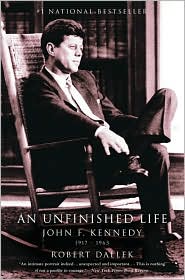
kennedyFor a man who had a shorter term in office than all but six other presidents (Barack Obama not included), John Kennedy might be studied and written about more than any other 20th Century president. Robert Dallek, who also has written biographies of Franklin Roosevelt and Lyndon Johnson, produced a scholarly biography of a man who was at times heroic, at times hesitant, often sick, and almost always on the prowl for another sexual conquest. It’s a unique combination of detailed policy analysis with generous helpings of tawdry (yet, true) details of Kennedy’s life.
Dallek was given unprecedented access to Kennedy’s medical history and what he uncovered there turned out to be what this book will be most remembered for. For all the romance of “Camelot” or “The New Frontier,” underneath it all was a man, who was elected at at the age of 43 (the youngest ever elected), who was beset by numerous serious health problems and was treated by physicians in such a way that most of us would rather just take our chances with the local HMO.

So alongside the Cuban Missile Crisis, there are descriptions of crippling back pain relieved mostly by a series of painkilling injections by doctors with questionable credentials. We find out that Kennedy took, at times, sleeping pills, antidepressants, amphetamines, testosterone, and probably a few other drugs that most of us would blanch at taking. Yet through it all, according to Dallek, Kennedy remained lucid and clear in his decision-making.
For someone who was President during the lifespan of a lot of people reading this (I missed by two years), it is surprising to me how much mythology has built up around Kennedy. Dallek tries to strip away the mythology and show how Kennedy was able to propel himself so quickly to the highest office in the U.S.

John Kennedy was born into a wealthy Irish Catholic family in Boston. His older brother, Joseph Jr., was expected to be the political star of the family, but he died in a plane crash during World War II and it was left for the second son, John (called Jack throughout the book, there’s a lot of first name reference in the book so you can keep people straight), to fulfill the wishes of his father, Joseph Sr., to become America’s first Catholic president.

Dallek details the medical problems that hit young Jack when he’s in prep school and set him on a course for lifelong illness. Kennedy was beset by intestinal problems early on and Dallek goes into quite a bit of detail on this.

The problem, as best as I could figure out, was that Kennedy’s intestinal problems were treated with a strong regimen of steroids. The problem was that doctors didn’t quite know how much to prescribe. Or when to take it. Or when to stop. And the longtime use of these steroids (not the anabolic kind, but Kennedy would take those later), led to osteoporosis (and chronic back pain that required surgery) and Addison’s disease (a deficiency in the adrenal glands that was potentially life-threatening). And then there were also chronic problems with the prostate, which probably wasn’t helped by Kennedy’s promiscuity.

John Kennedy became a war hero for his efforts to save his crew aboard PT-109, although he had to have several strings pulled for him to get into the military. Most people with Kennedy’s maladies would have spent World War II behind a desk, but Kennedy knew the importance of having a combat background if he wanted to go into politics.

Back from the war, Kennedy ran for the House in 1946 and then moved on the Senate in 1952. Despite numerous hospitalizations in 1954 and 1955 for spinal surgeries, Kennedy still had a high enough profile to get himself considered as possible running mate to Adlai Stevenson in 1956. Joseph Kennedy actually tried to get Lyndon Johnson to run for President and have his son be his running mate, but Johnson did not think that the Democrats had much chance to win in 1956.

Soon after Stevenson’s loss to Eisenhower, Kennedy started positioning himself to run for President in 1960. Few campaigns have received more attention as they were multiple story lines.

There was the young, rich, attractive Senator from Massachusetts trying to overcome religious prejudice. There were Cold War overtones throughout. The Kennedy-Nixon television debates changed the way presidential campaigns were conducted. In the end, Kennedy won by a narrow margin over Nixon, thanks in part to some “interesting” vote counting in Illinois and Texas. Dallek attributes the closeness of the election to the hesitancy of many Southern Protestant voters to elect a Catholic. The 1960 election was set up nicely for the Democrats as there was a recession and Kennedy was able to outspend Nixon. (In general, Kennedys outspend everyone in elections. It’s a family tradition.)

After Kennedy’s famous inaugural address, Dallek starts to dissect the Kennedy presidency. There were many doubts if someone so young could handle such a big job. And at the outset, Kennedy definitely looked not up to the task.

Kennedy was faced with crises external, in Laos (where he chose not to intervene), and internally, with a civil rights issue with the Freedom Riders. And in April of 1961, Kennedy gave the go ahead to the CIA plan to remove Castro from power with a paramilitary force. That turned out to be what is known as The Bay of Pigs. And it was an utter failure.

Soon after, Kennedy ventured to Vienna for a summit meeting with Soviet leader Nikita Khruschev. Kennedy’s performance at this was widely criticized as the young president was not prepared for Khruschev’s belligerence regarding East Germany and Berlin.

On the domestic front, which Kennedy didn’t seem to care about as much as foreign policy, there were problems. The Kennedy administration was slow to take action on civil rights legislation because the Congress was still dominated by conservative Southerners in important positions, and Kennedy didn’t want to alienate an important part of his party that he needed if he wanted to be reelected in 1964.

Economically, the country was in a recession and Kennedy wanted to push through a large income tax cut, although opposition from conservatives (both Democratic and Republican) kept Kennedy from getting the complete package of reforms he wanted. Plans to increase Federal funding for education also went nowhere.

The biggest crisis of Kennedy’s administration was the Cuban Missile Crisis of October of 1962. It was perhaps the closest time ever that the US and Soviet Union ever came to a full-scale nuclear exchange. But, fortunately, Khruschev backed down from placing offensive weapons in Cuba and Kennedy opted not to follow the advice of his military advisers, who wanted an armed invasion of Cuba. This event, probably more than any other, secured Kennedy’s legacy, even though all he was doing was reacting to posturing by the Soviet Union. Of course, Kennedy and his advisers didn’t know if all Khruschev was doing was posturing or was really intent on war.

By 1963, Kennedy’s popularity was steadily increasing. He gave a speech at American University in June of 1963 where he made his case for nuclear disarmament to the Soviet Union. Soon after the speech, the first comprehensive nuclear test ban treaty was agreed to between the Americans and Soviets.

Later in 1963, Kennedy had a triumphant trip to Berlin, where he rallied the hopes of West  Berlin residents with his famous (although semantically incorrect) statement of “Ich bin ein Berliner!

The final months of the the Kennedy administration (not that he was expecting them to be the final months) brought up one of the most troubling parts of that era: Vietnam. On November 1, 1963 Kennedy authorized the CIA to start a coup to overthrow South Vietnamese leader Diem, who was killed during the the military takeover. Dallek portrays Kennedy as being deeply troubled by the violence of the coup and whether or not U.S. involvement in that region would ever work. But would Kennedy have increased the military buildup in Vietnam to the point where it became what we know as the Vietnam War?

Before that question could be answered, Kennedy was assassinated in Dallas on November 22, 1963. And the answer to that question (along with many others) is still hotly debated.

So just what did John F. Kennedy do as President? What did he accomplish? In Dallek’s view, his primary accomplishments were: 1) standing up to Khruschev and the Soviets in the Cuban Missile Crisis and the negotiation of the Comprehensive Test Ban Treaty, 2) the development of the space program, which Dallek felt greatly improved America’s international standing, and 3) the establishment of the Peace Corps. Despite Dallek’s admiration for Kennedy, I doubt he would have rated Kennedy as high as the panel of historians C-SPAN assembled.

Obviously, some people are going to disagree with this assessment. For some, Kennedy will be the man who was more show than substance. He was a man who, in many ways, bought his way to the top. Kennedy didn’t get any major civil rights legislation passed (that happened in the Johnson Administration). He was a man who presented an image of a loving family man who was physically fit, when in reality he was very ill and cheated on his wife with women who were connected to mobsters.

It’s almost like John F. Kennedy is whomever people want him to be. If you’ve got the time to plow through an 830 page biography (it’s only about 700 pages of text, the rest of it is notes and an index), then Robert Dallek’s book is for you. It is not hagiography. It is not a hatchet job either. But like Kennedy, the book will ultimately reflect what you want it to be.

Other stuff: As you would expect, the John F. Kennedy Presidential Library is in Boston.

I attended John F. Kennedy High in Granada Hills, California. The 1994 Northridge Earthquake destroyed a couple buildings on campus and allowed ones that were slightly less ugly to be put in their place.

Kennedy is unique among Presidents in that he is the only one widely commemorated on the day he died, November 22, rather than on his birthday, May 29.

John Kennedy’s seat in the House was filled by future Speaker Tip O’Neill. His Senate seat was filled by Benjamin Smith, who held it for two years before John Kennedy’s youngest brother,  Edward, was elected in 1962.

Senator Robert Byrd of West Virginia is the only current member of the Senate to have served alongside John Kennedy in that body. Representative John Dingell of Michigan served alongside Kennedy in the House.

There are now two Senators who were born after John Kennedy’s death: Michael Bennett of Colorado and Kirsten Gillibrand of New York.

The New York Times review of this book was written by Ted Widmer, who wrote the Martin Van Buren bio that I had reviewed earlier. Van Buren and Kennedy remain the only two Presidents who were not partially English.

Although Kennedy was the first Catholic president, there was not a Catholic Vice President until Joe Biden. The first Catholic Chief Justice was Roger Taney, way back  in 1836.

The next bio I will review will be shorter. So there may not be as long of a gap before the next review.

Gerald Ford by Douglas Brinkley

President #38, C-SPAN ranking 22

Pardon me!

geraldford2Gerald Ford had a unique presidency. He was not elected to be vice president. He was not elected to be president. His vice president was not elected either. He was the first president to born with an entirely different first and last name than what he used while in office. He was a remarkably successful politician who never lost an election, until he ran for president on his own.

But what will history remember Gerald Ford for? He was the man who pardoned Richard Nixon. And that one act, something which Ford did not regret, is like that big  blemish on someone’s face that you just can’t help staring at.

Douglas Brinkley, who has written a biography of Jimmy Carter among his many other books, writes the Gerald Ford obituary and does a good job of presenting the two sides of Ford. One side was the grandfatherly, pipe-smoking calm leader who led America out of the dark years of  Watergate. The other side was the man who spent most of this adult life in politics and based many of his decisions based on what was feasible in a hostile political climate.

Ford came into the world with the name Leslie King, but his mother took her son away from her abusive husband and moved to Grand Rapids, Michigan, where she remarried a successful local business man, who adopted  young Leslie King and renamed him Gerald R. Ford, Jr. The R stands for Rudolph, which was originally Rudolf, but Ford changed that spelling too.

Ford was an All-America center for the University of Michigan’s football team in 1934.  That Michigan squad went 1-7 and scored just 21 points.

Eventually Ford went on to Yale Law School, served in the Navy in World War II, and then came back to Grand Rapids and started a law practice and went into politics and won a House seat in 1948 and held it until he resigned to become the replacement for Spiro Agnew as Vice President in 1973.

Ford remained loyal to Nixon for as long as he could, but even he had his limits. When it became clear that Nixon had to resign, White House Chief of Staff Alexander Haig came to Ford with a series of scenarios. One of them was that Nixon would resign in exchange for a pardon from Ford. Did Ford agree to this? According to Brinkley, Ford didn’t. But he also didn’t explicitly say he wouldn’t pardon Nixon. And in such gray areas, Ford’s legacy was made.

The rest of Ford’s presidency featured events such as an attempt to end inflation by getting people to wear WIN (Whip Inflation Now!) buttons and telling people that it was their patriotic duty to spend less, the signing of the Helsinki accords on human rights (which made Ford a pariah to the Republican right, aka Ronald Reagan), watching South Vietnam fall into the hands of Communists, sending Marines to rescue a captured U.S. freighter in Cambodia, and getting to look very presidential during the Bicentennial.

One aspect of Ford’s presidency that Brinkley mentions is Ford’s role in  East Timor. When the Timorese tried to break away from Indonesia, Ford, upon advice from his Secretary of State Henry Kissinger, gave the Indonesians free rein to suppress the insurgency. Hundreds of thousands died in a conflict that lasted over 20 years. In his memoirs, Ford pointed to his actions in this matter as one of his biggest mistakes.

Ford lost his chance to be elected in his own right in 1976. Reagan almost denied Ford the nomination and did little campaigning for him in the general election against Jimmy Carter. And despite having the stain of the Nixon pardon and making a huge gaffe in a debate (“There is no Soviet domination of Eastern Europe.”), Ford narrowly lost in 1976, 50.1%-40.8% 48.0%.

Gerald Ford, unlike the other presidents with official libraries, opted to have the museum attached to it in a different city. Ford’s papers are at the University of Michigan in Ann Arbor, while a museum dedicated to his life is in his home town of Grand Rapids (I’ve been to it. TWICE!). Ford’s widow, Betty, is of course better known for the rehab clinic she and her husband helped to open in Rancho Mirage, California.

Rancho Mirage is where Gerald Ford passed away on December 26, 2006 at the age of 93. Ford lived longer than any other President, 45 days longer than Reagan.