The Survivor, Bill Clinton in the White House by John F. Harris

President #42, C-SPAN Historians ranking #15

It is what it is if you ask me
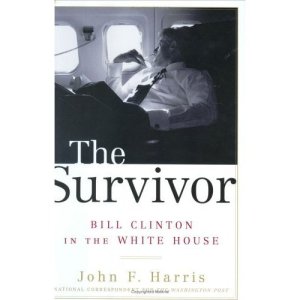
clintonsurvivorI wasn’t overly excited about reading a book about Bill Clinton for many reasons.

First, people who read this blog already know Bill Clinton. It’s not like I can find anything new or interesting to say that hasn’t already been said.

Second, I’ve never found Bill Clinton all that interesting. It’s similar to the way I feel about people who want to go on vacation to San Diego. I tell those people, “In theory, San Diego should be interesting, but it isn’t.”

Third, it was hard to find anything resembling an impartial biography of Bill Clinton.  (When it comes to partisanship, Bill Clinton brings out in everybody it seems.) The book I picked was written by a Washington Post national reporter, who covered the White House for nearly all eight years of Clinton’s Administration. And while the book is well written, it is not really a biography. It’s more a story of how a guy from Arkansas tried to fit in with the Washington establishment.

Harris devotes over 400 pages to the ins and outs of the eight years of the Clinton White House. But Harris isn’t analyzing Clinton’s place in history, but mainly recounting how the seemingly unending series of crises unfolded. Very little time is spent on Clinton’s life prior to assuming the Presidency, even though those years would prove to be very important to what happened during the eight years in the White House.

Bill Clinton was born William Jefferson Blythe III on August 19, 1946 in Hope, Arkansas. And as most of us know from hearing or reading about his life story, Clinton’s father, William Blythe Jr., died before he was born in an automobile accident. His mother, Virginia, would later marry a man named Roger Clinton, and young Bill would assume that last name. (Clinton and Gerald Ford are the only two Presidents who have changed surnames during their life. Gerald Ford was born Leslie King.) Roger Clinton was an alcoholic and prone to violence, and young Bill was eager to get away.

Fortunately, Bill Clinton was an excellent student. He was able to gain entrance to Georgetown University, and then a Rhodes Scholarship to study at Oxford. Upon his return from England, Clinton entered Yale Law School, where he eventually met his future wife, Hillary Rodham.

Clinton would move back to Arkansas and get elected Attorney General at the age of 30. Two years later, he was elected Governor. Two years after that, Clinton lost his bid for re-election. Two years after that, Clinton figured out how to stay elected, winning four more elections. (In 1984, the term of office was extended to four years. Subsequently, Arkansas has limited its governors to two terms.)

Some thought Clinton would run for President in 1988, but he decided against it. Instead, he opted to give the nominating speech for Michael Dukakis. There went two hours of my life I wanted back.

In 1991, Clinton decided to run against incumbent George H.W. Bush. Clinton was the leader of the wing of the Democratic Party referred to as “New Democrats.” This wing, which preferred the term Democratic Leadership Council, was supposed to bring the Democratic Party closer to the center.

Clinton weathered a campaign marked by accusations of marital infidelities and questions over the fitness of the governor of a small state to run the United States. H. Ross Perot mounted a spirited third party campaign.

Perot was able to siphon enough votes away from Bush to allow Clinton to win the election comfortably. However, Clinton ended up with just 43% of the popular vote. Many of his opponents would remind him that 57% of the voters wanted someone else to be President.

Unfortunately for Clinton, he didn’t seem to get the message that he didn’t have deep support. His administration hit the ground stumbling. There were tussles over gays in the military, his Attorney General nominee (Zoe Baird, who withdrew after a disclosure that she had employed an illegal alien as a nanny), replacing the staff in the White House Travel Office, and also making other planes wait for him at LAX while he was getting a haircut. Deputy White House counsel Vince Foster committed suicide, either from the stress of the job or severe depression. (Or some combination of the two. Or he was murdered. Take your pick.)

Amidst all this, Clinton tried to get his economic plan passed by Congress. Since it contained some new taxes, Republicans refused to support it. The plan passed narrowly in the House on party lines, and it only passed in the Senate because Vice President Al Gore was available to break a tie.

Clinton also promised to reform health care. Hillary Clinton was put in charge of the project. Clinton demanded that any plan guarantee universal health care. The plan came out of the project supposedly did that, but it ran into fierce opposition from just about everyone. And that included “Harry and Louise.”

The health care plan got nowhere. Much of what Clinton tried to do in his first two years in office went nowhere. His foreign policy initiative in Bosnia went nowhere. Clinton was helpless in the face of a genocide in Rwanda. U.S. troops tried to intervene in Somalia, but suffered some horrific losses.

Unsurprisingly, in the midterm elections, the Democrats were massacred. They lost control of both houses of Congress. Bill Clinton would now face another nemesis, Speaker of the House Newt Gingrich.

At this time, Clinton made a fateful change in strategy. He called an old adviser, Dick Morris, for assistance. Clinton kept this secret from nearly everyone on his staff. Most Democrats disliked Morris. That was because Morris usually worked for Republican candidates. But Clinton had a strange kinship with Morris and trusted him.

Morris was able to get Clinton to shift his policies rightward. Clinton signed a welfare reform bill that appalled many Democrats, but it proved to be hugely important in presenting Clinton to the public as a leader who could get things done.

In 1995, the Republicans tried to get Clinton to agree to their budget deficit reduction plan by threatening to shut down the government. Clinton called the bluff of the Republicans. Clinton bet that while people didn’t like the Federal Government in the abstract, they liked individual things that the Government did. People liked their Social Security checks and weather forecasts. The Republicans ended up backing down and compromised on a budget reduction plan.

All the while, a new scandal was brewing. It was called Whitewater. I believe five people fully understand what the Whitewater scandal truly was about.  It involved the Clintons and their involvement in a failed real estate development called Whitewater back in Arkansas.  There were bribes, embezzlement, and some connection to the Savings and Loan Crisis of the late 1980s. Clinton appointed a special prosecutor to look into the matter, feeling that it would be the best way to clear his name.  Originally, this special prosecutor was Robert Fiske, but he would later be replaced by Kenneth Starr. This investigation would take several years, and turn into something much different. (Ultimately, Clinton would not be found guilty of any one particular crime directly connected to Whitewater.)

Clinton faced off against Kansas senator Bob Dole in 1996 and it wasn’t much of a contest. Clinton won despite having to cut ties with Morris before the election after it had been discovered that Morris was letting a prostitute listen in on phone conversations he had with Clinton. Perot ran again and he won enough votes to keep Clinton below 50%.

In his second term, Clinton first faced a crisis over his acceptance of campaign contributions from foreign nationals, which is prohibited by Federal law. Some believed that the contributions, mostly from China, were compromising the security of the nation. However, this dust-up seemed to fade away with little effect on Clinton.

But, the Whitewater investigation was starting to take a turn for the worse for Clinton.

One of the many problems Clinton faced was a civil suit for sexual harassment by an Arkansas woman named Paula Jones. (This was also known as Troopergate.) Clinton’s attorneys offered to settle the case for $750,000. Jones’ attorneys thought “Hey, that’s a good deal.” But, Jones turned down the offer. So, her attorneys quit the case. A conservative legal group called the Rutherford Institute took over the case. And, they knew stuff.

In particular, Jones’ new attorneys knew that Clinton had been carrying on a sexual affair with a White House intern named Monica Lewinsky. Clinton was called in to give a deposition about his relationship with Lewinsky. Clinton, in very legalistic terms, denied the affair. He also denied helping Lewinsky find a job outside the White House.

The problem with this was that: 1) Clinton had had a sexual affair with Lewinsky and 2) he had helped (through his friend Vernon Jordan) Lewinsky find another job. Clinton also had coached his secretary, Bettie Currie, into saying that Lewinsky was just coming to the Oval Office to visit her, not the President.

Kenneth Starr was now aware of this evidence. A White House staffer named Linda Tripp had provided evidence, in the form of a semen-stained dress, that the President had had sex with Lewinsky. Starr viewed Clinton’s earlier testimony as perjury. Skipping ahead, this charge of perjury went to Congress. The Republicans, out for blood, decided that this was an impeachable offense. The House voted in favor of two articles of impeachment (perjury and obstruction of justice), which passed mostly along on party lines. But, to convict Clinton, the Republicans would have to get a 2/3 vote in the Senate. The votes weren’t close, 50-50 for perjury, and 55-45 against on the obstruction of justice charge. (Jones’ case was dismissed, but Clinton did pay her a settlement.)

With the impeachment crisis over, Clinton was able to have a productive final two years in office. Clinton spent much of his time concentrating on foreign affairs, dealing with Kosovo, Northern Ireland, and the West Bank. Clinton also discovered that America had an enemy by the name of Osama bin Laden. (And at this point, you can decide for yourself if you think Clinton did enough to stop bin Laden.)

Clinton hoped that Gore would succeed him in the White House, but was disappointed that the Vice President never asked him to campaign for him. Gore would later tell Clinton that he had to distance himself from the sex scandals. Clinton told Gore that if he ran on Clinton’s record, he would have won. Of course, Gore sort of won. Except he didn’t win the votes in the right places, so he lost.

Amidst all this, you might ask, (I certainly did), what did Bill Clinton do that made him so popular? Beats me. OK, maybe I have some ideas.

It did help that the economy grew during Clinton’s eight years in office. Clinton also managed to tame the budget deficit and left office with a $559 billion surplus. (You can argue amongst yourselves if there really was a surplus or if it was just accounting chicanery.)

It’s hard not to like a President when things are going well. As one of Clinton’s campaign advisers, James Carville, said during the 1992 campaign, “It’s the economy, stupid.” Or is it a stupid economy?

Would I recommend Baker’s book? To be honest, no I wouldn’t. But I’m also a guy who doesn’t like to visit San Diego. It’s just not my thing.

Other stuff: In case you didn’t know, Bill Clinton’s wife, Hillary, was a United States Senator from New York. And she almost became President. But now she’s the Secretary of State. Just checking to see if you’re paying attention.

The William J. Clinton Presidential Library is in Little Rock, Arkansas.

If you saw this on your RSS feed earlier, that was a mishap on my part. I was hurrying to get this done and clicked “publish” too early. I likely have a lot of typos. I will try to fix them as I go along. I beg your indulgence. This was just not a post I enjoyed writing much. Sorry, I’ll try to do better with the next one. But that won’t be for a few more weeks as I’m going on vacation soon. And not to San Diego.

Add to FacebookAdd to DiggAdd to Del.icio.usAdd to StumbleuponAdd to RedditAdd to BlinklistAdd to TwitterAdd to TechnoratiAdd to FurlAdd to Newsvine

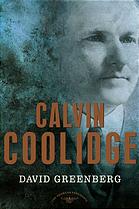
Calvin Coolidge by David Greenberg

President #30, C-SPAN Historians Ranking #26

The chief business of this blog is business

coolidgeCalvin Coolidge assumed the Presidency in 1923 as something of a cipher. But, by the time he left office in 1929, he was one of the most popular men in America. And, very quickly, that popularity vanished with the onset of the Great Depression. Just who was this taciturn man from New England?

David Greenberg, a Rutgers University history professor and a columnist for Slate.com, does an excellent job of putting the life and times of Calvin Coolidge into perspective. Greenberg doesn’t spare Coolidge from some blame for the Great Depression.  He does  provide a motive for Coolidge’s policies, however. Also, Greenberg delves into the public persona of one of the first Presidents who mastered the public relations game, and was able to capitalize on a new medium that was going to transform politics: radio.

Calvin Coolidge came into this world on July 4, 1872 as John Calvin Coolidge in Plymouth Notch, Vermont. His father was a farmer and store owner, and like many people in small towns, held a variety of elected offices. Calvin (who dropped John as a teenager) lost his mother in 1885 to tuberculosis that was complicated by injuries suffered in a horseback accident. His only sibling, a sister named Abigail, died five years later from appendicitis.

Without his mother around, Calvin became a shy and somewhat withdrawn child. His father sent him to a boarding school, where Coolidge had a hard time making friends at first.  Slowly, he came out of his shell and became a leader at his school. Speech and debate proved to be his specialties.

Coolidge would go on to study at Amherst. There he would meet two lifelong friends, and political allies, Dwight Morrow and Harlan Stone. After graduating Amherst, Coolidge studied law as an apprentice in Northampton, Massachusetts. And in 1898, Coolidge won a seat on the Northampton city council, kicking off a career in politics.

For a man who appeared to be very quiet and withdrawn, it would seem unlikely that Coolidge could propel himself into the highest office in the country. But, as Greenberg demonstrates, Coolidge was extraordinarily shrewd in grabbing opportunities to move up the political ladder, as well as presenting himself as a man who could be a leader.

By 1911, Coolidge had been elected to the Massachusetts State Senate. And in 1913, Coolidge became the President of the State Senate. From this position, Coolidge positioned himself with key Republican leaders in Massachusetts, some of whom would be key financiers in his campaigns for higher office.

In 1915, Coolidge was elected to his first of three one-year terms as lieutenant governor of Massachusetts. And in 1918, Coolidge reached what many thought would be the highest position a man like him could hope to obtain, governor of Massachusetts.

Coolidge’s term as governor was marked by reducing government spending and streamlining the bureaucracy of Massachusetts. But, Coolidge might have faded into obscurity if the police officers of Boston had not gone on strike in 1919.

This strike was no ordinary strike. Nearly the entire force walked off the job, leaving the streets of Boston open for roving gangs of thieves and looters.

At first Coolidge didn’t want to intervene, preferring Boston’s mayor to handle the situation. After two days of rioting, in which three people were killed, Coolidge fired the striking officers and sent off a telegram to Samuel Gompers, who was negotiating for the police men, that read, in part, “There is no right to strike against the public safety by anybody, anywhere, any time.”

Coolidge made sure the newspapers saw this telegram. And the public lauded Coolidge for his tough stance on the strike, and his visibility on the national stage increased. The Republicans put him on the ticket in 1920 as Vice President with Warren Harding.

Once Coolidge assumed the Vice Presidency, Harding had little use for him. Coolidge was rarely consulted on policy, and Coolidge spent much of his time trying to keep busy.

Being shut out of Harding’s scandal-ridden White House turned out to be a good thing for Coolidge. When Harding passed away in August of 1923, Coolidge was able to assume the Presidency without any of the baggage from the numerous scandals that were about to come to light.

No one was sure what to make of the new President. Some thought he would be a lightweight compared to Harding (and Harding was about as lightweight as Presidents come). But, Coolidge surprised people with his quiet and seemingly honest and forthright style.

Coolidge quickly appeared everywhere in the press. He held press conferences twice a week for nearly his entire Administration. He would appear in a photo with just about anyone. And he would wear anything photographers asked. (This link is to a particularly rare one.) He was the ideal man for that moment in history.

And what was happening during this time in America? Foremost, the country was prosperous. Wages were increasing. Productivity was up. People could buy and spend freely it seemed. The U.S. economy, bolstered by booming industries in automobiles and radios, looked to be in great shape.

Coolidge, advised by Secretary of Treasury Andrew Mellon, proposed a hefty tax cut, eliminating many surtaxes on the highest income brackets. These had been put in place to help the economy during World War I. But in peacetime, Coolidge and Mellon though that stimulating the economy with tax cuts would ultimately help out all income levels.

Congressional opposition kept Coolidge from getting all that he wanted in the tax bill, but there was enough left to satisfy him. And, according to Greenberg, left America with an economic model that would be adopted 57 years down the road by Ronald Reagan.

In 1924, Coolidge decided to run for President in his own right. This might have been a daunting task. No Vice President, with the exception of Theodore Roosevelt, who had assumed the Presidency after a death had been elected in his own right. And Coolidge was no Teddy Roosevelt.

But, Coolidge was no political innocent. His three principal opponents on the Republican side all were removed in expert ways.

Pennsylvania governor Gifford Pinchot, one of Roosevelt’s last disciples to hold a high office, was asked by Coolidge to help mediate a strike among coal miners in his state, but he had to follow White House directions, effectively taking Pinchot out of the race.

Henry Ford was another rival.  Coolidge offered to sell Ford the Federal hydroelectric plant at Muscle Shoals, Alabama.  After this, Ford decided against running against Coolidge. (The move was later blocked in Congress.)

The third Republican opponent was Wisconsin senator Robert La Follette, a Progressive. La Follette’s Progressive movement was shut out of decision making at the White House, and Coolidge’s people controlled the party regulars, who were needed to have any chance of gaining the nomination. La Follette would run as a third party candidate.

The Democrats provided even less opposition to Coolidge than his own party. With the resurgence of the Ku Klux Klan throughout the nation, the Democrats found themselves being identified as the party of the Klan because of their strength in the South. The Democrats took 103 ballots and 10 days before coming up with a nominee in 1924, as the party split over support for the Klan. It was a New York lawyer (although born in West Virginia) named John W. Davis who got the nomination.

Bruce Barton, a public relations man who worked in the White House and deftly crafted Coolidge’s image, had celebrities, such as Al Jolson, campaign for the President. (In 1924, Hollywood and Broadway were dominated by Republicans.) Coolidge also used the radio to deliver speeches, which allowed him to reach a much wider audience than ever before. Greenberg estimated that the crowds of people who showed up for Theodore Roosevelt’s speeches were about 13 million people. Coolidge could reach more than that with just one radio address. (You can listen to some of Coolidge’s speeches here.)

Coolidge, like Harding in 1920, won the election in a landslide. The Democrats won only in the states of the Confederacy, plus Oklahoma. Coolidge won 54.4% of the vote and Davis won only 28.8% of the popular vote, the lowest percentage for a Democratic nominee ever. Third party candidate La Follette won 16% of the vote and carried his home state of Wisconsin.

In his full term in office, Coolidge continued his pro-business policies. It was in January 1925 when Coolidge issued his famous statement “The principal business of America is business.”  Greenberg also points out that Coolidge followed up that statement with “The chief ideal of the American people is idealism.”

This means that either: 1) Coolidge truly had a pro-business agenda, 2) Coolidge’s idealism was about business’s ability to improve the nation, 3) Coolidge was just trying to sound smart or profound, 4) it was all an act. It was likely all four.

Coolidge’s election energized the stock markets. Millions of people who had never invested before turned to the stock market with the hope of quick riches. Real estate prices soared in some markets, especially in Florida. Few people believed that there would be any end in sight to this prosperity.

While the economy soared, America was faced with numerous internal conflicts. Women, now with the right to vote, were starting to assert their independence and sexuality during this time. Civil rights remained an issue that had to be confronted. American literature, music, and art were all undergoing rapid changes.

And what was Coolidge’s response to all this? Not much. He just kept quiet (an image he cultivated) and tried to present the image that he was taking care of things. He wanted Americans to believe that their president was a simple guy. He liked to go back to his farm to work. (Be sure to dress appropriately!)

Over in Europe, the situation was not as rosy. Nearly every European country had built up huge debts that they owed to the United States. Germany was also trying to pay off reparations as well. Germany ended up facing a hyperinflation scare where, at one time, one U.S. dollar was worth 4.2 TRILLION marks.

Coolidge, while trying to maintain an isolationist stance, did encourage some international agreements that were supposed to alleviate the debt problem, as well as reduce the chance of another world war. But, not much more was produced other than toothless agreements such as the Kellogg-Briand Pact, which was supposed to prohibit the use of war as an instrument of national policy. Its effectiveness proved to be limited, to put it kindly.

Although Coolidge did not wish to get involved in European matters, he had a different view toward Latin America. Coolidge and Morrow had to work hard behind the scenes to prop up the Mexican government of Alvaro Obregon. When Obregon was replaced by Plutarco Elias Calles in 1923, more problems followed, as Calles moved to nationalize businesses and the holdings of the Catholic Church.

Then in 1926, Coolidge ran into a problem in Nicaragua when he withdrew Marines who had been supporting the government there. With the Marines gone, civil war broke out in Nicaragua. And Coolidge had to send the Marines back.

Coolidge’s friend, Dwight Morrow, was able to negotiate a solution to the problem in Mexico. However, the problems of Nicaragua would be a thorn in the side of American presidents for the next 60 years.

In 1928, when Coolidge addressed the Pan-American Congress in Havana, he spoke of the region’s shared goals. But, Coolidge found few friends.  The Pan-American Congress almost adopted a resolution condemning the U.S. for intervening in the affairs of other countries in the region. At the last minute, American delegate Charles Evans Hughes was able to get the resolutuion withdrawn.

In August of 1927, Coolidge famously announced his intention not to run for a second full term in 1928 by handing reporters small slips of paper that read, “I do not choose to run for president in 1928.” Coolidge had felt that he had done enough as President and had little to gain by running for another term. Also, Coolidge had still never recovered psychologically from the death of his son, Calvin Jr., in 1924 from an infected blister.

And so, Coolidge departed the White House in March of 1929. His Secretary of Commerce, Herbert Hoover, took over. And, as most of us know, the stock markets crashed a few months after Hoover was sworn in. And soon after that, the Great Depression began.

The economic hard times made people look back at Coolidge and wonder if he was responsible for the calamity.

Greenberg gives Coolidge a mixed report card. He feels that Coolidge didn’t act to put any controls on the stock market or banking systems because he felt it wasn’t the Federal government’s role. No one had done so before, and it would be especially unlike Coolidge to have taken the lead in this field. But, Coolidge had to have known that the rise in the price of stocks couldn’t be sustained.  Greenberg writes that Coolidge’s tax cutting policies encouraged speculation in corporate stocks, instead of bonds, further inflating their prices, and screwing up (this is a technical term used by economists!) credit markets. (Since corporate taxes were lower, corporations paid out larger dividends.)

According to Greenberg, the difficult in assessing Coolidge is that he is evaluated by people who knew what the problems with the U.S. economy were. But, few people from 1923 through 1928 foresaw those problems. (Some people did, but no one who was in a policy making position did.)  Coolidge ran the country according to a political philosophy that got him from a job as a city councilman in Northampton, Massachusetts, all the way to the White House.

Franklin Roosevelt’s New Deal would make Coolidge’s laissez faire policies seem almost quaint. But, they would be revived in 1980 when Ronald Reagan was elected. And another Republican who knew how to manipulate his public image and get his programs through Congress would return to the White House.

When Coolidge passed away in January of 1933, he was already an afterthought to some. Dorothy Parker, upon being told that Coolidge had passed away, remarked, “How could they tell?”

Other stuff: Calvin Coolidge’s birthplace in Plymouth is an historic site operated by the State of Vermont. The Calvin Coolidge Presidential Library and Museum is in Northampton, Massachusetts. It is not operated by the National Archives, but rather by the Forbes Library, which is a public library established by Judge Charles E. Forbes in 1894.

Coolidge’s Vice President, Charles Dawes, began his term with a speech excoriating the Senate for having obsolete rules. Early in 1925, Coolidge faced a contentious nomination for his Attorney General candidate, Charles Warren. It appeared that the Senate was going to tie 40-40 on the nomination (ties don’t go to the nominee). Dawes, as President of the Senate, could have cast the deciding vote in favor of Sargent. However, when the vote came up, Dawes was taking a nap back at his hotel. The Senate voted without him present and rejected the nomination. Coolidge rarely spoke to Dawes again after that.

Add to FacebookAdd to DiggAdd to Del.icio.usAdd to StumbleuponAdd to RedditAdd to BlinklistAdd to TwitterAdd to TechnoratiAdd to FurlAdd to Newsvine

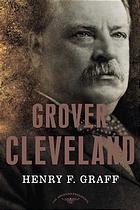
Grover Cleveland by Henry F. Graff

President #22 and #24, C-SPAN Historians Ranking #21

I’m only telling you this once!

clevelandOften just regarded as a numerical oddity, Grover Cleveland served eight years as President during one of the most turbulent times in American history. America was still recovering from the Civil War. The nation was beset with violent labor strife. The economy  teetered on the brink of collapse. European powers were stretching out their empires and there was pressure for the U.S. to join in the fun.

And the man in the middle of much of this change was Grover Cleveland, a man who had vaulted from being mayor of Buffalo in 1881 to the White House in 1885. And is the story of this man an inspirational one for all of us?

From reading Henry F. Graff’s slim (only 138 pages if you don’t count the notes or index) book about Cleveland, the answer is no. Graff, a former professor at Columbia, tries his best to make us believe that Grover Cleveland had some special attributes that made him an especially great president. But, for the most part, Graff writes about a man who moved up the political ladder, mostly because he appeared to be more honest than most politicians of the era. This is a very low standard considering the state of American politics at the time.

Stephen Grover Cleveland (he dropped Stephen when he was young) was born in Caldwell, New Jersey in 1837, but spent most of his formative years in upstate New York. In 1854, after his father’s death, Cleveland decided it was time to go off and start a career. He was going to go to Cleveland, Ohio (my law career has been stymied by having no city named Timmermann) to study law as an apprentice to another lawyer. However, Cleveland ended up going to Buffalo to study after an uncle there gave him some financial help.

Cleveland was set up with a position in Buffalo’s most prestigious firm: Rogers, Bowen, and Rogers. The firm was famous because former president Millard Fillmore used to be a partner in it. And to this day, it is the only law firm to produce two presidents.

After passing the bar, Cleveland worked as an assistant district attorney for Erie County, but lost an election for the D.A. job. During the Civil War, Cleveland hired a substitute to take his place in the Union Army (which was perfectly legal and above board at the time).

In 1870, Cleveland won his first race when he was elected sheriff of Erie County. Cleveland presided over two executions, throwing open the trap door for two different men who were hanged. At the end of his term, Cleveland started a successful private law practice.

In 1881, Cleveland was elected mayor of Buffalo. And one year later, New York Democrats, soured by scandals among Tammany Hall Democrats in New York City, nominated Cleveland to run for governor. And Cleveland won that race.

Suddenly, Cleveland was placed in one of the most high profile state government jobs in the nation. It made him a contender for the White House in 1884.

However, it didn’t take much to be a Presidential contender in 1884. American politics was not producing its finer candidates at the time. Cleveland’s opponents at the Democratic convention were Thomas Bayard, Allen Thurman, and Benjamin Butler. Cleveland won on the second ballot.

The 1884 election would be fought on many topics. None of them were particularly germane to the problems of the country, however.

The Republican nominee was former Speaker of the House and Secretary of State James Blaine. The Republicans still liked to use the Civil War as a campaign issue (it was known as “waving the bloody shirt”). This time out, they were thwarted in an attempt to capitalize on that issue. First, Blaine, like Cleveland, had not served in the Civil War. Second, Civil War veterans were starting to age and die off and no longer as powerful as a voting bloc for the Republicans. A spike in immigration added new voters with no memory of the Civil War.

The Republicans did turn up a potential problem for Cleveland. Namely, Cleveland was suspected of fathering an illegitimate child, and then taking that child from his mother. Cleveland was prepared for this issue, and had told Democratic party officials about it. When asked for advice about what to do, Cleveland famously replied, “Tell the truth.”

And in this case, honesty was the best policy. The child was likely not Cleveland’s, but the offspring of a married friend of his, Oscar Folsom. Cleveland, as a bachelor, let his name be used as the father to avoid scandal. Cleveland also had provided for the child’s upbringing, and also made sure that the child was adopted into a good home. (The mother likely suffered from mental illness or an addiciton.)

The Democrats countered the Republicans bastard charges by accusing Blaine of corruption for receiving kickbacks from an Arkansas railroad in 1876 in exchange for political favors. There were incriminating letters to back this up, one of which was marked “Burn this letter.” The Democrats would derisively chant that phrase during any Republican rally.

Finally, a few days before the election, Blaine was being introduced at a rally in New York by a Presbyterian minister who described the Democrats as the party of “rum, Romanism, and rebellion.” Blaine quickly tried to dissociate himself from the comments, but it was too late. The large number of Irish voters in New York were incensed, and they swung in favor of Cleveland.

Cleveland carried New York by a little over 1,000 votes. He won nationwide by 32,000 votes, with a healthy lead in the Electoral College, 219 to 182.

Cleveland was the first Democrat to assume the Presidency since the Civil War (if you count Andrew Johnson as a Republican, which he sort of was.) There were going to be changes.

However, the Democrats expected Cleveland to engage in wide scale firings of Republicans in government jobs. But Cleveland eased up a bit, angering many supporters who were hoping to have favors cashed in. Cleveland, following the lead of Presidents Hayes and Arthur, tried to continue to reform the Federal Civil Service, although such reforms were hard to get through a Congress used to dealing in political patronage mixed with a dash of corruption and a pinch of graft.

Cleveland angered veterans groups by vetoing numerous pension bills, many of which were pushed through Congress as political favors for men who did little or no fighting during the Civil War. Cleveland also ordered the Army to return all captured Confederate battle flags (to whom is unclear to me.)

In May of 1886, a bomb thrown into the crowd at a labor rally in the Haymarket section of Chicago killed seven police officers. This event would presage other violence surrounding attempts by workers to organize for the next 50 years.

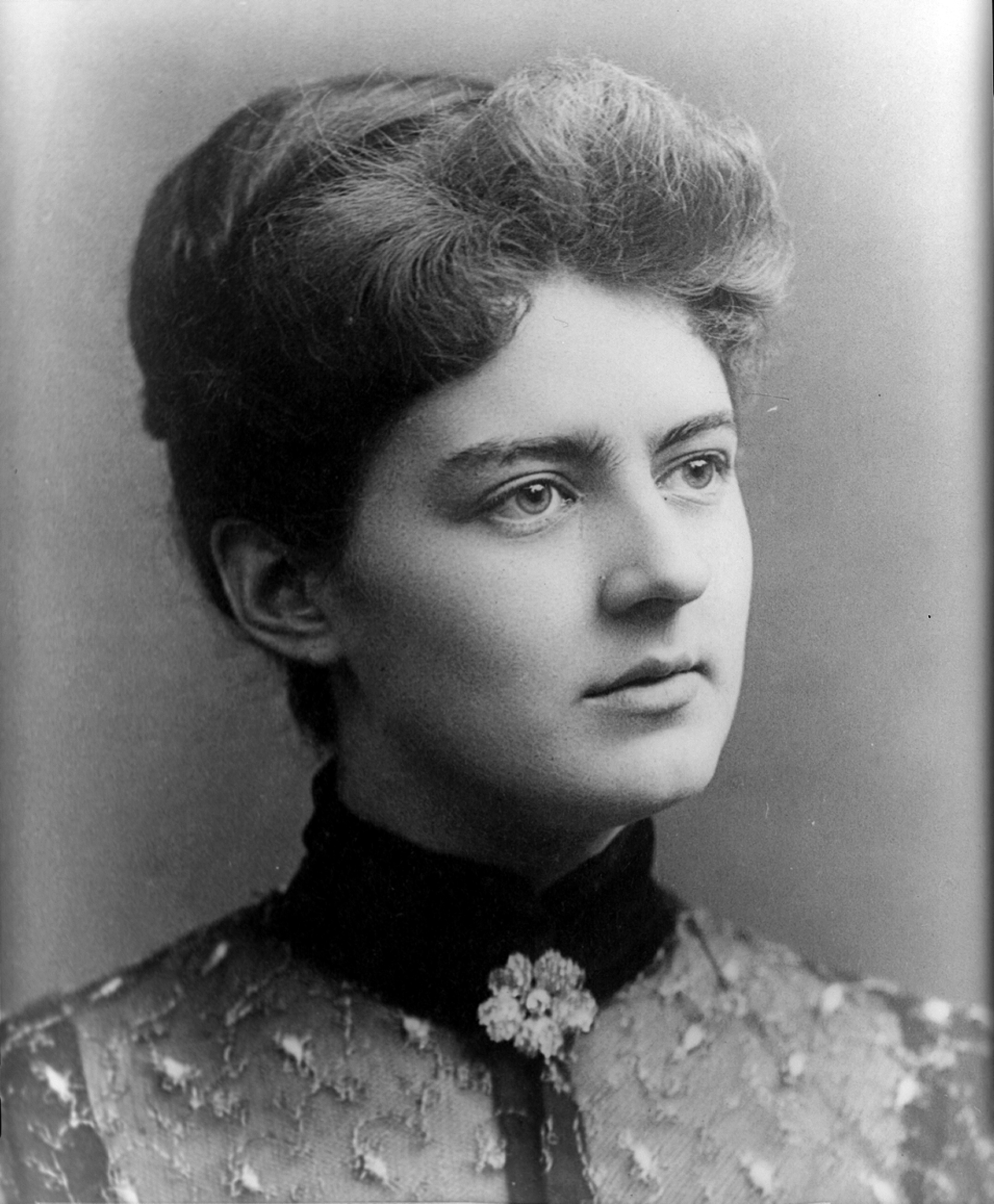
Although he was a bachelor when he entered the White House, Cleveland wouldn’t remain one for long. He had developed a fondness for the daughter of his friend Oscar Folsom. This young woman was born with the name Frank, which she changed to Frances, because life is hard for a girl named Frank. Cleveland had known this woman since birth. He bought Frank  her first crib.  When she was 21, Cleveland married Frank. And in the White House no less.

Perhaps today if there were a 49-year old bachelor president marrying a 21-year old woman that he had known since she was an infant, people might be a bit put off. But in 1886, this wasn’t considered that unusual. And the Clevelands went on to have a long and happy marriage that produced five children. Cleveland would always call his wife Frank also.

Toward the end of his first term, Cleveland pushed for a lower tariff. He felt that the system in place was hampering trade (tariffs tend to do that.) And the current tariff was making more than enough money for the country as the Treasury actually had a surplus.

Although Cleveland didn’t exactly negotiate anything remotely like today’s NAFTA, the tariff dropped enough to anger the American business establishment. And that, in turn, caused a flood of money to pour into Republican campaign coffers.

In 1888, Cleveland would win the popular vote over Republican Benjamin Harrison by 90,000 votes. But, he lost the electoral vote by a 233-168 margin. New York proved to be the key state, as Harrison won it by 15,000 votes.

The election of 1888 was also marred by some political chicanery. A California Republican wrote a letter, using the pseudonym “Murchison”, to the British minister to the U.S., Lord Lionel Sackville-West, asking him who he thought would be the best candidate for British interests in the upcoming election. Sackville-West wrote back saying that he thought Cleveland would better serve England.

When this news (The Murchison Letter) hit the papers, Cleveland, who had prided himself on his independence, looked like a tool of the British. And his Irish supporters in New York moved over to the Republican side.

Historical legend says that Frances Cleveland told the White House staff  in 1889 not to move around the furniture. Frances Cleveland said that she and her husband would be back in four years. Whether this was true is unclear, but the Clevelands did indeed return in 1893.

Harrison’s presidency was marred by a Populist uprising from rural interests, who demanded that the Federal Government start issuing more currency backed by silver* (which was being produced in mass quantities compared to gold.) This was combined with the Republicans imposing a very high tariff. So, there were fewer cheap goods coming into the country, and there was a lot of inflated currency around to spend (silver certificates). Hilarity did not ensue.

* To give you an idea of the problem, silver advocates wanted to maintain the arbitrary ratio of the price of gold being 16 times the price of silver. In 2009, the price of gold is about 65 times the price of silver. The disparity wasn’t as great in the 1890s, but it was still substantial. I’d explain this better, but I’m not paid to be an economist.

Another major labor action marred by violence, the Homestead Steel Strike of 1892, occurred a few months before the election. The Carnegie Steel Corporation hired Pinkerton detectives (Graff calls them “detectives”) as strikebreakers. Striking workers fired on the Pinkertons, killing ten of them.

The Democrats, with few other prospects on the horizon, trotted out Cleveland again in 1892. He was still popular, and he had still won the most popular votes the last time out. In the rematch, Cleveland bested Harrison by over 400,ooo votes, and won 277 electoral votes to 145 for Harrison and 22 for Populist Party candidate James Weaver. Cleveland became just the second president to win the popular vote three straight times, joining Andrew Jackson.

Cleveland’s second term began inauspiciously. The weather was bitterly cold on Inauguration Day and a small crowd came out to watch the ceremonies and parade.

Soon after taking office, a major financial crisis, the Panic of 1893, set in. All of the silver currency that was floating around was wreaking havoc with the financial system. Foreign creditors were demanding payment in gold. But, Western interests didn’t want to give up their silver. There wasn’t enough gold to pay foreign creditors.

To further complicate matters, Cleveland was diagnosed with a cancerous tumor on his soft palate. Since Cleveland’s vice president, Adlai Stevenson (grandfather of this guy), was a silver money supporter (unlike Cleveland who backed the gold standard), there were grave concerns that the financial markets would collapse further upon the news of Cleveland’s illness.

Cleveland had his surgery done in secret, on a yacht that was floating up and down the Hudson River. First, surgeons removed the tumor, and then later a dental appliance was formed so that Cleveland’s mouth looked normal. His speech would be unaffected. News of Cleveland’s illness would not be made public until 1917.

The economy did recover. However, Cleveland used a method that would not be associated with the Democratic Party of today. Cleveland asked New York bankers, principally J.P. Morgan, to supply the government with enough gold (3.5 million ounces) to build up its reserves and help ease the credit markets. Morgan likely made millions of dollars from deals he negotiated with foreign suppliers. Morgan would later be asked by Congress to reveal how much he made on the deal. Morgan wouldn’t say.

Cleveland faced two major foreign policy crises in his second term:

The first was a border dispute between Britain and Venezuela. The British argued that the border of their colony, British Guyana, stretched much further west than what Venezuela thought. This would have given Britain a considerable chunk of the Orinoco Valley.  Ships and soldiers prepared to fight before the two sides apparently realized that no one really cared about this border (and Britain was caught up in the Boer War).

The second problem was with Hawai’i. In 1893, a group of American plantation owners dethroned Queen Liliuokalani and established a provisional government, hoping for annexation by the United States. However, Cleveland refused to annex the islands. He rejected the idea that the U.S. Government would sponsor the overthrow of a legitimate government. Cleveland’s objections only served to postpone annexation until 1898, when he was out of office.

Cleveland faced another labor problem in 1894 when Pullman workers went on strike. This led to a strike by nearly all railroad workers in the country, crippling the transportation system.

The center of the crisis was in Chicago, where union leader Eugene Debs promised that the strike would prevent all trains, even those carrying the mail, from travelling through Chicago. Cleveland reacted by sending in soldiers to operate the train. His Attorney General, Richard Olney, received an injunction against the strikers. Once Debs violated the injunction, he was arrested and the strike was crushed.

The kindly mayor from Buffalo now appeared to be nothing more than a tool of Eastern capitalists. He was no longer the honest reformer of government.

In 1896, Cleveland toyed with the idea of another term. This time, the Democrats tried to tap into the Populist movement, nominating William Jennings Bryan, who made “free silver” (aka inflated currency), his platform. Cleveland watched his party go down to defeat, although he wasn’t broken up by it, as he thought Bryan would have ruined the country.

Cleveland retired to Princeton, New Jersey and did typical ex-president jobs, such as writing his memoirs, giving speeches, and picking up a lot of cash. He passed away in 1908.

Grover Cleveland’s time is a fascinating era in American history, with many different sociological and political changes. But from reading Graff’s book, it doesn’t seem that Grover Cleveland was nearly as interesting as the time he lived in. He was a man who was along for the ride. Graff describes Cleveland as man without charisma and without any knowledge of handling public relations (Cleveland made White House reporters wait outside for stories.). Grover Cleveland was not a person who defined his era. He just tried his best to get through it.

Other stuff: The Grover Cleveland Birthplace is located in Caldwell, Jersey. It is operated by the New Jersey Department of Environmental Protection.

Cleveland’s unique status as the 22nd and 24th Presidents wasn’t decided officially until the 1950s. According to a New York Times article from January 10, 1950, the Congressional Directory identified Cleveland as both the 22nd and 24th President for the first time, changing Harry Truman from being the 32nd President to the 33rd. Truman believed he was the 32nd President, however. But, when Dwight Eisenhower was inaugurated in 1953, he identified himself as the 34th President. The 1950 article cites an opinion by an anonymous “State Department legal adviser” in 1945 that said that Cleveland had to be the 24th President as well as the 22nd because, logically, you couldn’t have the 22nd President serving in office after the 23rd.

Cleveland had a different running mate in each of his three presidential campaigns. Thomas Hendricks was his first Vice President (he also ran as Samuel Tilden’s running mate in 1876), but he passed away in 1885. Thurman was Cleveland’s running mate in 1888. Stevenson was his running mate in 1892. Stevenson would run for Vice President again in 1900 alongside Bryan.

Add to FacebookAdd to DiggAdd to Del.icio.usAdd to StumbleuponAdd to RedditAdd to BlinklistAdd to TwitterAdd to TechnoratiAdd to FurlAdd to Newsvine

Jimmy Carter: American Moralist by Kenneth E. Morris

President #39, C-SPAN historians’ ranking #25

Would you like some malaise on your sandwich?

carterJimmy Carter was, and in many ways still is, a confounding figure to understand. Just how did someone rise from the relatively obscure position of Governor of Georgia to the Presidency? And just what were Carter’s goals and aims in the White House? Was he just a man with a nervous grin who seemed paralyzed by events, especially the hostage crisis in Iran, or was he a shrewd politician? And why did he seem to blame America’s problems on the American people?
Kenneth Morris, the author of this book, is not a historian, but rather a sociologist. And as the subtitle of the book would lead you to believe, it is an examination about how and why Jimmy Carter tried to turn the office of the Presidency into a place where he could exert moral leadership of the country. Morris describes how Carter changed over time from a child of a comfortable upbringing in rural Georgia to a midshipman at the U.S. Naval Academy and then on to Georgia politics, and ultimately, the White House, using what he considered to be his two best skills: morality and competence.

The problem for Carter was that the American people often look for more than competence in their Presidents. They want to be inspired. They want to be led. They want to feel as if they are doing the right thing. And, in the end, Carter wasn’t able to convince the American people that they needed his style of leadership, which some thought sounded more like criticism than anything else.

Morris reveals quite a bit about Carter from an examination of his upbringing in Plains, Georgia. And, first of all, people should know that Carter actually grew up in a smaller town near Plains, called Archery. His father, James Earl Carter (called Earl by everyone), was a prosperous farmer and businessman and also served in the Georgia Legislature.

Earl was a strong supporter of Herman Talmadge, a Georgia governor and ardent segregationist. Earl was, like many Southerners of his era, also a supporter of segregation, although he was personally kind to African-Americans. Earl Carter didn’t mind the African-Americans who worked for him and was a good landlord to those who rented from him. But, Earl Carter was not of the mind that African-Americans should share any sort of economic or political equality with whites. His son did not share these views, however.

His wife, Lillian, primarily married Earl for his money, although she did bear him four children. But, she traveled a lot (she would later join the Peace Corps as a nurse) and was not a major figure in the life of her eldest, James Earl Carter Jr., aka Jimmy or Jim, or her other children. Jimmy was, like many people, a son who didn’t like his father, but wanted nothing more than his father’s approval. Morris writes that Earl’s favorite was his daughter Ruth, whom Morris hints that Earl may have been a bit too fond of.

Jimmy Carter left Plains in 1943 to go to the U.S. Naval Academy and get away from the influence of the man whom he felt he could never satisfy. So, Carter left Georgia to start out on a new phase of his life.

Because of World War II, the term of instruction at Annapolis was shortened from four to three years, but that still meant that Carter missed out on combat duty in World War II as he didn’t graduate until 1946, around the same time he married his wife, Rosalynn.

Despite serving on ships and submarines, Carter made few friends during his tour of duty in the Navy. Morris spoke to many other sailors that Carter served with and none of them had any stories to tell about him, except to say that he was a loner who almost always kept to himself, even on a submarine. Morris speculates that Carter may have been suffering from depression during this time.

In 1953, Earl Carter died of pancreatic cancer. His eldest son, who had wanted to not be like his father, immediately resigned his naval commission and headed back to Plains (that was where the family business was located) and, essentially, became his father. Jimmy Carter took over the family business (a peanut farm and processing plant) and reinvented himself.

Back in Plains, Carter worked at the family business, although his younger brother Billy was actually the better businessman. By 1962, Carter decided to try for his first government office, the Georgia State Senate. Carter sought this office in part because the U.S. Supreme Court had mandated that all state legislatures be chosen on a “one man, one vote” system and this changed the demographics of the district making it more favorable for someone like Carter, who would have been considered a liberal on civil rights at the time in Georgia.

Carter actually lost his first election for the State Senate seat, however; the results were thrown out because of voter fraud. After several court decisions changed the result back and forth, Carter’s opponent just gave up and Carter was elected for a four-year term.

During his four years in the State Senate, Carter vowed to read EVERY page of EVERY bill he voted on. He wanted to show that he was not a machine politician who could be swayed by his boss’ suggestions, as his father was by the Talmadge machine. Carter apparently did keep to this promise.  It likely required him to pull some all-nighters at the end of each legislative session. Carter was trying to emulate John Kennedy, not realizing that Kennedy would never have worked that hard.

In 1966, Carter was planning to run for a House seat and would likely have won it, except he decided, at the last minute, to run for governor instead. Carter didn’t win and he ended up splitting the Democratic primary vote in such a way that Lester Maddox, a segregationist who prided himself on not serving blacks at his restaurant, as well as chasing away any potential black customers away by waving an axe handle at them, won the primary, and later the general election.

Carter underwent another transformation after this setback. With time on his hands, Carter began to read the works of notable philosophers and theologians and became especially enamored with the work of Reinhold Niebhur. Also, Carter’s sister, Ruth, had become a minister and she brought about a religious reawakening in her older brother. And from this Carter would begin to identify himself as a “Born Again Christian.”

Along with this religious transformation, Carter also set his sights on correcting his mistakes in running for governor and started to prepare for another run in four years (at the time Georgia governors could not be reelected.) Carter, along with his political advisers Hamilton Jordan and Jody Powell, mapped out a strategy that would make Carter appeal to just about everyone in the state of Georgia. They studied voting patterns for each one of Georgia’s 159 counties. Carter gave speeches that were tailored for each particular ZIP code he was in. The hard work paid off and Carter assumed the Governor’s job in 1971.

Almost as soon as Carter was elected governor, he started to prepare for a presidential run. In 1972, Carter (or his supporters) tried to get him nominated as George McGovern’s running mate, but McGovern was not interested.

The lesson Carter took from McGovern’s landslide loss to Nixon in 1972 was that the American people liked McGovern’s ideas, but didn’t think that McGovern was competent enough to run the country. So, Carter went about showing his “competence” with a series of reforms in Georgia and a reform of the budget process. It’s hard to tell just what he accomplished as governor of Georgia.

Carter was one of the first declared candidates for the Democratic nomination in 1976, and most political pundits assumed that the election was in the bag for the Democrats in the wake of Watergate and President Ford’s pardon of Richard Nixon. However, after a quick start with wins in Iowa and New Hampshire, Carter’s momentum stalled as Democrats started looking at other candidates, like Morris Udall or Jerry Brown. Even Hubert Humphrey was still popular among Democrats. Carter had built enough of an early lead though, that his nomination was not in doubt.

In the general election, Carter, according to Morris, almost blew a huge lead in the polls, edging out Ford by a little more than 2% in the popular vote and by just 51 in the electoral vote. Carter won only one state in the West, Hawai’i. Carter’s election represented the last gasp of “The Solid South” for Democrats and that was was attributed more to the region’s desire to return one of its own to the White House for the first time since 1848. (Texans have told me that Texas is not in the South. I will not disagree with them. Also, Woodrow Wilson was born in Virginia, but was considered a New Jerseyan when elected.)

Carter’s four years in office were not a time that many Americans look back at with much fondness. The “stagflation” of the Nixon and Ford Era, continued. People were faced with double digit rates of inflation combined with interest rates well over 15 percent. Worker productivity declined. There were sporadic energy shortages.

Energy was the first issue that Carter tried to tackle. Immediately, he faced opposition from Congressional Democrats who found Carter’s style to be somewhat dismissive of them. Also, Carter wasn’t considered liberal enough by the Democrats in Congress. It took two years to get any sort of legislation in this field passed.

As Morris wrote, Carter worked very hard to find the perfect middle road and established a unique position on just about every political issue possible. There were estimates that Carter had over 250 different position papers on separate subjects. It was hard to figure out just what he stood for, except possibly just for Jimmy Carter.

In foreign policy, Carter decided to make the return of the Panama Canal to Panama, his first big issue to tackle. While negotiations had gone on for several years under different administrations, opposition to the return of the Canal was fierce. Carter won Senate approval of  the treaty after spending quite a bit of political capital.

In 1978, Carter’s made his greatest mark on history when he was able to get Israeli Prime Minister Menachem Begin and Egypitan President Anwar Sadat to come to Camp David. Carter was able to mediate a peace treaty between these two enemies.

By 1979, the wheels came off of Carter’s Presidency. On July 15, 1979, Carter addressed the nation on television, ostensibly to discuss energy policy, but Carter changed his idea about the speech and spoke about a “crisis of confidence” in the United States. Carter said that the problem with the country wasn’t Congress not passing his energy policy, but the problem was that the country didn’t believe in itself and was skeptical that the country get itself back on track.

This speech was dubbed the “malaise” speech, even though Carter didn’t use that word in the speech. But, the American people didn’t like to be told that they were a bunch of whiners. Carter did not give the appearance that he was leading anymore.

And then on November 4, 1979, terrorists held 52 Americans hostage in the U.S. embassy in Tehran. This was, first in protest of Carter allowing the deposed Shah to come to the U.S. for medical treatment, but the crisis continued past the Shah’s death. Carter retreated in to the White House and seemed to offer little hope for the hostages’ return. Not that finding their release would be easy as the Iranian government was in flux and it was difficult to find anyone who had any authority. Also, decades of anti-American attitudes were being played out in this event.

Carter did order a commando style rescue of the hostages, but it ended up with two American helicopters crashing in the desert, the hostages still in Tehran, and Secretary of State Cyrus Vance resigning in protest.

In addition to his problems with Iran, Carter irritated Soviet leader Leonid Brezhnev with his support of Soviet dissidents, such as Andrei Sakharov. Carter and Brezhnev negotiated a SALT II agreement to limit nuclear weapons. Neither side liked the agreement. It was scrapped when the USSR invaded Afghanistan. (That didn’t work out so well for anybody did it?)

How did Carter respond to the Soviet invasion of Afghanistan? He ordered a boycott of the upcoming Olympic Games in Moscow, as well as an embargo on grain exports to the USSR.

In 1980, Carter had to survive a primary challenge from Ted Kennedy to be renominated. Then, Carter had to face one of the most polished campaigners in American politics in Ronald Reagan. Compared to Reagan, the earnest, moralizing Southern farmer seemed most inadequate against Reagan, who would keep asking if people were better off than they were four years ago. And, the answer to that was almost always “no.” Reagan won by nearly 9% and by 440 votes in the Electoral College.

And the electoral defeat in 1980, brought about yet another reinvention of Jimmy Carter. Now, he became Mr. Humanitarian. Carter was often shown building houses for Habitat for Humanity. Carter would serve as an election observer in countries like Haiti and Nicaragua. And Carter would show up on Jay Leno’s show from time to time.

This book was written in 1996, before Carter won the Nobel Peace Prize in 2002. Carter has been seen with some world figures that have made conservatives blanch in horror. His legacy, the Carter Center, details most of his post-presidential career, although you have to judge the impartiality of the source.

It is difficult to make an assessment on the life of anyone who is still alive and still active. And with Jimmy Carter’s numerous reinventions, you feel like you have to read three different books to keep up with him. I lived during the Carter Administration and thought I followed the events of his Presidency closely for a nerdy kid in junior high. (Now I’m a nerdy adult, so I blog about Carter.) But, I still don’t fully understand what Jimmy Carter was about. Morris asks people to take a look at Carter’s moral leadership and judge him that way. However, moral leadership may not have the payoff that most people want.

Other stuff: In addition to the Carter Center, the National Park Service runs the Jimmy Carter National Historic Site in Plains, Georgia.

Carter did not appoint anyone to the Supreme Court. He was the first President since Andrew Johnson to not appoint a Justice. William Henry Harrison, Zachary Taylor, and Barack Obama are the other presidents with no Supreme Court nominations, although the current president still has a few years for a vacancy to turn up.

Jimmy and Rosalynn Carter have the second-longest marriage of any U.S. Presidential couple. They will celebrate their 63rd anniversary on July 7, 2009. George and Barbara Bush were married on January 6, 1945.

During Carter’s first presidential campaign, he tried to portray himself as being much more “hip” than people’s perceptions of Southerners. One claim Carter made was that his views on tenant farming were changed after listening to Bob Dylan’s “Maggie’s Farm.” This was an excuse for me to link to this video.

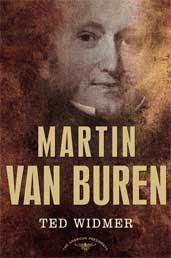
Martin Van Buren by Ted Widmer

Don’t Panic!

President #8, C-SPAN Historians Ranking #31

martinvanburenMartin Van Buren is not a president who inspires people in this day and age. He exists mainly as a name to remember when you’re trying to remember the names of all the presidents. Fortunately, Ted Widmer, a former speechwriter for Bill Clinton, penned a biography of the first president born after the Declaration of Independence, the first president who wasn’t at least part English (there have been only two and Barack Obama isn’t the other one), and the first president who grew up speaking a language other than English.

Born into a lower middle class Dutch family in the upstate New York city of Kinderhook, Martin Van Buren was the first president to get elected primarily because he had the political smarts to pull it off. Van Buren was neither a military hero nor was he a Founding Father (or son of one). He was a man who became quite taken with the beliefs of Thomas Jefferson as a young man and then was able to work his way up to the highest office in the land.

And almost as soon as he took office, the United States economy plunged into a financial panic that had not been seen since the Constitution had been adopted. And master politician Martin Van Buren was not a master economist and after four years, Van Buren was bounced out of office in the 1840 “Log Cabin and Hard Cider” campaign of the Whig Party that got the American people used to buying into catchy slogans in an effort to make them feel better about themselves.

Widmer has a sense of humor that appealed to me. Here is a passage from a chapter where the author discusses Van Buren’s attempts to organize opposition to then incumbent president John Quincy Adams.

None of this activity was lost on President Adams, who could not have looked upon Van Buren’s activity with more disfavor if he was an emissary from the Vatican seeking to convert Yankee maids to Papism and then sell them into white slavery.

Van Buren’s accomplishments are usually presented in terms that a reader could compare to the political realities of today. The problems may have been different (well, except for the major financial disaster, that seems to be something we can relate to now), but there are parallels to today. When Van Buren’s opponents couldn’t find an actual solution to a problem that Van Buren couldn’t solve either, the alternative became to attack the person. Van Buren had done the same thing when he was attacking Adams as president and Van Buren ended up with a taste of his own medicine.

But just what did Van Buren do as president? If you’re looking for a major accomplishment that Van Buren had while he was president, you aren’t going to find one. But before Van Buren moved into the White House, he had begun the development of the Democratic Party as the first truly organized political party in the United States. But Van Buren did little to end or even ameliorate the financial panic.

Much of what we think of when we think of a political party were started by Van Buren. He established state party committees and tried to keep all parts of the country informed as to what the Democratic “message” was.  This was all at a time when communications in the United States were revolutionized by the development of the telegraph and railroads. Politics was no longer local, it was national. (Well, until the 1980s, when Tip O’Neill told us that all politics was local.)

Van Buren’s became a confidante of Andrew Jackson after the election of 1824. Although Van Buren had backed William Crawford in 1824, he saw that Jackson was the man who was going to go places. Van Buren advised Jackson to stay out of the political arena and, in the words of Widmer, “to look presidential.” Van Buren’s strategy paid off and in 1828, Jackson won the presidency over Adams, who had to ruin his image by actually trying to govern (which he did poorly.)

At the same time, Van Buren was elected governor of New York. However, he held that office for only a few months as Jackson appointed Van Buren Secretary of State. Later, Jackson appointed Van Buren to serve as U.S. minister to Britain (this was not considered a demotion at the time), but the Senate rejected Van Buren’s nomination with Vice President John Calhoun casting the tiebreaking vote against Van Buren. Calhoun would later resign the Vice Presidency before Jackson could not invite him back and Van Buren took over the #2 job in 1833. Calhoun had also been John Quincy Adams’ Vice President and was getting tired of the job. And Calhoun was just an all around miserable person.

Following after one of America’s most popular presidents in Jackson, Van Buren had little trouble defeating a combination of Whig Party candidates in 1836 (William Henry Harrison finished second). However, Van Buren’s Vice President, Richard Johnson of Kentucky, had to be elected by the Senate as he failed to get a majority of the electoral votes as many Southerners objected to the fact that Johnson had been married to one of his former slaves.

But the economic hard times defined Van Buren’s four years in office. He was not equipped for the job and likely wasn’t helped that Jackson had shut down the Bank of the United States, the national bank that had provided some sense of semblance of rationality while speculators were driving up land prices and then going broke. Interestingly at this time, one of the economy’s problems was that the Federal Government was running a SURPLUS and was returning money to the states. It would be even more interesting if I knew why running a surplus was bad. But I’m not an economist, just a guy with a blog. Economists today still don’t agree on why there was a panic in 1837, but banks refusing to lend people money was a start.

Widmer includes this description of the Panic of 1837 (as its familiarly called) that was penned by Ralph Waldo Emerson.

Cold April; hard times; men breaking who ought not to break; banks bulled into the bolstering of desperate speculators; all the newspapers a chorus of owls.

While in office, Van Buren had to face the issue of slavery head on and most of the time he tried his best to not make eye contact. Van Buren did refuse to annex the new nation of Texas to the United States because he feared what a large slave-owning state would do to the balance of power in the U.S. And Van Buren has been portrayed as the villain in the Amistad affair, but Widmer attributes this more to Steven Spielberg’s direction of the 1997 film. Nigel Hawthorne portrayed Van Buren in the film. (For more on the Amistad case, read the John Quincy Adams review.)

However, after leaving office, Van Buren had a change of heart about slavery. Widmer can’t point out exactly why except that perhaps Van Buren realized that some things were more important that than trying to keep the South placated as part of a nationa coalition. Van Buren tried for office again in 1844, but lost the nomination to James Polk, who ended up snubbing Van Buren or any of his associates for his administration. In 1848, Van Buren ran again, but the Democrats wouldn’t have him and he ran on a third party ticket called the Free Soil Party, but failed to win any electoral votes, but was enough of a pest to throw the election to Whig candidate Zachary Taylor. Van Buren got to be the Ross Perot of 1848.

Widmer managed to pull off the not so easy task of making the life of a career politician, not known for his soaring oratory or military bravery (Van Buren didn’t go to college or serve in the military), into a living, breathing, relevant figure for our times. Martin Van Buren definitely was not a great president. And he may be forgotten, but he is a part of our nation’s history and he is worth looking into.

Other stuff: Van Buren’s wife, Hannah, died in 1819 and he never remarried, although he supposedly was quite popular with the ladies. Widmer believes though that he never had a sexual relationship with anyone after his wife passed away.

Van Buren’s home, Lindenwald, is now part of the Martin Van Buren National Historic Site in Kinderhook, New York.

At 5’6″, Van Buren is believed to be the second shortest U.S. president. Only James Madison (5’4″ to 5’5″) was shorter. However, there aren’t any accurate measurements as few presidents have submitted to getting measured as if they were attending the NFL Draft Combine.

After Van Buren was elected President while serving as Vice President, no other sitting Vice President pulled off that feat until George H.W. Bush did in 1988.

Martin Van Buren was also reference in an episode of “Seinfeld.”

The next president up in my list doesn’t yet have a biography published in the American Presidents Series. So I’m going to read a biography from a different publisher. And it will be about 5 times longer (800 or so pages) than the books in this series. So it may take a while to get the next review published. But stay tuned.