Grover Cleveland by Henry F. Graff

President #22 and #24, C-SPAN Historians Ranking #21

I’m only telling you this once!
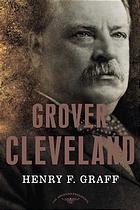
clevelandOften just regarded as a numerical oddity, Grover Cleveland served eight years as President during one of the most turbulent times in American history. America was still recovering from the Civil War. The nation was beset with violent labor strife. The economy  teetered on the brink of collapse. European powers were stretching out their empires and there was pressure for the U.S. to join in the fun.

And the man in the middle of much of this change was Grover Cleveland, a man who had vaulted from being mayor of Buffalo in 1881 to the White House in 1885. And is the story of this man an inspirational one for all of us?

From reading Henry F. Graff’s slim (only 138 pages if you don’t count the notes or index) book about Cleveland, the answer is no. Graff, a former professor at Columbia, tries his best to make us believe that Grover Cleveland had some special attributes that made him an especially great president. But, for the most part, Graff writes about a man who moved up the political ladder, mostly because he appeared to be more honest than most politicians of the era. This is a very low standard considering the state of American politics at the time.

Stephen Grover Cleveland (he dropped Stephen when he was young) was born in Caldwell, New Jersey in 1837, but spent most of his formative years in upstate New York. In 1854, after his father’s death, Cleveland decided it was time to go off and start a career. He was going to go to Cleveland, Ohio (my law career has been stymied by having no city named Timmermann) to study law as an apprentice to another lawyer. However, Cleveland ended up going to Buffalo to study after an uncle there gave him some financial help.

Cleveland was set up with a position in Buffalo’s most prestigious firm: Rogers, Bowen, and Rogers. The firm was famous because former president Millard Fillmore used to be a partner in it. And to this day, it is the only law firm to produce two presidents.

After passing the bar, Cleveland worked as an assistant district attorney for Erie County, but lost an election for the D.A. job. During the Civil War, Cleveland hired a substitute to take his place in the Union Army (which was perfectly legal and above board at the time).

In 1870, Cleveland won his first race when he was elected sheriff of Erie County. Cleveland presided over two executions, throwing open the trap door for two different men who were hanged. At the end of his term, Cleveland started a successful private law practice.

In 1881, Cleveland was elected mayor of Buffalo. And one year later, New York Democrats, soured by scandals among Tammany Hall Democrats in New York City, nominated Cleveland to run for governor. And Cleveland won that race.

Suddenly, Cleveland was placed in one of the most high profile state government jobs in the nation. It made him a contender for the White House in 1884.

However, it didn’t take much to be a Presidential contender in 1884. American politics was not producing its finer candidates at the time. Cleveland’s opponents at the Democratic convention were Thomas Bayard, Allen Thurman, and Benjamin Butler. Cleveland won on the second ballot.

The 1884 election would be fought on many topics. None of them were particularly germane to the problems of the country, however.

The Republican nominee was former Speaker of the House and Secretary of State James Blaine. The Republicans still liked to use the Civil War as a campaign issue (it was known as “waving the bloody shirt”). This time out, they were thwarted in an attempt to capitalize on that issue. First, Blaine, like Cleveland, had not served in the Civil War. Second, Civil War veterans were starting to age and die off and no longer as powerful as a voting bloc for the Republicans. A spike in immigration added new voters with no memory of the Civil War.

The Republicans did turn up a potential problem for Cleveland. Namely, Cleveland was suspected of fathering an illegitimate child, and then taking that child from his mother. Cleveland was prepared for this issue, and had told Democratic party officials about it. When asked for advice about what to do, Cleveland famously replied, “Tell the truth.”

And in this case, honesty was the best policy. The child was likely not Cleveland’s, but the offspring of a married friend of his, Oscar Folsom. Cleveland, as a bachelor, let his name be used as the father to avoid scandal. Cleveland also had provided for the child’s upbringing, and also made sure that the child was adopted into a good home. (The mother likely suffered from mental illness or an addiciton.)

The Democrats countered the Republicans bastard charges by accusing Blaine of corruption for receiving kickbacks from an Arkansas railroad in 1876 in exchange for political favors. There were incriminating letters to back this up, one of which was marked “Burn this letter.” The Democrats would derisively chant that phrase during any Republican rally.

Finally, a few days before the election, Blaine was being introduced at a rally in New York by a Presbyterian minister who described the Democrats as the party of “rum, Romanism, and rebellion.” Blaine quickly tried to dissociate himself from the comments, but it was too late. The large number of Irish voters in New York were incensed, and they swung in favor of Cleveland.

Cleveland carried New York by a little over 1,000 votes. He won nationwide by 32,000 votes, with a healthy lead in the Electoral College, 219 to 182.

Cleveland was the first Democrat to assume the Presidency since the Civil War (if you count Andrew Johnson as a Republican, which he sort of was.) There were going to be changes.

However, the Democrats expected Cleveland to engage in wide scale firings of Republicans in government jobs. But Cleveland eased up a bit, angering many supporters who were hoping to have favors cashed in. Cleveland, following the lead of Presidents Hayes and Arthur, tried to continue to reform the Federal Civil Service, although such reforms were hard to get through a Congress used to dealing in political patronage mixed with a dash of corruption and a pinch of graft.

Cleveland angered veterans groups by vetoing numerous pension bills, many of which were pushed through Congress as political favors for men who did little or no fighting during the Civil War. Cleveland also ordered the Army to return all captured Confederate battle flags (to whom is unclear to me.)

In May of 1886, a bomb thrown into the crowd at a labor rally in the Haymarket section of Chicago killed seven police officers. This event would presage other violence surrounding attempts by workers to organize for the next 50 years.

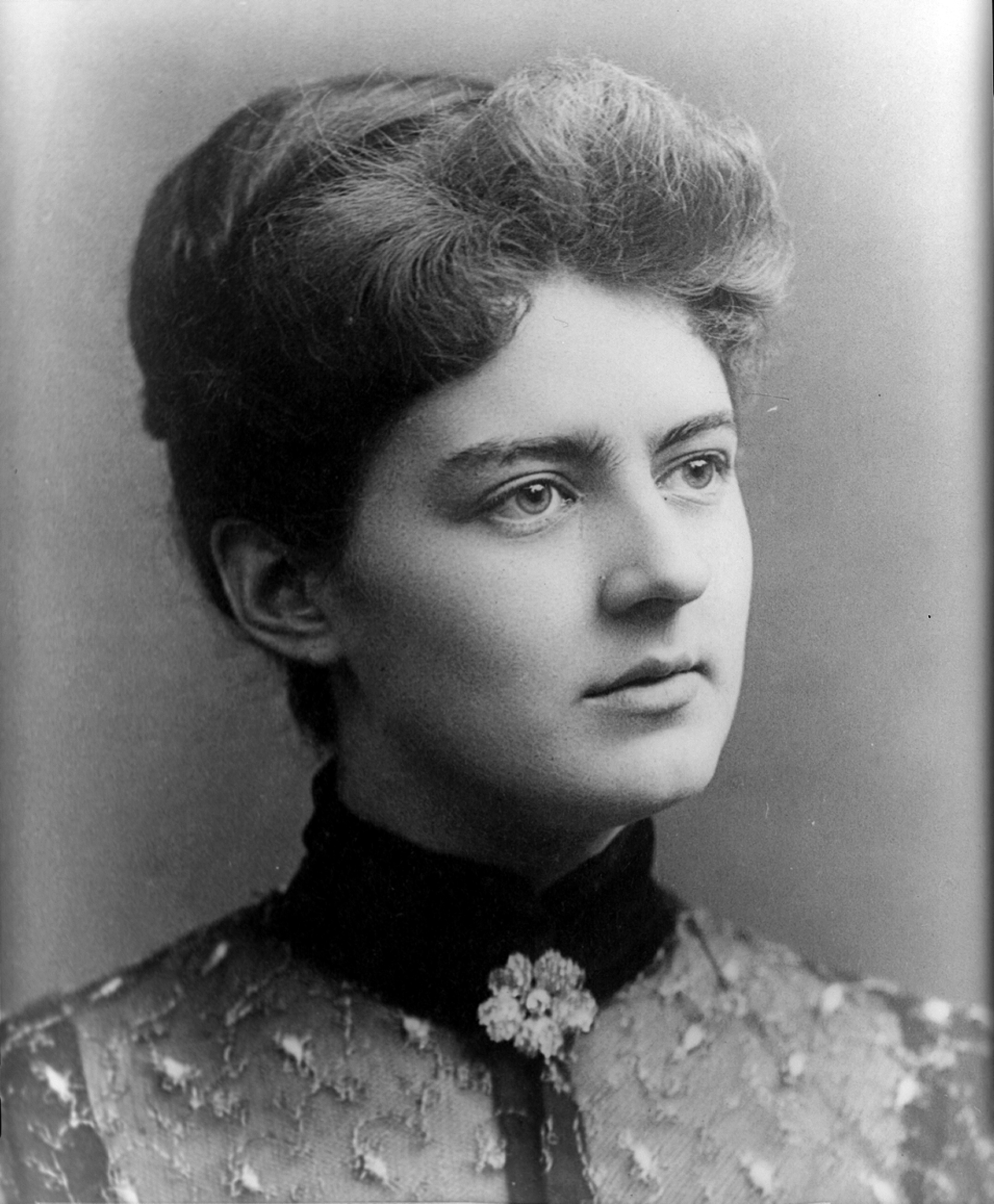
Although he was a bachelor when he entered the White House, Cleveland wouldn’t remain one for long. He had developed a fondness for the daughter of his friend Oscar Folsom. This young woman was born with the name Frank, which she changed to Frances, because life is hard for a girl named Frank. Cleveland had known this woman since birth. He bought Frank  her first crib.  When she was 21, Cleveland married Frank. And in the White House no less.

Perhaps today if there were a 49-year old bachelor president marrying a 21-year old woman that he had known since she was an infant, people might be a bit put off. But in 1886, this wasn’t considered that unusual. And the Clevelands went on to have a long and happy marriage that produced five children. Cleveland would always call his wife Frank also.

Toward the end of his first term, Cleveland pushed for a lower tariff. He felt that the system in place was hampering trade (tariffs tend to do that.) And the current tariff was making more than enough money for the country as the Treasury actually had a surplus.

Although Cleveland didn’t exactly negotiate anything remotely like today’s NAFTA, the tariff dropped enough to anger the American business establishment. And that, in turn, caused a flood of money to pour into Republican campaign coffers.

In 1888, Cleveland would win the popular vote over Republican Benjamin Harrison by 90,000 votes. But, he lost the electoral vote by a 233-168 margin. New York proved to be the key state, as Harrison won it by 15,000 votes.

The election of 1888 was also marred by some political chicanery. A California Republican wrote a letter, using the pseudonym “Murchison”, to the British minister to the U.S., Lord Lionel Sackville-West, asking him who he thought would be the best candidate for British interests in the upcoming election. Sackville-West wrote back saying that he thought Cleveland would better serve England.

When this news (The Murchison Letter) hit the papers, Cleveland, who had prided himself on his independence, looked like a tool of the British. And his Irish supporters in New York moved over to the Republican side.

Historical legend says that Frances Cleveland told the White House staff  in 1889 not to move around the furniture. Frances Cleveland said that she and her husband would be back in four years. Whether this was true is unclear, but the Clevelands did indeed return in 1893.

Harrison’s presidency was marred by a Populist uprising from rural interests, who demanded that the Federal Government start issuing more currency backed by silver* (which was being produced in mass quantities compared to gold.) This was combined with the Republicans imposing a very high tariff. So, there were fewer cheap goods coming into the country, and there was a lot of inflated currency around to spend (silver certificates). Hilarity did not ensue.

* To give you an idea of the problem, silver advocates wanted to maintain the arbitrary ratio of the price of gold being 16 times the price of silver. In 2009, the price of gold is about 65 times the price of silver. The disparity wasn’t as great in the 1890s, but it was still substantial. I’d explain this better, but I’m not paid to be an economist.

Another major labor action marred by violence, the Homestead Steel Strike of 1892, occurred a few months before the election. The Carnegie Steel Corporation hired Pinkerton detectives (Graff calls them “detectives”) as strikebreakers. Striking workers fired on the Pinkertons, killing ten of them.

The Democrats, with few other prospects on the horizon, trotted out Cleveland again in 1892. He was still popular, and he had still won the most popular votes the last time out. In the rematch, Cleveland bested Harrison by over 400,ooo votes, and won 277 electoral votes to 145 for Harrison and 22 for Populist Party candidate James Weaver. Cleveland became just the second president to win the popular vote three straight times, joining Andrew Jackson.

Cleveland’s second term began inauspiciously. The weather was bitterly cold on Inauguration Day and a small crowd came out to watch the ceremonies and parade.

Soon after taking office, a major financial crisis, the Panic of 1893, set in. All of the silver currency that was floating around was wreaking havoc with the financial system. Foreign creditors were demanding payment in gold. But, Western interests didn’t want to give up their silver. There wasn’t enough gold to pay foreign creditors.

To further complicate matters, Cleveland was diagnosed with a cancerous tumor on his soft palate. Since Cleveland’s vice president, Adlai Stevenson (grandfather of this guy), was a silver money supporter (unlike Cleveland who backed the gold standard), there were grave concerns that the financial markets would collapse further upon the news of Cleveland’s illness.

Cleveland had his surgery done in secret, on a yacht that was floating up and down the Hudson River. First, surgeons removed the tumor, and then later a dental appliance was formed so that Cleveland’s mouth looked normal. His speech would be unaffected. News of Cleveland’s illness would not be made public until 1917.

The economy did recover. However, Cleveland used a method that would not be associated with the Democratic Party of today. Cleveland asked New York bankers, principally J.P. Morgan, to supply the government with enough gold (3.5 million ounces) to build up its reserves and help ease the credit markets. Morgan likely made millions of dollars from deals he negotiated with foreign suppliers. Morgan would later be asked by Congress to reveal how much he made on the deal. Morgan wouldn’t say.

Cleveland faced two major foreign policy crises in his second term:

The first was a border dispute between Britain and Venezuela. The British argued that the border of their colony, British Guyana, stretched much further west than what Venezuela thought. This would have given Britain a considerable chunk of the Orinoco Valley.  Ships and soldiers prepared to fight before the two sides apparently realized that no one really cared about this border (and Britain was caught up in the Boer War).

The second problem was with Hawai’i. In 1893, a group of American plantation owners dethroned Queen Liliuokalani and established a provisional government, hoping for annexation by the United States. However, Cleveland refused to annex the islands. He rejected the idea that the U.S. Government would sponsor the overthrow of a legitimate government. Cleveland’s objections only served to postpone annexation until 1898, when he was out of office.

Cleveland faced another labor problem in 1894 when Pullman workers went on strike. This led to a strike by nearly all railroad workers in the country, crippling the transportation system.

The center of the crisis was in Chicago, where union leader Eugene Debs promised that the strike would prevent all trains, even those carrying the mail, from travelling through Chicago. Cleveland reacted by sending in soldiers to operate the train. His Attorney General, Richard Olney, received an injunction against the strikers. Once Debs violated the injunction, he was arrested and the strike was crushed.

The kindly mayor from Buffalo now appeared to be nothing more than a tool of Eastern capitalists. He was no longer the honest reformer of government.

In 1896, Cleveland toyed with the idea of another term. This time, the Democrats tried to tap into the Populist movement, nominating William Jennings Bryan, who made “free silver” (aka inflated currency), his platform. Cleveland watched his party go down to defeat, although he wasn’t broken up by it, as he thought Bryan would have ruined the country.

Cleveland retired to Princeton, New Jersey and did typical ex-president jobs, such as writing his memoirs, giving speeches, and picking up a lot of cash. He passed away in 1908.

Grover Cleveland’s time is a fascinating era in American history, with many different sociological and political changes. But from reading Graff’s book, it doesn’t seem that Grover Cleveland was nearly as interesting as the time he lived in. He was a man who was along for the ride. Graff describes Cleveland as man without charisma and without any knowledge of handling public relations (Cleveland made White House reporters wait outside for stories.). Grover Cleveland was not a person who defined his era. He just tried his best to get through it.

Other stuff: The Grover Cleveland Birthplace is located in Caldwell, Jersey. It is operated by the New Jersey Department of Environmental Protection.

Cleveland’s unique status as the 22nd and 24th Presidents wasn’t decided officially until the 1950s. According to a New York Times article from January 10, 1950, the Congressional Directory identified Cleveland as both the 22nd and 24th President for the first time, changing Harry Truman from being the 32nd President to the 33rd. Truman believed he was the 32nd President, however. But, when Dwight Eisenhower was inaugurated in 1953, he identified himself as the 34th President. The 1950 article cites an opinion by an anonymous “State Department legal adviser” in 1945 that said that Cleveland had to be the 24th President as well as the 22nd because, logically, you couldn’t have the 22nd President serving in office after the 23rd.

Cleveland had a different running mate in each of his three presidential campaigns. Thomas Hendricks was his first Vice President (he also ran as Samuel Tilden’s running mate in 1876), but he passed away in 1885. Thurman was Cleveland’s running mate in 1888. Stevenson was his running mate in 1892. Stevenson would run for Vice President again in 1900 alongside Bryan.

Add to FacebookAdd to DiggAdd to Del.icio.usAdd to StumbleuponAdd to RedditAdd to BlinklistAdd to TwitterAdd to TechnoratiAdd to FurlAdd to Newsvine

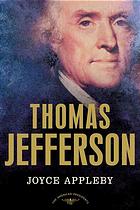
Thomas Jefferson by Joyce Appleby

President #3, C-SPAN Historians ranking #7

Embargo! O grab me!

jeffersonIn this biography of the Third President, UCLA professor Joyce Appleby begins the seventh chapter of the book with this sentence: “Americans’ most pressing history assignment is coming to terms with Thomas Jefferson.”
And speaking as someone who was taught by Professor Appleby at UCLA, this woman can give out tough assignments. (Do you want to read a good paper on the importance of mob action prior to the American Revolution? If so, don’t read the one I wrote for her class.)

Thomas Jefferson is someone that nearly everyone would like to be. For starters, he wrote the Declaration of Independence. He also designed his own home, Monticello, one of the nation’s architectural jewels (and for many years on the back of the nickel.) He was an inventor. He was an author. He was an intellectual. He was a civil libertarian. And he was tall (reportedly 6’3″, making him something of a Yao Ming of that era.)

But, there is also the Thomas Jefferson who owned slaves. The Thomas Jefferson who quite likely fathered a child or children from one of his slaves, and still kept them as slaves. There is the Thomas Jefferson who believed in liberty for all, as long as you were a white male. There is the Thomas Jefferson who believed in the sanctity of the Constitution, unless it got in the way of something he really wanted to do. There is the Thomas Jefferson who was not afraid to get revenge on his political enemies.

Thomas Jefferson was a definitely a man of his time. But is he a man for our time? Appleby tries to make the case for Jefferson. Her task is difficult because her book concentrates almost exclusively on the eight years Jefferson served as President, which were not his best years. However, this is a presidential biography series, so it’s those eight years we have to look at.

Jefferson had been one of the major political figures in the U.S. since 1776 because of his authorship of the Declaration of Independence. Later, Jefferson served as governor of Virginia, although he was accused of cowardice after fleeing into the Virginia hills in the face of oncoming British troops.

In 1782, Jefferson’s wife, Martha, passed away, likely of complications from the numerous pregnancies (seven) she went through in their 10 years of marriage. Martha gave her husband two daughters before she passed away. Thomas Jefferson would destroy all his correspondence with his wife, which is about all the writings of his that he didn’t save. Jefferson’s complete papers still have not been completely published and may not be for another 40-50 years.

After the Revolutionary War ended, Jefferson served for a time in the Continental Congress, where he helped to draft the Northwest Ordinance, one of the few accomplishments of the pre-Constitution version of Congress. In 1784, Jefferson was sent to Paris as a U.S. representative, serving alongside John Adams for a period.

While Jefferson was in Europe, the United States adopted the Constitution. While Jefferson was returning home in 1789, George Washington appointed him to be the first Secretary of State.

Soon after joining the new government, Jefferson realized that Washington’s ear and mind belonged to Alexander Hamilton, a man whom Jefferson disagreed with. A government that was not supposed to have parties or factions quickly devolved into one with two of them: Hamilton’s Federalists and Jefferson’s Republicans. The battle between the two men would be over the nature of American politics. Would it be a government run by an aristocracy or a government dominated by “the common man.”

The party structure first showed up in the election of 1796, which John Adams won by just three electoral votes over Jefferson. Under the terms of the Constitution at the time, Jefferson became Vice President as the second place finisher.

The political climate grew even more rancorous during the Adams administration. Tensions from the French Revolution spilled over to the United States. Jefferson and his supporters backed France, while Adams and the Federalists feared the radical ideas of the French government.

By 1800, the political tide of the country had shifted just enough to give Jefferson the presidency. Jefferson and Aaron Burr tied for the most electoral votes with 73 and Adams finished in third place with 68.

With a tie in the Electoral College, the House of Representatives had to choose between Jefferson and Burr. However, the House was still controlled by Federalists. And they were in no hurry to choose a President. It took five days and 35 ballots before the deadlock was broken. Hamilton ended up being the kingmaker. While Hamilton despised Jefferson, he despised Burr twice as much.

Jefferson was upset that Burr, whom he had considered an ally, did not concede the Presidency to him. For the rest of his political career, Burr was shut out by Jefferson. Burr would eventually end up killing Hamilton in a duel. Although, he avoided prosecution for that crime. Also, Burr would be tried for treason in 1807 for trying to foment a separatist rebellion in the West. However, Burr was acquitted.

In his Inaugural Address in 1801, Jefferson struck a conciliatory tone by stating, “We are all Republicans. We are all Federalists.” The spirit of bipartisan cooperation lasted about as long as the speech. As soon as he got to work, Jefferson appointed a new Cabinet, and also began to replace Federalists who held various government jobs through the country.

Jefferson also had one Federalist judge impeached, and then took aim on a Supreme Court Justice, Samuel Chase, for another impeachment. While the first judge was often drunk and possibly insane, Chase had committed no crime bigger than being obnoxious.

Chase’s impeachment trial ended with the Republicans failing to get the necessary 2/3 majority to remove Chase from the bench. The Supreme Court, under the leadership of John Marshall, would remain as the last Federalist bastion in American government.

Appleby writes that Jefferson had a hard time finding people to serve in government. Most people with an inclination toward serving in government at the time were Federalists. Jefferson’s supporters didn’t want to leave their current ways of life to work in Washington. Jefferson’s Treasury Secretary, Albert Gallatin, suggested that Jefferson appoint women to some of the offices. Jefferson nixed that idea, as his world view didn’t include women working in government. (Or voting. Or doing much of anything other than having children. The only state where women could vote in Jefferson’s time was New Jersey, and that was only for single, white women who owned property. That law was repealed in 1807.)

Not long after taking office, Jefferson lucked into his greatest accomplishment as President: the Louisiana Purchase. Jefferson had found out that Napoleon had reacquired the Louisiana Territory for France from Spain in a secret treaty. He dispatched ministers to France to negotiate the purchase of New Orleans. Napoleon counteroffered with the whole territory, which proved to be difficult to govern. Jefferson, who at first was worried that there was no provision in the Constitution for a President to acquire new territory, decided that he could live with the idea of doubling the size of the country. Ultimately, Jefferson decided the Louisiana Purchase was a “treaty revision.”

Jefferson was incredibly popular during his first term. He was sent a 1,235 pound wheel of cheese in his honor. At the time, it was the biggest wheel of cheese ever made. (Subsequent wheels of cheese have been bigger.)

The clergy feared Jefferson because they assumed he would completely remove religion from public life in the United States. Jefferson was asked to speak to a group of Baptists in Connecticut in 1802 or, alternatively, to declare a national day of fasting. Jefferson’s reply was famous (emphasis mine and if you count the ampersands as words, the first sentence has 83 words in it):

Believing with you that religion is a matter which lies solely between Man & his God, that he owes account to none other for his faith or his worship, that the legitimate powers of government reach actions only, & not opinions, I contemplate with sovereign reverence that act of the whole American people which declared that their legislature should “make no law respecting an establishment of religion, or prohibiting the free exercise thereof,” thus building a wall of separation between Church & State. Adhering to this expression of the supreme will of the nation in behalf of the rights of conscience, I shall see with sincere satisfaction the progress of those sentiments which tend to restore to man all his natural rights, convinced he has no natural right in opposition to his social duties.

It seemed that for Thomas Jefferson, his political philosophy had caught on. His approval ratings, if such a thing had existed in 1804 when he was up for reelection, were through the roof. But, the good times would not last.

In 1802, Scottish immigrant James Callender, who had run afoul of the government under the Alien and Sedition Acts of the Adams Administration, printed a story that Jefferson had fathered a child with one of his slaves. While the story may have seemed to have been nothing more than a scurrilous acussation, it was also not entirely dismissed. And Jefferson did not deny the allegation. Nor did he confirm it.

Callender was not the first person to notice that Jefferson and one of his slaves, Sally Hemings, seemed to have close relationship. Abigail Adams had noted a closeness between Hemings and Jefferson back in 1787 in Paris.

Appleby gives a balanced presentation of the evidence that would link Hemings to Jefferson. First, Jefferson did not list the names of the fathers of any of Hemings’ children in his ledger, which was unusual for a fastidious recordkeeper like Jefferson. Second, DNA evidence from 1998 confirmed that there was some male from the Jefferson family who fathered a child with Hemings. However, because Jefferson had no sons (only two daughters, one of whom passed away in 1804), there is not enough evidence to positively assert whose DNA it is in the Hemings gene pool.

There is no “smoking gun” that conclusively links Jefferson and Hemings, but Appleby leans to the side of Jefferson being the father of at least some of Hemings’ children. Appleby notes that Jefferson petitioned the Virginia Legislature to allow the Hemings family (who were received their manumission after Jefferson’s death) to remain in the state. Virginia law at the time, which Jefferson supported, did not allow free blacks to live in the state for more than one year.

The Federalists would try to use the Hemings story as a campaign issue in 1804, but it didn’t have much effect. The Federalists had few good candidates available, especially since Burr had murdered the party’s leader, Hamilton. Jefferson won all but two states, besting Charles Pinckney by a 162-14 margin in the Electoral College. The Vice President was elected separately and George  Clinton took over that task.

Jefferson’s second term was marred by international problems. In particular, the Napoleonic Wars slopped over on to the shores of the U.S. British ships preyed on American merchant ships looking for deserters from the Royal Navy. France wouldn’t allow American ships to trade with Britain. Britain wouldn’t let American ships trade with France.

What was Jefferson’s solution to this? An embargo. Jefferson, hampered by a greatly reduced navy and a reluctance to take on either Britain or France, ordered a complete cessation of overseas trade. Jefferson hoped that Britain and France would feel the pain of not receiving American goods.

However, the result was that the British and French continued what they were doing. Furthermore, American port cities lost millions of dollars in revenues. Enforcement of the ban was a nightmare and was about as successful as Prohibition would be over 100 years later.

Jefferson could have run for a third term in 1808, but opted not to, following the example set by Washington. He seemed quite burnt out by the job. After James Madison was elected in December of 1808, Jefferson did almost no government work. He spent the time boxing up materials to send home to Monticello. The Federal Government was essentially paralyzed.

In his retirement, Jefferson spent his time with various tasks. He founded the University of Virginia, primarily to establish a college for Virginians that would not be dominated by the Presbyterian Church. He also spent much of his time writing letters to his old adversary, Adams. And, he spent time trying to avoid creditors, as he lost much of his money in the Panic of 1819. Jefferson, who was a profligate spender, understood government finance much better than his own finances.

One major problem remains though in evaluating Jefferson: slavery. How could a man who wrote such eloquent words about “life, liberty, and the pursuit of happiness” spend his life owning slaves. And not just owning slaves, but most likely using them for his own sexual gratification. And buying and selling them like they were livestock.

Jefferson had his view of the world. And it was a view born out of growing up in comfortable surroundings in Piedmont Virginia, where his wealth derived from slaves. Jefferson could not escape his heritage. His racial attitudes were instilled in him from birth.

But why didn’t he change as he got older? American history is filled with people who changed their attitudes about slavery or racial equality through time. But, Jefferson is not one of those men. It is an unescapable fact.

Also, did Jefferson, a firm believer in states rights, lay the foundation for the secessionist movement in the South? That too seems to be true.

Is Jefferson still an admirable figure? In Appleby’s view, the answer is yes. Jefferson was responsible for carrying out the first peaceful change in power in world history in 1801, when his Republicans took over control of the government. Jefferson and his followers would hold on to the Presidency for all but eight years from 1801 through 1861.

Jefferson believed in a government where the common people ruled, not the aristocracy. However, Jefferson’s common people were just white males. He hadn’t been able to make the mental leap to include all parts of society. Was it that Jefferson was not ready, or was America not ready? There lies the dilemma in evaluating the life of Thomas Jefferson.

Appleby concludes that Jefferson’s greatest contribution to American history is his belief that an aristocracy was not preordained. Jefferson believed that the people could make themselves better.

If you look at Jefferson’s presidency from what the country was like when he assumed office in 1801, the changes were dramatic. But over 200 years have passed, and the country has changed even more dramatically, and, perhaps, Thomas Jefferson is not all what he thought he may have been. But for his time, he was a giant, both physically and metaphorically.

Other stuff: Thomas Jefferson’s home, Monticello, is run by the Thomas Jefferson Foundation and is located in Charlottesville, Virginia. The National Park Service operates two facilities dedicated to Jefferson. One is the Thomas Jefferson National Memorial in Washington. The other is the Jefferson National Expansion Memorial, which is underneath the Gateway Arch in St. Louis. Jefferson is buried at Monticello, with a small obelisk on his grave.

Jefferson’s portrait has been on the rarely-used $2 bill since 1929. Jefferson has appeared on the nickel since 1938 and, in 2006, his portrait was changed so he faced forward instead of in profile.

For those not scoring at home, this is biography #13.

Andrew Jackson by Sean Wilentz

President #7, C-SPAN Historians Ranking #13

Coming soon to an ATM near you!

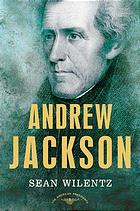
andrewjacksonJust who was Andrew Jackson? Was he the first president to create a political following among the masses and ride that to power? Was he a shameless opportunist who pandered to the lowest common denominator? Was he a war hero? Was he a man who set into place a policy that turned out to be genocidal? Was he devoutly loyal to the United States and its Constitution? Did he interpret the Constitution as he saw fit?
According to Sean Wilentz, the answer to all these questions is “yes.” However, in Wilentz’s view, there was an explanation for all of Jackson’s actions, and, ultimately, they served to benefit the United States.

Andrew Jackson’s stock among historians has risen and fallen throughout the years like the Dow Jones 30 on a day when Timothy Geithner coughs. Wilentz traces these changes in the introduction to his book and then sets out, as best you can in 170 pages, to explain the complicated life of Andrew Jackson.

The future President was born near the South Carolina/North Carolina border in 1767 and was caught up in the tail end of the Revolutionary War, when he and his brothers were captured by British soldiers. The young Jackson refused to shine a British officer’s boots, claiming he was a prisoner of war, and for his insolence, Jackson received a gash in his head with a sword that never left him. That wound would be a constant reminder of Jackson’s distaste for Britain, aristocracy, and privilege.

Jackson’s father died before he was born, and his mother died when he was still in his teens.  So, Andrew Jackson was very much a self-made man. In 1791, he married a woman named Rachel Donelson, who provided both love and some financial security for him. However, Rachel was not completely divorced from her husband. After a period, the two would marry again to make it official. This would end up being a significant event in American politics later. Jackson would also fight several duels to uphold his wife’s honor, and killed one person during one.

By 1796, Jackson, who had moved west to Tennessee, used his political connections to become that state’s first member of the House of Representatives, and, a few months later, moved on to the Senate. Jackson resigned from the Senate in 1798 to serve on the Tennessee Supreme Court, and later took up farming at his plantation, the Hermitage.

However, Jackson was not bound for a quiet life. The War of 1812 gave Jackson the chance to serve in the military, and get some measure of revenge against the British who treated him so shamelessly during the Revolution.

Jackson’s first military encounters, however, were against the Creek Indians in Alabama. Responding to a massacre by a group of Creeks called the Red Sticks at Fort Mims in 1813, Jackson led his troops to extract vengeance. In two engagements, Jackson’s troops killed nearly every Red Stick Creek male and took all the women and children as prisoners. Additionally, Jackson was able to get a treaty ceding Creek land in Georgia and Alabama to the U.S. Jackson was prepared to do whatever it took to keep whites and Indians separate. He firmly believed that the two groups could not coexist peacefully.

After his success in Alabama (at least in the eyes of President Madison), Jackson moved on to New Orleans to defend that crucial port city against the British. On January 8, 1815, Jackson famously routed the British in what would be the last battle of the War of 1812, which was technically already over since a peace treaty had been signed about 10 days earlier. However, Jackson failed to receive a Tweet from @ghentytreaty in time that read “USA and UK say war over! Woo hoo! Henry Clay is totally wasted!”

Wilentz points out that Jackson’s victory at New Orleans was just as much the product of British bungling (there were numerous logisticial problems), but history judged that from then on, Jackson would be “The Hero of New Orleans.” And Jackson didn’t take kindly to anyone saying otherwise.

With the War of 1812 over, Jackson kept up his military adventures, moving on to Florida, which was still part of Spain. Jackson ostensibly had moved his troops to Georgia to deal with the Seminoles, but that soon morphed into a mission to take control of Florida. And with a few military victories and the executions of two British subjects, the United States was able to parlay this into buying Florida from Spain. Jackson became its first territorial governor.

In 1822, Jackson was nominated for President by the Tennessee legislature, which also elected him to the Senate. But in the election of 1824, Jackson, despite winning the most popular votes AND electoral votes, lost the election. With four candidates running, no one had a majority, and the House of Representatives chose John Quincy Adams as President. Jackson made Adams his enemy. And if you were an enemy of Andrew Jackson, that was a lifetime job. (Jackson would continually advocate for the direct election of the President. That has not worked so far.)

Adams turned out to be ill-suited for the presidency, and Jackson exacted his revenge with an easy win in 1828. However, the campaign was ugly, with numerous slurs brought up about Rachel Jackson, and her questionable first marriage. Rachel Jackson died of a heart attack in December of 1828. Andrew Jackson never forgave anyone for the slights on her reputation.

Crises hit Jackson almost immediately after his inauguration. Jackson, like most Presidents, removed many Adams supporters from their officers and replaced them with people loyal to him. Jackson referred to this as “rotation in office,” but it soon was dubbed “the spoils system.” While Jackson was not the first, or last, President to use the power of patronage, he became the most closely identified with it.

Jackson also faced a crisis within his own Cabinet. Secretary of War John Eaton, one of his closest friends, had married a woman named Margaret Eaton, who was not from upper crust society in Washington. Her first husband had reportedly killed himself while at sea. She was snubbed by many of the wives of the other Cabinet members along with the wife of Jackson’s Vice President, John Calhoun. Jackson backed Eaton, although by 1831, five members of Jackson’s cabinet had resigned in the fallout.

After this, three major domestic events defined Jackson’s presidency.

First, Jackson, in agreement with Georgia’s government, ordered the removal of Cherokees from that state to western territories, such as Arkansas. The removal was not voluntary, and the Seminoles would be subject to attacks by settlers along the way. Approximately 8,000 Cherokees died on the journey west (called “The Trail of Tears”). However, Jackson stood by his decision. He believed that it was better for all parties if Native Americans lived in Federal territories where they would receive more protection than they did from local authorities. This turned out to be one of the biggest mistakes of the Jackson administration.

Jackson’s second major crisis was the Rechartering of the Second Bank of the United States. Jackson greatly distrusted banks and paper money. Jackson especially disliked the way the Bank of the United States was run. He felt that it’s director, Nicholas Biddle, was creating an aristocracy who made money from the hard work of people who needed to use the bank to buy land or get credit.

In 1831, Henry Clay pushed forth a bill that would extend the bank’s charter for another 20 years. This was done four years before the charter expired for two reasons: 1) to remove the issue from the upcoming election, and 2) to make the bank an issue in the upcoming election. Clay assumed that the Bank, which was well run, would get its recharter.

However, Jackson shocked the political establishment by vetoing the bill rechartering the bank. His veto message used populist themes to explain why he took his action. Jackson felt that the bank was unconstitutional (although the Supreme Court had already said otherwise), and in his duty as President, he couldn’t allow it to continue. He did not want the Federal Government to sponsor an institution that benefited a group of wealthy Easterners.

The third crisis Jackson faced was the Nullification Crisis. The state of South Carolina believed that tariffs were too high (one bill was named “The Tariff of Abominations”), preventing residents from buying cheap goods from Europe, instead having to rely on more expensive goods made in other parts of the country. Also, South Carolina felt that too much of the revenue from tariffs was being used to build canals and roads in the North and East.

South Carolina believed that that the Constitution was a contract among the states. And if a state believed that a law was too onerous to uphold, the state had the right to declare it null and void within its borders. Or, if it was really offended, the state could secede all together.

Jackson was not going to allow one state to opt out of the country that he believed in so much. He used a two pronged approach to the crisis. In a message to Congress, Jackson offered to work with South Carolina to adjust the tariffs to more appropriate levels. And in another bill, Jackson authorized the use of force to collect tariffs. Jackson began sending ships out to sea to meet ships and collect tariffs there before the ships would dock in Charleston.

South Carolina eventually backed down as a compromise tariff was reached. But the crisis would be revisited again,  with more deadly implications over the issue of slavery in 1860.

Jackson campaigned for reelection in 1832 using the Bank Veto as something of a campaign platform. His opponent, Clay, tried to use the Veto against Jackson. But the people loved Jackson, and he was easily reelected. Jackson also had a new Vice President in Martin Van Buren.

Jackson’s second term saw him put the finishing touches on the Bank of the United States. Not content to wait for the charter to expire, Jackson ordered all Government deposits to be withdrawn from the Bank of the United States and redistributed to a series of state chartered banks. Biddle reacted to this by greatly curtailing credit, creating a brief financial panic. However, Jackson won the battle of popular opinion over Biddle. Credit markets loosened up, and the economy grew.

Wilentz spends a chapter examining Jackson’s views on slavery. And Jackson doesn’t come out well here. Jackson was a slave owner and profited greatly from having slaves. But during Jackson’s Presidency, the nascent Abolitionist movement was starting to grow from fringe level into a major political force. Abolitionists attempted to send through the mail to nearly everyone in South Carolina, political materials advocating their side. Jackson had to figure out which was more important: maintaing the Federal Government’s duty to deliver the mail, or to keep South Carolina happy by not delivering “objectionable materials.” Jackson ultimately sided with South Carolina on this point, allowing local postal officials to skirt any obligation to deliver all the mail.

At the end of Jackson’s administration, Texas split away from Mexico. Texas had been settled by many slaveholding Americans. Jackson saw Texas as a natural part of the United States, believing that John Quincy Adams had negotiated it away in 1819. However, Jackson was not able to negotiate any method to annex Texas. That would wait until 1845.

What stands out the most for Wilentz in his view of Jackson is that Jackson was a champion of democracy. He firmly believed in democratic ideals. Wilentz acknowledges that, according to today’s standards, Jackson can look like a monster. However, Jackson was a product of his time. And in many ways, Jackson was ahead of his time in his reliance on the people to make the right choices in a democracy. Jackson believed that the President had a job to lead the country. And leadership was not something he was afraid of.

Does America need another Andrew Jackson? Probably not. Did America need Andrew Jackson in its past? It’s hard to envision the country otherwise.

Other stuff: Jackson’s home, the Hermitage, is run by a private foundation. Jackson and his wife Rachel are buried there. It is about 12 miles east of Downtown Nashville. It is not this Hermitage.

Jackson’s portrait has appeared on the $20 bill since 1928 (the year of a major redesign of American currency). He replaced Grover Cleveland. Of course, in 1928, not many people had $20 bills.

Andrew Jackson was the first President to be subject to an assassination attempt. A man named Richard Lawrence tried to shoot Jackson with a pistol at close range in January of 1835. Both of Lawrence’s pistols failed to fire and Jackson subdued Lawrence by hitting him with his walking stick. Lawrence was sent to an asylum for the mentally ill.

Warren G. Harding by John W. Dean

President #29, C-SPAN Historians Ranking #38

Getting back to normalcy?

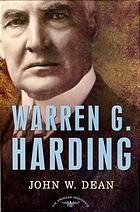
hardingAmerica’s 29th President, Warren Gamaliel Harding, has not fared well in the eyes of historians. He is viewed as a weak leader who appointed corrupt friends to high government positions. He was accused of extramarital affairs and fathering illegitimate children. People have speculated that he was murdered by his wife. And not many people even know or cared about what happened during his Administration.

John W. Dean (yes, that John W. Dean, from Watergate times) took on the task of trying to find out who the real Warren Harding was. And why Dean? Is it because he is an expert on presidential scandals? No, it’s actually because Dean grew up in Marion, Ohio, the same town where Harding grew up and lived most of his life. Dean has spent a good amount of his life studying the life of Harding.

Dean has been rather harsh toward other Presidents in books he’s written (namely Richard Nixon and George W. Bush), but in this biography, Dean is almost sympathetic to one of the lesser lights to inhabit the White House. Dean tries to get you to believe that Harding was a decent man, who was in over his head, yet still tried his best.

However, it is hard to believe that someone like Warren Harding ever made it to the White House. Harding did little in his political life except be nice to the right people and “look” presidential. He accomplished little on the domestic front, and his principal foreign policy initiative, the Washington Naval Disarmament Conference, was soon forgotten.

When Harding was 18, he was able to get the financing (all $300 of it) that let him purchase the Marion Star newspaper in his Ohio hometown. Harding loved running a newspaper and developed an interest in politics because of it.

One of the local figures in Marion that Harding took on was the richest man in town, Amos Kling. Eventually, Kling’s daughter, Florence, married Harding, despite the protestations of her father. Florence Harding had borne a child out of wedlock before marrying Warren Harding, although that son ended up being raised by her father, who described his grandson as his “son.” Kling disapproved of Harding and started a rumor campaign in Marion that described Harding as being part African-American. (Kling actually used a far less polite term.) Harding would have to confront stories about his ancestry throughout his life.

Florence, often described as the woman who pushed Warren into politics, actually didn’t do so, according to Dean. Harding decided to run for the state legislature on his own. While serving in Columbus, Harding developed a reputation as being an all around nice guy, who gave good speeches. This eventually elevated Harding into the lieutenant governor’s job in Ohio, but when he tried for the governor’s job in 1910, he was defeated.

Harding started his political comeback when he put William Howard Taft’s name into nomination at the Republican Convention in 1912. In 1914, when Ohio held its first direct senatorial election, Harding won and he and Florence headed off to Washington.

While in the Senate, Harding generally tried to spend most of his time developing connections that could help his standing. He befriended a senator from New Mexico named Albert Fall. This would end up not being a good career move in the long run for Harding. But, at least Fall had a nice mustache.

After eight years of Woodrow Wilson and the Democrats in the White House, the American voters were ready to vote Republican. Wilson’s popularity had plummeted after World War I with the rejection of the Treaty of Versailles and the League of Nations. Wilson suffered a debilitating stroke and for the final 18 months of his term, he was rarely seen in public, and the government was run mostly by Wilson’s wife and some key aides.

Nevertheless, Wilson thought he could run for a third term. He was politely told by people that he shouldn’t do so. (Primarily because Wilson was almost dead and could barely talk or see.) Theodore Roosevelt was talked about as a candidate to run for the White House in 1920, but those plans were interrupted when Roosevelt died in 1919.

So, the two major political figures for the 1920 Presidential campaign (Wilson and Roosevelt) were either dead or incapacitated. Into the void, entered Warren Harding, the nice guy from Ohio.

Harding started his campaign in the winter of 1919, but his strategy, formed by Ohio’s Republican boss, Harry Daugherty, was to not try to win the nomination outright, but rather to just hang around during the primaries (which were still in their infancy) and then hope for a deadlocked convention. Harding’s plan was to try to offend as few people as possible.

And Harding’s plan worked. Leonard Wood, who had served with Roosevelt in Cuba in the Spanish-American War, was the leader among a crowded field heading into the Republican Convention. But Wood had irritated too many people during his campaign. No majority was reached by the Friday of the convention. Most observers felt that the delegates wanted to nominate someone on Saturday. Why? So they wouldn’t have to pay for an extra day of hotels. And on that Saturday, Harding ended up as the choice of the Convention on the tenth ballot.

Harding ran against another Ohioan, Governor James Cox (who had a young assistant Secretary of the Navy named Franklin Delano Roosevelt as his running mate, a counterpoint to dour Massachusetts governor Calvin Coolidge, Harding’s running mate). It would be the first election in which women could vote. It was a landslide. Harding won over 60% of the vote and racked up 404 electoral votes. Harding became the first sitting member of the United States Senate to be elected President.

Almost from the outset, Harding ran into problems in office. His Cabinet had some good people in it, such as Secretary of State Charles Evans Hughes, Secretary of Labor James Davis, Secretary of Commerce Herbert Hoover, and Secretary of the Treasury Andrew Mellon.  However, Harding also picked friends like Daugherty to be Attorney General and Fall to be Secretary of the Interior. Florence’s personal physician, Charles Forbes, would be in charge of veterans medical affairs.

Harding, like seemingly every President, felt that there was too much government spending, and he needed to rein it in. And, like most Presidents, he wasn’t all that successful at doing that. Harding did establish the Bureau of the Budget (now the Office of Management and Budget) which may be the one legacy of Harding’s administration that lives on today that people have heard of.

Dean tries to detail other legislative initiatives that Harding tried, but none of them stand out. Harding vetoed a plan to award World War I vets a bonus because he didn’t like the way it was funded (primarily, because it wasn’t funded at all). There were some attempts at raising tariffs, which were a pet cause of Republicans of the time. Harding also tried to limit immigration, but that didn’t work as desired because Harding was hesitant to order wide-scale deportations. Dean paints a picture of Harding as a diligent worker, but someone who just didn’t have the temperament to be an executive. He was someone who was your pal, not your boss.

Harding had one minor success in foreign affairs when he was able to get the major powers (U.S, Britain, and Japan) to come to Washington (with Hughes mediating) and negotiate a treaty that was supposed to slow down (or stop all together) the buildup in naval armaments. This was a noble idea. But, World War II spoke to the lasting effect of that treaty.

Scandals started to touch the White House early in 1923. Forbes was discovered to have sold large amounts of surplus government medical supplies to private companies seemingly below cost. But, Forbes actually was taking kickbacks on the deals and enriching himself. Forbes was dismissed from his post.

In the summer of 1923, the Hardings embarked on a trip for the West Coast and Alaska, in order to relax and also to do some campaigning for his own agenda. Harding became the first President to visit Alaska and the first to visit Canada. But while golfing in Portland, Harding took ill with severe chest pains. Harding, who came into office with a bad heart and likely had suffered a mild undiagnosed heart attack in the winter, was suffering from congestive heart failure and pneumonia. In an era before antibiotics and detailed knowledge of cardiological problems, there was little that doctors could do for Harding. He passed away in San Francisco on August 2, 1923 at age 57.

Not long after Harding’s passing, more scandals came to the fore. The most famous was the Teapot Dome scandal. Interior Secretary Fall had been leasing what were supposed to be protected oil reserves to private interests, headed by California oilmen Harry Sinclair and Edward Doheny. The fact that Fall leased them was not the problem. The problem was that Sinclair and Doheny had furnished Fall with bribes in order to get the leases. Eventually, Fall would go to prison for receiving the bribes, although Sinclair and Doheny were acquitted of giving a bribe. Attorney General Daugherty was caught up in this scandal, as well as several others. (It would take a lot of space to list them.) Daugherty resigned his position, but was never convicted of any crime.

In addition to the real scandals, a cottage industry about fabricating Presidential scandals sprung up. A woman named Nan Britton wrote a book called The President’s Daughter, where she claimed to have had an affair with Harding in the White House and having a child with him. H.L. Mencken gave the book a favorable review and sales skyrocketed. Most historians believe that no such affair with Britton occurred.  Harding did have at least one extramarital affair before he became President, according to Dean.

A man named Gaston Means got author May Dixon Thacker to write a book about his “reminiscences” of Harding. It was titled The Strange Death of President Harding. It was supposed to revelatory and accused Florence Harding of poisoning her husband. The book is considered to be almost, but not quite, entirely untrue. Nevertheless, Florence Harding is still thought by some to have murdered her husband.

Warren Harding didn’t leave much of a legacy. His election showed the danger of electing a President who just looked the part. He came from an era where speeches with passages like this:

America’s present need is not heroics, but healing; not nostrums, but normalcy; not revolution, but restoration; not agitation, but adjustment; not surgery, but serenity; not the dramatic, but the dispassionate; not experiment, but equipoise; not submergence in internationality, but sustainment in triumphant nationality.

were considered brilliant oratory.

Dean states that his main reason for writing about Harding was to set the record straight on him. And to that extent, he succeeds. Warren Harding was not a great president, but he wasn’t a horrible person. He just was unremarkable, and overly loyal to his friends. He was a man who stumbled into the highest office in the land by pissing off fewer people than his opponents. It seems that Americans haven’t used that technique for electing a President subsequently.

Harding’s successor, the laconic and phlegmatic Calvin Coolidge, would actually be the President who become far more famous and beloved by the American people.

Other stuff: Warren Harding’s home isn’t part of the National Park Service. Instead, it is operated by the Ohio Historical Society and it is in Marion.

Author Malcolm Gladwell in his book Blink, described the “Warren Harding Effect”, where people judge a person instantly, but use the wrong clues.

Harding appointed former President Taft to be Chief Justice. Harding’s Secretary of Agriculture, Henry C. Wallace, was the father of Henry A. Wallace, who would hold the same position under Franklin Roosevelt, and then later serve as Vice President for one term.

Jimmy Carter: American Moralist by Kenneth E. Morris

President #39, C-SPAN historians’ ranking #25

Would you like some malaise on your sandwich?

carterJimmy Carter was, and in many ways still is, a confounding figure to understand. Just how did someone rise from the relatively obscure position of Governor of Georgia to the Presidency? And just what were Carter’s goals and aims in the White House? Was he just a man with a nervous grin who seemed paralyzed by events, especially the hostage crisis in Iran, or was he a shrewd politician? And why did he seem to blame America’s problems on the American people?

Kenneth Morris, the author of this book, is not a historian, but rather a sociologist. And as the subtitle of the book would lead you to believe, it is an examination about how and why Jimmy Carter tried to turn the office of the Presidency into a place where he could exert moral leadership of the country. Morris describes how Carter changed over time from a child of a comfortable upbringing in rural Georgia to a midshipman at the U.S. Naval Academy and then on to Georgia politics, and ultimately, the White House, using what he considered to be his two best skills: morality and competence.

The problem for Carter was that the American people often look for more than competence in their Presidents. They want to be inspired. They want to be led. They want to feel as if they are doing the right thing. And, in the end, Carter wasn’t able to convince the American people that they needed his style of leadership, which some thought sounded more like criticism than anything else.

Morris reveals quite a bit about Carter from an examination of his upbringing in Plains, Georgia. And, first of all, people should know that Carter actually grew up in a smaller town near Plains, called Archery. His father, James Earl Carter (called Earl by everyone), was a prosperous farmer and businessman and also served in the Georgia Legislature.

Earl was a strong supporter of Herman Talmadge, a Georgia governor and ardent segregationist. Earl was, like many Southerners of his era, also a supporter of segregation, although he was personally kind to African-Americans. Earl Carter didn’t mind the African-Americans who worked for him and was a good landlord to those who rented from him. But, Earl Carter was not of the mind that African-Americans should share any sort of economic or political equality with whites. His son did not share these views, however.

His wife, Lillian, primarily married Earl for his money, although she did bear him four children. But, she traveled a lot (she would later join the Peace Corps as a nurse) and was not a major figure in the life of her eldest, James Earl Carter Jr., aka Jimmy or Jim, or her other children. Jimmy was, like many people, a son who didn’t like his father, but wanted nothing more than his father’s approval. Morris writes that Earl’s favorite was his daughter Ruth, whom Morris hints that Earl may have been a bit too fond of.

Jimmy Carter left Plains in 1943 to go to the U.S. Naval Academy and get away from the influence of the man whom he felt he could never satisfy. So, Carter left Georgia to start out on a new phase of his life.

Because of World War II, the term of instruction at Annapolis was shortened from four to three years, but that still meant that Carter missed out on combat duty in World War II as he didn’t graduate until 1946, around the same time he married his wife, Rosalynn.

Despite serving on ships and submarines, Carter made few friends during his tour of duty in the Navy. Morris spoke to many other sailors that Carter served with and none of them had any stories to tell about him, except to say that he was a loner who almost always kept to himself, even on a submarine. Morris speculates that Carter may have been suffering from depression during this time.

In 1953, Earl Carter died of pancreatic cancer. His eldest son, who had wanted to not be like his father, immediately resigned his naval commission and headed back to Plains (that was where the family business was located) and, essentially, became his father. Jimmy Carter took over the family business (a peanut farm and processing plant) and reinvented himself.

Back in Plains, Carter worked at the family business, although his younger brother Billy was actually the better businessman. By 1962, Carter decided to try for his first government office, the Georgia State Senate. Carter sought this office in part because the U.S. Supreme Court had mandated that all state legislatures be chosen on a “one man, one vote” system and this changed the demographics of the district making it more favorable for someone like Carter, who would have been considered a liberal on civil rights at the time in Georgia.

Carter actually lost his first election for the State Senate seat, however; the results were thrown out because of voter fraud. After several court decisions changed the result back and forth, Carter’s opponent just gave up and Carter was elected for a four-year term.

During his four years in the State Senate, Carter vowed to read EVERY page of EVERY bill he voted on. He wanted to show that he was not a machine politician who could be swayed by his boss’ suggestions, as his father was by the Talmadge machine. Carter apparently did keep to this promise.  It likely required him to pull some all-nighters at the end of each legislative session. Carter was trying to emulate John Kennedy, not realizing that Kennedy would never have worked that hard.

In 1966, Carter was planning to run for a House seat and would likely have won it, except he decided, at the last minute, to run for governor instead. Carter didn’t win and he ended up splitting the Democratic primary vote in such a way that Lester Maddox, a segregationist who prided himself on not serving blacks at his restaurant, as well as chasing away any potential black customers away by waving an axe handle at them, won the primary, and later the general election.

Carter underwent another transformation after this setback. With time on his hands, Carter began to read the works of notable philosophers and theologians and became especially enamored with the work of Reinhold Niebhur. Also, Carter’s sister, Ruth, had become a minister and she brought about a religious reawakening in her older brother. And from this Carter would begin to identify himself as a “Born Again Christian.”

Along with this religious transformation, Carter also set his sights on correcting his mistakes in running for governor and started to prepare for another run in four years (at the time Georgia governors could not be reelected.) Carter, along with his political advisers Hamilton Jordan and Jody Powell, mapped out a strategy that would make Carter appeal to just about everyone in the state of Georgia. They studied voting patterns for each one of Georgia’s 159 counties. Carter gave speeches that were tailored for each particular ZIP code he was in. The hard work paid off and Carter assumed the Governor’s job in 1971.

Almost as soon as Carter was elected governor, he started to prepare for a presidential run. In 1972, Carter (or his supporters) tried to get him nominated as George McGovern’s running mate, but McGovern was not interested.

The lesson Carter took from McGovern’s landslide loss to Nixon in 1972 was that the American people liked McGovern’s ideas, but didn’t think that McGovern was competent enough to run the country. So, Carter went about showing his “competence” with a series of reforms in Georgia and a reform of the budget process. It’s hard to tell just what he accomplished as governor of Georgia.

Carter was one of the first declared candidates for the Democratic nomination in 1976, and most political pundits assumed that the election was in the bag for the Democrats in the wake of Watergate and President Ford’s pardon of Richard Nixon. However, after a quick start with wins in Iowa and New Hampshire, Carter’s momentum stalled as Democrats started looking at other candidates, like Morris Udall or Jerry Brown. Even Hubert Humphrey was still popular among Democrats. Carter had built enough of an early lead though, that his nomination was not in doubt.

In the general election, Carter, according to Morris, almost blew a huge lead in the polls, edging out Ford by a little more than 2% in the popular vote and by just 51 in the electoral vote. Carter won only one state in the West, Hawai’i. Carter’s election represented the last gasp of “The Solid South” for Democrats and that was was attributed more to the region’s desire to return one of its own to the White House for the first time since 1848. (Texans have told me that Texas is not in the South. I will not disagree with them. Also, Woodrow Wilson was born in Virginia, but was considered a New Jerseyan when elected.)

Carter’s four years in office were not a time that many Americans look back at with much fondness. The “stagflation” of the Nixon and Ford Era, continued. People were faced with double digit rates of inflation combined with interest rates well over 15 percent. Worker productivity declined. There were sporadic energy shortages.

Energy was the first issue that Carter tried to tackle. Immediately, he faced opposition from Congressional Democrats who found Carter’s style to be somewhat dismissive of them. Also, Carter wasn’t considered liberal enough by the Democrats in Congress. It took two years to get any sort of legislation in this field passed.

As Morris wrote, Carter worked very hard to find the perfect middle road and established a unique position on just about every political issue possible. There were estimates that Carter had over 250 different position papers on separate subjects. It was hard to figure out just what he stood for, except possibly just for Jimmy Carter.

In foreign policy, Carter decided to make the return of the Panama Canal to Panama, his first big issue to tackle. While negotiations had gone on for several years under different administrations, opposition to the return of the Canal was fierce. Carter won Senate approval of  the treaty after spending quite a bit of political capital.

In 1978, Carter’s made his greatest mark on history when he was able to get Israeli Prime Minister Menachem Begin and Egypitan President Anwar Sadat to come to Camp David. Carter was able to mediate a peace treaty between these two enemies.

By 1979, the wheels came off of Carter’s Presidency. On July 15, 1979, Carter addressed the nation on television, ostensibly to discuss energy policy, but Carter changed his idea about the speech and spoke about a “crisis of confidence” in the United States. Carter said that the problem with the country wasn’t Congress not passing his energy policy, but the problem was that the country didn’t believe in itself and was skeptical that the country get itself back on track.

This speech was dubbed the “malaise” speech, even though Carter didn’t use that word in the speech. But, the American people didn’t like to be told that they were a bunch of whiners. Carter did not give the appearance that he was leading anymore.

And then on November 4, 1979, terrorists held 52 Americans hostage in the U.S. embassy in Tehran. This was, first in protest of Carter allowing the deposed Shah to come to the U.S. for medical treatment, but the crisis continued past the Shah’s death. Carter retreated in to the White House and seemed to offer little hope for the hostages’ return. Not that finding their release would be easy as the Iranian government was in flux and it was difficult to find anyone who had any authority. Also, decades of anti-American attitudes were being played out in this event.

Carter did order a commando style rescue of the hostages, but it ended up with two American helicopters crashing in the desert, the hostages still in Tehran, and Secretary of State Cyrus Vance resigning in protest.

In addition to his problems with Iran, Carter irritated Soviet leader Leonid Brezhnev with his support of Soviet dissidents, such as Andrei Sakharov. Carter and Brezhnev negotiated a SALT II agreement to limit nuclear weapons. Neither side liked the agreement. It was scrapped when the USSR invaded Afghanistan. (That didn’t work out so well for anybody did it?)

How did Carter respond to the Soviet invasion of Afghanistan? He ordered a boycott of the upcoming Olympic Games in Moscow, as well as an embargo on grain exports to the USSR.

In 1980, Carter had to survive a primary challenge from Ted Kennedy to be renominated. Then, Carter had to face one of the most polished campaigners in American politics in Ronald Reagan. Compared to Reagan, the earnest, moralizing Southern farmer seemed most inadequate against Reagan, who would keep asking if people were better off than they were four years ago. And, the answer to that was almost always “no.” Reagan won by nearly 9% and by 440 votes in the Electoral College.

And the electoral defeat in 1980, brought about yet another reinvention of Jimmy Carter. Now, he became Mr. Humanitarian. Carter was often shown building houses for Habitat for Humanity. Carter would serve as an election observer in countries like Haiti and Nicaragua. And Carter would show up on Jay Leno’s show from time to time.

This book was written in 1996, before Carter won the Nobel Peace Prize in 2002. Carter has been seen with some world figures that have made conservatives blanch in horror. His legacy, the Carter Center, details most of his post-presidential career, although you have to judge the impartiality of the source.

It is difficult to make an assessment on the life of anyone who is still alive and still active. And with Jimmy Carter’s numerous reinventions, you feel like you have to read three different books to keep up with him. I lived during the Carter Administration and thought I followed the events of his Presidency closely for a nerdy kid in junior high. (Now I’m a nerdy adult, so I blog about Carter.) But, I still don’t fully understand what Jimmy Carter was about. Morris asks people to take a look at Carter’s moral leadership and judge him that way. However, moral leadership may not have the payoff that most people want.

Other stuff: In addition to the Carter Center, the National Park Service runs the Jimmy Carter National Historic Site in Plains, Georgia.

Carter did not appoint anyone to the Supreme Court. He was the first President since Andrew Johnson to not appoint a Justice. William Henry Harrison, Zachary Taylor, and Barack Obama are the other presidents with no Supreme Court nominations, although the current president still has a few years for a vacancy to turn up.

Jimmy and Rosalynn Carter have the second-longest marriage of any U.S. Presidential couple. They will celebrate their 63rd anniversary on July 7, 2009. George and Barbara Bush were married on January 6, 1945.

During Carter’s first presidential campaign, he tried to portray himself as being much more “hip” than people’s perceptions of Southerners. One claim Carter made was that his views on tenant farming were changed after listening to Bob Dylan’s “Maggie’s Farm.” This was an excuse for me to link to this video.