The Survivor, Bill Clinton in the White House by John F. Harris

President #42, C-SPAN Historians ranking #15

It is what it is if you ask me
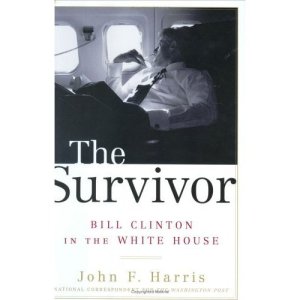
clintonsurvivorI wasn’t overly excited about reading a book about Bill Clinton for many reasons.

First, people who read this blog already know Bill Clinton. It’s not like I can find anything new or interesting to say that hasn’t already been said.

Second, I’ve never found Bill Clinton all that interesting. It’s similar to the way I feel about people who want to go on vacation to San Diego. I tell those people, “In theory, San Diego should be interesting, but it isn’t.”

Third, it was hard to find anything resembling an impartial biography of Bill Clinton.  (When it comes to partisanship, Bill Clinton brings out in everybody it seems.) The book I picked was written by a Washington Post national reporter, who covered the White House for nearly all eight years of Clinton’s Administration. And while the book is well written, it is not really a biography. It’s more a story of how a guy from Arkansas tried to fit in with the Washington establishment.

Harris devotes over 400 pages to the ins and outs of the eight years of the Clinton White House. But Harris isn’t analyzing Clinton’s place in history, but mainly recounting how the seemingly unending series of crises unfolded. Very little time is spent on Clinton’s life prior to assuming the Presidency, even though those years would prove to be very important to what happened during the eight years in the White House.

Bill Clinton was born William Jefferson Blythe III on August 19, 1946 in Hope, Arkansas. And as most of us know from hearing or reading about his life story, Clinton’s father, William Blythe Jr., died before he was born in an automobile accident. His mother, Virginia, would later marry a man named Roger Clinton, and young Bill would assume that last name. (Clinton and Gerald Ford are the only two Presidents who have changed surnames during their life. Gerald Ford was born Leslie King.) Roger Clinton was an alcoholic and prone to violence, and young Bill was eager to get away.

Fortunately, Bill Clinton was an excellent student. He was able to gain entrance to Georgetown University, and then a Rhodes Scholarship to study at Oxford. Upon his return from England, Clinton entered Yale Law School, where he eventually met his future wife, Hillary Rodham.

Clinton would move back to Arkansas and get elected Attorney General at the age of 30. Two years later, he was elected Governor. Two years after that, Clinton lost his bid for re-election. Two years after that, Clinton figured out how to stay elected, winning four more elections. (In 1984, the term of office was extended to four years. Subsequently, Arkansas has limited its governors to two terms.)

Some thought Clinton would run for President in 1988, but he decided against it. Instead, he opted to give the nominating speech for Michael Dukakis. There went two hours of my life I wanted back.

In 1991, Clinton decided to run against incumbent George H.W. Bush. Clinton was the leader of the wing of the Democratic Party referred to as “New Democrats.” This wing, which preferred the term Democratic Leadership Council, was supposed to bring the Democratic Party closer to the center.

Clinton weathered a campaign marked by accusations of marital infidelities and questions over the fitness of the governor of a small state to run the United States. H. Ross Perot mounted a spirited third party campaign.

Perot was able to siphon enough votes away from Bush to allow Clinton to win the election comfortably. However, Clinton ended up with just 43% of the popular vote. Many of his opponents would remind him that 57% of the voters wanted someone else to be President.

Unfortunately for Clinton, he didn’t seem to get the message that he didn’t have deep support. His administration hit the ground stumbling. There were tussles over gays in the military, his Attorney General nominee (Zoe Baird, who withdrew after a disclosure that she had employed an illegal alien as a nanny), replacing the staff in the White House Travel Office, and also making other planes wait for him at LAX while he was getting a haircut. Deputy White House counsel Vince Foster committed suicide, either from the stress of the job or severe depression. (Or some combination of the two. Or he was murdered. Take your pick.)

Amidst all this, Clinton tried to get his economic plan passed by Congress. Since it contained some new taxes, Republicans refused to support it. The plan passed narrowly in the House on party lines, and it only passed in the Senate because Vice President Al Gore was available to break a tie.

Clinton also promised to reform health care. Hillary Clinton was put in charge of the project. Clinton demanded that any plan guarantee universal health care. The plan came out of the project supposedly did that, but it ran into fierce opposition from just about everyone. And that included “Harry and Louise.”

The health care plan got nowhere. Much of what Clinton tried to do in his first two years in office went nowhere. His foreign policy initiative in Bosnia went nowhere. Clinton was helpless in the face of a genocide in Rwanda. U.S. troops tried to intervene in Somalia, but suffered some horrific losses.

Unsurprisingly, in the midterm elections, the Democrats were massacred. They lost control of both houses of Congress. Bill Clinton would now face another nemesis, Speaker of the House Newt Gingrich.

At this time, Clinton made a fateful change in strategy. He called an old adviser, Dick Morris, for assistance. Clinton kept this secret from nearly everyone on his staff. Most Democrats disliked Morris. That was because Morris usually worked for Republican candidates. But Clinton had a strange kinship with Morris and trusted him.

Morris was able to get Clinton to shift his policies rightward. Clinton signed a welfare reform bill that appalled many Democrats, but it proved to be hugely important in presenting Clinton to the public as a leader who could get things done.

In 1995, the Republicans tried to get Clinton to agree to their budget deficit reduction plan by threatening to shut down the government. Clinton called the bluff of the Republicans. Clinton bet that while people didn’t like the Federal Government in the abstract, they liked individual things that the Government did. People liked their Social Security checks and weather forecasts. The Republicans ended up backing down and compromised on a budget reduction plan.

All the while, a new scandal was brewing. It was called Whitewater. I believe five people fully understand what the Whitewater scandal truly was about.  It involved the Clintons and their involvement in a failed real estate development called Whitewater back in Arkansas.  There were bribes, embezzlement, and some connection to the Savings and Loan Crisis of the late 1980s. Clinton appointed a special prosecutor to look into the matter, feeling that it would be the best way to clear his name.  Originally, this special prosecutor was Robert Fiske, but he would later be replaced by Kenneth Starr. This investigation would take several years, and turn into something much different. (Ultimately, Clinton would not be found guilty of any one particular crime directly connected to Whitewater.)

Clinton faced off against Kansas senator Bob Dole in 1996 and it wasn’t much of a contest. Clinton won despite having to cut ties with Morris before the election after it had been discovered that Morris was letting a prostitute listen in on phone conversations he had with Clinton. Perot ran again and he won enough votes to keep Clinton below 50%.

In his second term, Clinton first faced a crisis over his acceptance of campaign contributions from foreign nationals, which is prohibited by Federal law. Some believed that the contributions, mostly from China, were compromising the security of the nation. However, this dust-up seemed to fade away with little effect on Clinton.

But, the Whitewater investigation was starting to take a turn for the worse for Clinton.

One of the many problems Clinton faced was a civil suit for sexual harassment by an Arkansas woman named Paula Jones. (This was also known as Troopergate.) Clinton’s attorneys offered to settle the case for $750,000. Jones’ attorneys thought “Hey, that’s a good deal.” But, Jones turned down the offer. So, her attorneys quit the case. A conservative legal group called the Rutherford Institute took over the case. And, they knew stuff.

In particular, Jones’ new attorneys knew that Clinton had been carrying on a sexual affair with a White House intern named Monica Lewinsky. Clinton was called in to give a deposition about his relationship with Lewinsky. Clinton, in very legalistic terms, denied the affair. He also denied helping Lewinsky find a job outside the White House.

The problem with this was that: 1) Clinton had had a sexual affair with Lewinsky and 2) he had helped (through his friend Vernon Jordan) Lewinsky find another job. Clinton also had coached his secretary, Bettie Currie, into saying that Lewinsky was just coming to the Oval Office to visit her, not the President.

Kenneth Starr was now aware of this evidence. A White House staffer named Linda Tripp had provided evidence, in the form of a semen-stained dress, that the President had had sex with Lewinsky. Starr viewed Clinton’s earlier testimony as perjury. Skipping ahead, this charge of perjury went to Congress. The Republicans, out for blood, decided that this was an impeachable offense. The House voted in favor of two articles of impeachment (perjury and obstruction of justice), which passed mostly along on party lines. But, to convict Clinton, the Republicans would have to get a 2/3 vote in the Senate. The votes weren’t close, 50-50 for perjury, and 55-45 against on the obstruction of justice charge. (Jones’ case was dismissed, but Clinton did pay her a settlement.)

With the impeachment crisis over, Clinton was able to have a productive final two years in office. Clinton spent much of his time concentrating on foreign affairs, dealing with Kosovo, Northern Ireland, and the West Bank. Clinton also discovered that America had an enemy by the name of Osama bin Laden. (And at this point, you can decide for yourself if you think Clinton did enough to stop bin Laden.)

Clinton hoped that Gore would succeed him in the White House, but was disappointed that the Vice President never asked him to campaign for him. Gore would later tell Clinton that he had to distance himself from the sex scandals. Clinton told Gore that if he ran on Clinton’s record, he would have won. Of course, Gore sort of won. Except he didn’t win the votes in the right places, so he lost.

Amidst all this, you might ask, (I certainly did), what did Bill Clinton do that made him so popular? Beats me. OK, maybe I have some ideas.

It did help that the economy grew during Clinton’s eight years in office. Clinton also managed to tame the budget deficit and left office with a $559 billion surplus. (You can argue amongst yourselves if there really was a surplus or if it was just accounting chicanery.)

It’s hard not to like a President when things are going well. As one of Clinton’s campaign advisers, James Carville, said during the 1992 campaign, “It’s the economy, stupid.” Or is it a stupid economy?

Would I recommend Baker’s book? To be honest, no I wouldn’t. But I’m also a guy who doesn’t like to visit San Diego. It’s just not my thing.

Other stuff: In case you didn’t know, Bill Clinton’s wife, Hillary, was a United States Senator from New York. And she almost became President. But now she’s the Secretary of State. Just checking to see if you’re paying attention.

The William J. Clinton Presidential Library is in Little Rock, Arkansas.

If you saw this on your RSS feed earlier, that was a mishap on my part. I was hurrying to get this done and clicked “publish” too early. I likely have a lot of typos. I will try to fix them as I go along. I beg your indulgence. This was just not a post I enjoyed writing much. Sorry, I’ll try to do better with the next one. But that won’t be for a few more weeks as I’m going on vacation soon. And not to San Diego.

Add to FacebookAdd to DiggAdd to Del.icio.usAdd to StumbleuponAdd to RedditAdd to BlinklistAdd to TwitterAdd to TechnoratiAdd to FurlAdd to Newsvine

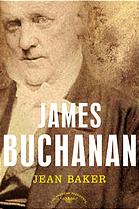
James Buchanan by Jean Baker

President #15, C-SPAN Historians Ranking #42

You know my successor and I average a ranking of 21.5!

jamesbuchananAs I careen through the roster of American presidents, I knew that eventually I would hit bottom. There had to be someone whom historians considered to be THE WORST President ever. Historian Jean H. Baker of Goucher College lays out the case for why James Buchanan is as bad as they get. And it’s not a pretty sight.

Baker not only believes that Buchanan was just guilty of violating his oath of office by failing to protect and defend the Constitution of the United States. She also believes that he may have committed treason against the United States.

Why did America’s only bachelor (and the only Pennsylvanian) President end up as such a colossal failure? Was Buchanan incompetent? Was he in over his head? According to Baker, Buchanan’s main sin was that he was so pro-Southern and pro-slavery that he would do whatever it took to appease that section of the Democratic Party. Buchanan said he believed in the Constitution; but, he only believed in his very narrow interpretation of it. Buchanan would rather have been right, than to have done right.

But, even more than Buchanan’s belief that he was right, his biggest problem, according to Baker, was his pro-Southern attitude. Buchanan may have grown up in Pennsylvania, but his closest friends and advisers were Southerners. He also believed that slavery was an institution that the Federal government had a duty to protect. His ideas on how to patch up the deepening sectional divide over the expansion of slavery served only to make matters worse.

Baker explains in an introduction that not many people want to examine the life of Buchanan. People want to believe that Presidents are heroes. And almost everyone thinks that Buchanan’s successor was the greatest President ever. But, Baker explains, there is value in learning about how someone like Buchanan, who had one of the most distinguished resumes of any person elected President, could be so bad.

Buchanan was born into a well-to-do family in Mercersburg, Pennsylvania. His father sent him to Dickinson College in Carlisle, Pennsylvania. Buchanan wasn’t a great student, and was briefly expelled from school for bad behavior, but managed to graduate. He never spoke well of his alma mater. (The school website’s history section doesn’t mention that Buchanan attended. Baker did speak about this book at Dickinson.)

Upon graduation, Buchanan moved to Lancaster, Pennsylvania to study law as an apprentice. Buchanan felt that working in Pennsylvania’s capital would be beneficial to his practice. He passed the bar in 1812, the same year Pennsylvania moved its capital to Harrisburg. (I once got lost in Harrisburg after pulling off the highway too early. Don’t ever do that. Take my word for it. No one needs to see that much of Harrisburg.)

However, Buchanan kept his practice in Lancaster, which still was one of Pennsylvania’s largest cities. Apparently, he did a good job because he earned a sizable income and was pulling in what would be a six figure income today by the time he was 30.

Buchanan also became involved with a woman name Ann Coleman. They became engaged in 1819.  But, the marriage was called off. No one knows for sure why it happened. Baker believes that Coleman tired of Buchanan’s lack of affection for her. Also, Buchanan was seen in the company of another woman while they were engaged. Coleman died soon after (of an unknown cause, although she was extremely distraught) the engagement ended. Coleman’s father refused to let Buchanan come to his daughter’s funeral. Buchanan would never marry.

The bachelorhood of Buchanan has often been shown as “proof” that Buchanan was homosexual. Baker doesn’t believe there is any proof of it. First of all, Baker points out, no one in Buchanan’s time would have identified himself as homosexual. There were just men who sometimes had sex with other men. Denial was prevalent. Buchanan likely was involved in criminal cases as a lawyer where men were accused of homosexual acts that were deemed illegal at that time.

Also, Buchanan may have just been not interested in sex. Baker tells us that Buchanan never had to shave in his life. He couldn’t grow facial hair. She posits the idea that Buchanan may have suffered from a hormonal imbalance that left him generally uninterested in sex with anyone.

In his writings, Buchanan would mention his desire to get married, but only for career reasons. Buchanan liked the idea of a woman who would cook for him and take care of him, but he certainly didn’t want to have to be affectionate or caring or chatty.

According to Baker, Buchanan’s lack of a spouse was an important part of his Presidency. Because Buchanan had no wife and family to rely on for support, his closest friends became other government officials. And the people who tended to be the friendliest toward Buchanan were Southerners. Buchanan would, for a time, share a room (and a bed) with Alabama Senator William King. The two men were very close and Andrew Jackson dubbed them “Miss Nancy” and “Aunt Fancy.” (Buchanan was actually a big supporter of Jackson.)

Despite his personal setbacks, Buchanan’s political career moved along well. He worked his way through Pennsylvania state government and on to the House of Representatives, and later a position as Minister to Russia.

Upon his return from Russia, Buchanan set his sights on the Senate. He lost in his first try, but the Pennsylvania Legislature elected him in 1834 to fill a vacant term. Buchanan worked his way up to the Chairmanship of the Foreign Relations Committee.

In 1844, Buchanan felt that his time had come to run for President. However, James Polk took the nomination and won the election. Polk showed his appreciation for Buchanan’s work in the campaign by naming him Secretary of State. However, Buchanan thought that he might want to serve on the Supreme Court. He vacillated between the two. Polk decided to leave Buchanan at State, tiring of Buchanan’s indecision.

Buchanan served as Secretary of State during the Mexican War, an early demonstration of America’s desire to acquire territory by any means necessary. The new territory added by the Mexican War would almost prove to be the nation’s undoing as heated debates sprung up over whether the new territory would be free or slave. Buchanan sided with pro-slavery forces; but, the matter was not decided before Polk’s term had ended.

Denied the nomination again in 1848 by the Democrats (Lewis Cass was the nominee and he lost to Whig party candidate Zachary Taylor), Buchanan found himself without a position in government. He spent time back at his Lancaster estate, Wheatland, where he kept an eye on the political scene with hope for a run for the White House again in 1852.

Buchanan was certain that 1852 was his year. But, the Democratic Convention was deadlocked for 49 ballots until Franklin Pierce, a man who would later look great compared to Buchanan, won the nomination and the election. Buchanan was given a post as Minister to the Court of St. James in London.

While it may have seemed like political exile for Buchanan to serve in London, it actually worked out to his benefit. The debate over the expansion of slavery into the new territories became even more heated. The flash point was in Kansas, which was believed to be the last part of the country that could operate with a slave-based economy. Congress, behind the efforts of Illinois Senator Stephen Douglas, passed the Kansas-Nebraska Act. This allowed the residents of each of those territories to decide for themselves whether or not slavery would be allowed in their borders.

Instead of this turning out to be a peaceful triumph of popular democracy, “popular sovereignity” (as Douglas’ plan was called) led to pro- and antislavery forces flooding into Kansas. Eventually, two governments were established in Kansas. Deciding which one was legitimate proved to be Pierce’s undoing. Pierce backed the proslavery Lecompton government, and disavowed the antislavery Topeka government. (The relative locations of the two Kansas cities can be seen at this link.) By the end of Pierce’s term, the matter still had not been settled. Pierce was denied renomination by the Democrats because of the uproar.

So, who did the Democrats turn to in 1856? They turned to a man who hadn’t been in the country while the debate over Kansas inflamed the people. Buchanan would finally get his chance to run for President.

Buchanan had spent his time concentrating on European affairs; although, he did participate in crafting a memorandum along with two other Southern diplomats serving in Europe called the Ostend Manifesto. This manifesto stated that the United States should use whatever means necessary to acquire Cuba from Spain. Buchanan saw Cuba as crucial to American interests, as well as a place where a slave-based economy could be put in place. The Ostend Manifesto was widely denounced in the North by antislavery forces. These antislavery politicians had formed a new political party: the Republicans.

The Republicans first nominee for President was John C. Fremont, an explorer and military hero (of sorts) from the Mexican War. Although born in Georgia and married to the daughter of Missouri Senator Thomas Hart Benton, Fremont had actually served in the Senate representing California.

In a modern day campaign, the 65-year old Buchanan, a bachelor as well as a man who had to always tilt his head at an angle because his eyes didn’t always point the same direction along with being farsighted and nearsighted in different eyes, would have been no match against the dashing Fremont.  But, this was 1856. Few people saw the candidates in person. And the South dominated the Electoral College. Buchanan won election fairly easily. It also helped that the Republicans weren’t even on the ballot in Southern states.

James Buchanan now had won the job that he had sought since 1844. He filled his Cabinet with Southerners, with the exception of Lewis Cass, who was the Secretary of State. Buchanan didn’t have much use for Cass and intended to carry out foreign policy on his own, with the goal of acquiring Cuba.

In his inaugural address, Buchanan spoke of how the issue of the expansion of slavery in the territories would soon be decided by the Supreme Court. The famous case of Dred Scott v. Sandford would be decided soon after the inauguration. Scott, a slave, was suing for his freedom in Federal court on the basis that he gained his freedom when his owner moved with him to a free territory.

Buchanan had made inquiries before the March 4 inaugural to determine the status of the case. One of the justices, John Catron of Tennessee told Buchanan that the Court would rule against Scott, but only on narrow grounds.

Catron suggested that Buchanan speak with the court’s Pennsylvanian justice, Robert Grier, to get him to go along with Chief Justice Roger Taney’s broader opinion. Buchanan did so, and Taney handed down an opinion, with Grier’s concurrence, that stated that Congress had no power whatsoever to regulate slavery in the territories.

Furthermore, Taney ruled that a slaveowner held on to his slaves as his personal property in perpetuity. It was not a right that could be infringed upon by Congress. Buchanan thought that the decision settled the matter, which was naive. The Dred Scott decision only served to draw more people over to the antislavery side. Increasingly, Northerners believed that the Federal government was nothing but a tool for Southern slave owners.

More bad news came for Buchanan in the form of a financial panic. The Panic of 1857 hit the United States soon after Buchanan took office. There had been much land speculation in the West in the years prior to 1857. That market collapsed and set off a financial downturn. Buchanan, in his message to Congress about the Panic, stated that the Federal government was not empowered to give individuals any relief. Buchanan just waited for the problem to fix itself. It didn’t bother Buchanan much that Northern states were more affected by the Panic than Southern states.

But, Buchanan had more ways to screw up. And with the Kansas situation, Buchanan displayed his inability to lead in many different ways.

The problem of the two competing governments in Kansas had not been resolved when Buchanan took office. Buchanan decided to accept the proslavery Lecompton government as the legitimate one in the territory, even though it represented a minority of the residents. The Lecompton government submitted a proposed constitution to Congress. If Congress approved it, statehood would follow.

The Senate, with enough pro-slavery Southerners in office, approved the constitution. But, the House would be a different matter. The population of the free states greatly outnumbered the slave states. (Baker says it was about 80% to 20%; although, Buchanan insisted in public that it was closer to 50-50.)

Buchanan undertook an aggressive lobbying effort of House members to get them to vote in favor of the Lecompton pact. Baker writes of how Buchanan promised to use his patronage power to reward compliant House members. There was even talk that some members of the House were bribed (through intermediaries) either with money or prostitutes.

Despite Buchanan’s efforts, the House voted down the Lecompton constitution. But, Buchanan would not give up. He suggested a new bill that would have granted Kansas immediate statehood (instead of waiting to reach the recommended minimum population of 93,000) if it adopted the Lecompton constitution. Congress passed the bill, but the voters of Kansas (all of them this time as there had been earlier disputed elections), voted to not accept the pro-slavery constitution. It was rejected by a margin of 11,000 to 1,800.

In the wake of this political fiasco, the Republicans took control of Congress in the 1858 elections. An investigation was started to examine Buchanan’s actions during the Kansas constitution votes. Buchanan refused to cooperate with the investigation. He believed that Congress had no right to investigate any wrongdoing by him. (If Congress had kept looking, evidence that Buchanan’s Secretary of War received kickbacks from contractors would have turned up also.)

Buchanan had promised to serve only one term. The Democrats were happy to be rid of him. However, the Democrats split into two over the slavery issue, nominating two candidates: Stephen Douglas (whom Buchanan hated) and John Breckinridge (whom Buchanan disliked also and he was the Vice President.) John Bell of Tennessee ran as the candidate of the Constitutional Union Party, a nativist faction. And, there was a fourth candidate: a Republican from Illinois named Abraham Lincoln. Lincoln won easily despite not appearing on the ballot in any Southern state.

Faced with the prospect of an antislavery President, the state of South Carolina held a special convention and voted to secede from the United States. During the final four months of Buchanan’s administration, Buchanan showed himself to be unable to deal with the problem of secession.

Buchanan believed that: 1) no state had the right to secede and 2) the Federal government had no authority to force a state to stay in the Union. So Buchanan did very little to stop the secession movement, which soon spread to other states.

Baker, and other historians of this time period, believed that Buchanan, at least, could have tried to politically isolate the more radical secessionists. This could have isolated the problem to South Carolina or a few neighboring states. But, left unchecked, almost the entire South had seceded by the time Lincoln was inaugurated. And, the Confederate States of America had become organized.

Buchanan compounded the problems by having so many Southerners in his administration. This gave the Confederate states intimate knowledge of the strengths of the U.S. Army, as well as Federal properties throughout the South. Baker goes as far as to accuse Buchanan of treason in the amount of assistance he gave to the Confederacy.

Eventually, Buchanan would take a stand at an Army fort in Charleston called Fort Sumter. The state of South Carolina wanted the fort surrendered. Buchanan could not accept “surrendering” a Federal facility to a state. This didn’t prevent Buchanan from entering into negotiations with South Carolina officials about the fort, granting the secessionists an air of legitimacy.

In the final two months of his Presidency, Buchanan’s Southern cabinet members resigned. Northerners were appointed to take their place. Buchanan was starting to stay up late hours and asking Cabinet members to sleep over at the White House to keep him company.

Buchanan decided that he would try to send supplies to Fort Sumter to help defend it. However, the supply ship was never able to get to the fort and offload its cargo. Eventually, Fort Sumter’s supplies would run out, but that would be after March 4, 1861. That would be Abraham Lincoln’s problem.

Of all the presidential biographies I’ve read so far, this is the first one where the author had absolutely no regard for the subject. Jean Baker found nothing redeeming in Buchanan’s life. Nevertheless, the book is worth reading, if only to see just what Lincoln had to follow. No President ever took office in more trying circumstances than Lincoln. It’s quite possible that James Buchanan would be second in that category. But, only one of them succeeded at his job.

Other stuff: James Buchanan’s estate, Wheatland, is in Lancaster, Pennsylvania, and is operated by the James Buchanan Foundation. The bibliography of suggested readings about Buchanan on the estate’s website includes Baker’s book.

James Buchanan’s birthplace is a Pennsylvania state park called, Buchanan’s Birthplace State Park. It is near Cove Gap, Pennsylvania. Or Fort Loudon. Or Cowan’s Gap. Or Mercersburg. Here’s a map.

There is also a memorial to James Buchanan in Meridian Hill Park (part of Rock Creek Park) in Washington, DC.

Buchanan’s Vice President, John C. Breckinridge, was just 36 years old when inaugurated. He remains the youngest Vice President ever. Breckenridge was the SECOND Vice President to be indicted for treason (the other being Aaron Burr). Breckenridge, who served in the Confederate government, was not tried.

Add to FacebookAdd to DiggAdd to Del.icio.usAdd to StumbleuponAdd to RedditAdd to BlinklistAdd to TwitterAdd to TechnoratiAdd to FurlAdd to Newsvine

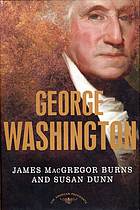
George Washington by James MacGregor Burns and Susan Dunn

President #1, C-SPAN historians ranking #2

You Never Forget Your First Time

georgewashingtonThe face of George Washington is well known to Americans. He stares at us on dollar bills. His profile is on the quarter. His portrait used to be a fixture in school classrooms. The capital city of the nation is named for him.

And, just like all of us, George Washington was just one person. One person, full of the typical needs and wants, features and defects, highs and lows, just like anyone else. He was the first true hero of the United States of America. But, why him? What made George Washington, Virginia plantation owner, into GEORGE WASHINGTON, American icon?

Historians James MacGregor Burns and Susan Dunn, both of Williams College, try to cut through the mystique that often clouds our judgment of George Washington. Their book is not revisionist by any means. But, it is a way for people to get a better grasp on just who the first President of the United State truly was.

George Washington was born on February 22, 1732; although, at the time, he thought his birthday was February 11. The British had not yet adopted the Gregorian calendar, so they were 11 days behind. (This would be the case until 1752.  Although, it would be fun if we celebrated Washington’s birthday one day before Lincoln’s.)

Washington didn’t attend any university; but, he did receive training in surveying. He also received a commission to serve in the Virginia militia. The two jobs would end up setting Washington on his path to fame.

One of Washington’s first major jobs as a surveyor was to map the parts of Virginia near the Ohio border in 1753. This put Washington into close contact with the French, who controlled that part of North America.

In 1754, France and Britain went to war in North America over the control of the territory of what was then called “The Northwest.” Washington served alongside British generals during this conflict, known as the French and Indian War in North America and the Seven Years War in Europe. (The war lasted nine years in North America, so it needed a different name.)

Washington was attached to British General Edward Braddock, who led his troops into an ambush at the Battle of the Monongahela. Braddock was killed; but, Washington was able to rally the remaining troops. For his efforts, Washington was sent to accompany General John Forbes in an attempt to capture Fort Duquesne.

There was no battle at Fort Duquesne, though. The French abandoned the fort in the face of the overwhelming size of the British forces. Fort Duquesne became Fort Pitt, and later Pittsburgh. Forbes ended up with a baseball stadium in Pittsburgh named after him.

For all of his service, Washington hoped that the British Army would give him a commission. But, no commission would be awarded. Washington took this as a tremendous slight. Washington was keenly aware of the importance of titles and status. He realized that the British Army would never consider a colonial like him worthy of honor.

Washington did receive a generous grant of property for his service, and he was able to parlay that into great personal wealth. And with this wealth, Washington did become one of the most famous and most important people in Virginia. Washington would serve in the Virginia House of Burgesses. Although not as radical as other members of that body, such as Patrick Henry, Washington did join others in calling for a boycott of imported goods from Britain.

When the First Continental Congress convened in Philadelphia in 1774, Washington was part of Virginia’s delegation. Washington dressed in his military uniform for all the meetings. And when the American Revolution began the following year, the Congress decided to appoint Washington as the head of the Continental Army. Presumably, this was because he already had a uniform.

Washington agreed to serve without pay, asking only to be reimbursed for expenses. During the Revolution, Washington became, in the words of Burns and Dunn, a transactional leader. Washington had to take care of forming an army, keeping it equipped and fed, making sure people all over the colonies (soon to be states) were happy. It was almost a triumph of management, more than military expertise.

After eight long years, Washington and the Americans won their independence from Britain in 1783 (although hostilities had ended in 1781 after the Battle of Yorktown.) Washington addressed his officers in what was known as his Farewell Address. It would turn out that Washington’s public life was far from over.

The United States, under the terms of the Articles of Confederation, was almost ungovernable. The Congress had very little authority. States tried levying tariffs on goods imported from other states.

Meanwhile, in Western Massachusetts, a Revolutionary War veteran named Daniel Shays led a popular uprising against the government of Massachusetts. Shays’ wanted the state to stop property seizures by creditors against farmers. Although the violence was relatively muted, the concept behind Shays’ Rebellion stirred Washington to take action to change the American government.

The action turned out to the Constitutional Convention. Washington did not directly call for it, but encouraged others to do so. And Washington also welcomed an invitation to participate in it. And Washington had little trouble in accepting the job as the president of the convention.

Washington’s job at the Constitutional Convention was not to come up with new ideas. The heavy lifting, from an intellectual standpoint, was left to people such as James Madison and Alexander Hamilton. But, it was Washington’s air of authority (he wore his military uniform during much of the convention to help with this) that kept the delegates in line.

After the Constitution was ratified, there was little doubt who would be the man chosen to be the first President. It had to be Washington. He won every electoral vote in 1789.

Washington had one of the most difficult jobs as President because nobody knew just what the President was supposed to do.  Washington had no example to go by. He had to find out how to make it all work. And he had to do it right away.

During the debate over the ratification of the Constitution, many thought that Congress would end up as the most powerful branch of government. But, Washington was able to shape the office of President into a more powerful force.

Burns and Dunn point out two main ways Washington accomplished this. First, Washington, thanks to the efforts of Hamilton, made the President a proactive force in making legislation. Washington did not want to sit back to wait for Congress to propose action. Most notably, Hamilton sent to Congress plans to consolidate state debts into one national debt, as well as a plan to set up a national bank. Washington fully supported these policies.

The second area where Washington asserted the authority of the President was in foreign affairs. After Washington negotiated a treaty with several Indian tribes early in his Presidency, he went to the Senate to discuss the treaty with its members. But, the initial meeting was a disaster as the senators were not prepared to ask questions and Washington was asked to come back later. Washington had no desire to ever repeat that experience. Since then, all presidents have negotiated treaties and then just presented the completed document for the Senate to vote on. Washington also knew that since the President had the right to receive and appoint ministers and ambassadors, the President had the right to recognize nations.

Washington relied heavily on Hamilton and Jefferson for advice and counsel. The two men were given a great deal of latitude to make decisions. But, it was Hamilton who ended up being Washington’s favorite adviser.

Hamilton, who during the Constitutional Convention proposed an executive who would be elected for life, saw great promise in the United States. Hamilton felt that a strong Chief Executive was needed for this. Washington was of the same mind. The favoritism that Washington gave to Hamilton would ultimately to the rise of the two-party system in the United States.

Burns and Dunn point to a 1791 article anonymously written by Madison as the beginning of factionalism in U.S. government. At this time, Hamilton’s plan for the assumption of state debts by the Federal government was before Congress. Madison opposed this because he felt it was outside the scope of Congress’ powers according to the Constitution. Also, Madison felt that the plan was unfair to many Revolutionary War veterans who had sold off their debt certificates to speculators at a fraction of their value. Hamilton’s plan had all of the certificates redeemed at full value.

Although most in government knew that Madison had written the piece, Washington and Hamilton believed that Jefferson was the man behind the whole idea. Jefferson also believed that his views were being ignored by Washington.  So, he resigned his position as Secretary of State in 1793.

In addition to domestic differences, the American political system also split along the lines of France and England. In the aftermath of the French Revolution, the United States was left in the position of having to choose whether to honor its Revolutionary War alliance with France, or, try to remain neutral and avoid the wrath of England.

Jefferson and his supporters backed France. Hamilton and his supporters sided with England. Washington opted for a policy of neutrality, knowing that the United States could not afford a war with any European power.

However, the English were not going to allow American ships to trade with their French enemies. The Royal Navy began to seize American merchant ships and choke off trade. Washington opted to try diplomacy to get the English to relent in their attacks.

So, Washington sent Chief Justice John Jay to London in 1794 to negotiate a treaty. Jay didn’t have much to bargain with. When he returned, the treaty didn’t have much in the way of concessions from the British. There were no provisions to relieve the pressure on American shipping; but, the British did agree to abandon their forts along the Canadian border.

Jay’s Treaty (as it would be called) was sent to the Senate in 1795, where it was debated in secret. (The Senate conducted almost all of its business behind closed doors in the early years of the Republic.) The Senate voted to ratify the treaty.

It did not take long for details of the treaty to emerge. Public reaction to it was harsh. Mobs burned effigies of Jay throughout the country. (Jay said he could ride up and down the country at night using the lights from his burning effigies.) Hamilton was shouted down at a public meeting trying to defend the treaty. Washington was stunned by the reaction. It was the first time that Washington faced an enormous amount of opposition from the American public. (Washington had been reelected in 1792 unanimously.)

Washington was not sure if he would sign the treaty; but, the decision was made for him in the summer of 1795. At that time, Washington was given a letter written by his Secretary of State, Edmund Randolph, to the French minister to the United States. Randolph seemed to indicate that he felt that the treaty was favorable to England, instead of France. Also, Randolph, somewhat obliquely, solicited a bribe from the French to prevent the treaty from going into force. Washington would not tolerate such disloyalty from his Secretary of State. Randolph was fired, and the treaty was signed by Washington.

Toward the end of his second term in 1796, Washington was a tired man. He complained of vision and hearing problems, and, even worse, memory lapses. He had worked nearly all of his adult life to the creation of a new nation that he was extraordinarily proud of. But, Washington knew it was time to retire from public life for good. Washington’s example of serving two terms would be followed by all presidents until Franklin Roosevelt. (The 22nd Amendment made the two terms limit a requirement instead of an example.) Washington delivered a second Farewell Address.

In this address, Washington bemoaned the partisanship that had taken over American politics. He also famously warned against the United States from entering into any alliances that would force the country to become needlessly involved in European matters. This philosophy would guide American foreign policy for most of the 19th Century.

In 1797, after the inauguration of John Adams as the second President, Washington returned to his home at Mount Vernon. Burns and Dunn portray the retired Washington as one who had come to accept partisanship in government. When Washington was asked to lead the Army by Adams in a possible war against France, Washington insisted that all his officers be Federalists (as the supporters of Adams and Hamilton had become known.) Washington also worried that the United States was in danger of being taken over by the Illuminati. (Someone had traveled through time and given Washington the collected works of Dan Brown.)

Washington passed away on December 14, 1799 at the age of 67. Henry Lee, in a eulogy for Washington, described him as being “first in peace, first in war, and first in the hearts of his countrymen.” George Washington, the man, was dead. George Washington, the myth, lives on to this day.

Other stuff: Normally, this section is reserved for listing places that are memorials dedicated to the President reviewed. However, I don’t have enough space or energy to list all of the homes, monuments, and memorials dedicated to George Washington.

Washington’s Mount Vernon home is not a national park or monument. It is run by a private foundation called the Mount Vernon Ladies’ Foundation. The Washington Monument is not considered to be a National Monument by the United States Park Service. It is a National Memorial. Construction began on the Washington Monument in 1848; but, it was not completed until 1884. There were problems with raising money for the monument. Also, there was this thing called the Civil War….

For those not wishing to travel to Virginia or the District of Columbia, you can just visit the state of Washington. I hear it’s pretty much the same as our nation’s capital.

Washington had no children with his wife Martha. However, Martha did have two children by her first husband.

Add to FacebookAdd to DiggAdd to Del.icio.usAdd to StumbleuponAdd to RedditAdd to BlinklistAdd to TwitterAdd to TechnoratiAdd to FurlAdd to Newsvine

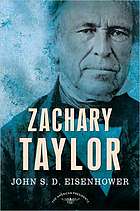
Zachary Taylor by John S. D. Eisenhower

President #12, C-SPAN Historians ranking #29

He’s Tanned, Rough, and Ready

ztaylorWhat can be said about a man who was President for just 16 months? What can be said about a President who never held any other political office in his life? What can be said about a man who likely never voted in his life until he was elected President? What can be said about a man who almost went directly from battlefield success to the White House?
As it turns out, not much. John S. D. Eisenhower, son of another general turned President, tries to give us a look at the life of the third man to parlay military success (after Washington and Jackson) into the Presidency. Unfortunately, Taylor’s term in office was brief, most of his papers were destroyed in the Civil War, and his greatest accomplishments occurred in a war that happened before mass communications (in the form of the telegraph) had taken hold.

Eisenhower did not get the most interesting President to write about, but he tries his best. The book works best if you are interested in military history, or the particular ins and outs of battlefield strategy. But at the end of the book, Taylor remains something of a cipher.

This is not to say that the life of Zachary Taylor is not worth examining. His military career spanned the two wars that the U.S. fought in after the Revolution and before the Civil War: The War of 1812 and the Mexican War. Taylor was also the father-in-law, albeit briefly, of Jefferson Davis.

Taylor was born on November 24, 1784 in Orange County, Virginia, but that was only because his mother was too far along in her pregnancy to accompany her husband, Richard, to his new property (a reward for his Revolutionary War service) in Kentucky, in what would become Louisville.

Although young Zachary Taylor received little formal education, he was able to read and write acceptably. In 1808, Taylor followed in his father’s footsteps and became a soldier, getting a commission as a first lieutenant.

But in 1809, Taylor’s military career almost ended because of one of the most colossal errors committed by an American commander in peacetime. Taylor had been transfered to New Orleans, where James Wilkinson, a brigadier general, was in command. The oppressive heat of New Orleans was making most under his command ill.

The Secretary of War ordered Wilkinson to move his troops north to Natchez, where conditions were more favorable. But, Wilkinson moved the force south to a spot called Terre Aux Bouefs. This place was even hotter and more humid than New Orleans. And there was even less food. The soldiers began to die by the score.

Finally, Wilkinson (who had likely moved the soldiers south because there was money in it for him) decided to move whatever soldiers were left to Natchez. And nearly all of the remaining soldiers perished on that trip. What of Zachary Taylor? He was fortunate in that he got sick almost as soon as he arrived and he was sent back home to Louisville to recover.

(During his Army career, Wilkinson also served as a spy for Spain,  was a co-conspirator with Aaron Burr to commit treason, had numerous mistresses, and took countless bribes. Yet, he was never successfully court martialed.)

During the War of 1812, Taylor fought in the West. He made a name for himself when he successfully defended Fort Harrison (in present day Indiana near Terre Haute) from an assault by an allied force of Indians. Taylor was made a brevet major for his actions. However, Taylor saw little action after Fort Harrison as most of the fighting in the War of 1812 occurred near the U.S.-Canada border. Taylor asked to be transferred to that theater, but he stayed in the West.

When the War of 1812 ended though, the Army was reduced in size and Taylor was demoted back down to captain. Taylor took this as a sign to leave the Army, and he did. He went back to Louisville to work on his plantation, which proved to be a very lucrative endeavor for him.

But, the Army would keep calling Taylor back. Taylor always answered the call, serving in various frontier posts. In 1820, Taylor moved his family with him to Louisiana. Tragically, he saw two of his young children die of malaria there in a span of four months.

By 1832, Taylor had worked his way up in the military to the rank of  lieutenant colonel. At this time, the U.S. engaged in a rather pointless and bloody affair called the Black Hawk War. Black Hawk was the name of a Sauk Indian chief who tried to halt the gradual takeover of his people’s land in Illinois by white Americans. Both Jefferson Davis and Abraham Lincoln would fight in this war, which was really more of a chase by the Army to catch Black Hawk. After a few months, Black Hawk was captured and all but 50 of his men were killed, either by the Army or by the Sioux.

Davis, a lieutenant serving under Taylor, had grown fond of his commander’s daughter Sarah. However, Taylor refused to let his daughter marry an Army officer. The two ended up courting in secret, and eventually wed in 1835, by which time Davis had resigned his commission. However, Sarah Taylor died soon after her marriage of malaria.

While fighting against Seminoles in Florida, Taylor earned his nickname of “Old Rough and Ready” because he would always be out on the battlefield with his troops. Taylor drove his troops hard, but no harder than he would drive himself. Because of his actions in Florida, Taylor had become Brigadier General Zachary Taylor.

Taylor would later find himself commanding troops at Fort Jesup near what is the border today between Louisiana and Texas. In 1845, Taylor was ordered by President James Polk to move his troops to a point south of the Nueces River in what was then the village of Corpus Christi, Texas.

The point of this maneuver was for the U.S. to tell Mexico just where they believed the border between Texas and Mexico was. According to Mexico, the border was on the north side of the Nueces. But Polk wanted to establish a U.S. presence south of the Nueces, and, if possible, as far south as the Rio Grande. (The river has been expanded into a bay in recent times.)

At first, Polk attempted to negotiate a settlement with Mexico, but the Mexicans would not sell the U.S. the disputed territory. So, Taylor’s troops marched further south to the Rio Grande, right across from the Mexican town of Matamoros. On April 26, 1846, Mexican soldiers fired at and killed some of Taylor’s men. The news was sent back to Washington. And by May 13, Congress had declared war on Mexico.

Taylor spent much of the war along the U.S.-Mexico border. After capturing Monterrey, Taylor hoped that the U.S. government would just follow a strategy of waiting around for Mexico to surrender. But Mexico wouldn’t surrender. Eventually, Polk, on the advice of Missouri Senator Thomas Hart Benton, ordered General Winfield Scott (who was already a declared candidate for President in 1848) to lead an amphibious assault on the port of Veracruz, with the eventual takeover of Mexico City.

However, such an invasion required Taylor to give up some of his best soldiers to Scott. While the attack on Veracruz was successful for the U.S., Mexican president Santa Anna decided that his last best hope was to attack what was left of Taylor’s forces, which were now in a place called Buena Vista.

The Battle of Buena Vista (fought in February of 1847 near the city of Saltillo, Mexico), saw over 670 American officers killed and an estimated 1,500 volunteer soldiers desert. But, the Americans won as the Mexican Army was spent after a long march through the Mexican Desert. The war was essentially over. The U.S. added most of present day Arizona, New Mexico, Utah, Nevada, and California.

Taylor ended up being the hero of the war for the Americans. His plain dress (he rarely wore a full uniform) and easy manner endeared him to his men. Although the Mexican War proved to be unpopular as it was being fought, the American people still wanted a hero.

In 1848, there would be an election. Polk had promised to serve only one term, so the race was wide open. It’s not clear when Taylor became interested in running for President. He had made few political statements during his military career.

Taylor wanted to be drafted to become President. He didn’t want to have to run for office. It’s also quite possible that he had no idea how to run for office. No one knew which party Taylor belonged to.

The Whig Party, seeing a chance to win the White House, sent a delegation to Louisiana to get Taylor to declare himself a Whig. After that, Taylor was able to win the nomination in June of 1848. At the time, parties sent letters to the nominees informing them of the selection. Taylor did not respond for an entire month. However, Taylor was not hesitant to run. Instead, the local postmaster had refused to deliver the letter to Taylor because it had insufficient postage and Taylor had left instructions that he would not pay postage due. Eventually, a second letter was sent and Taylor began his race for the White House. Millard Fillmore, the state comptroller for New York, was given the Vice Presidential nomination.

The Democrats would nominate another soldier, Lewis Cass. Cass however had also served in the government both as a Cabinet member and a Senator.

Taylor did not campaign much. He hoped that his personal popularity and a general dissatisfaction with the Democrats (who had been in power almost since Jefferson’s election) would carry the day. Taylor was right. He won 47.3% of the popular vote, besting Cass and third party candidate Martin Van Buren. The Electoral Vote tally was 163-127.

General Taylor was now President Taylor. En route to Washington, he was on a steamship that carried Whig Party leader (and political rival) Henry Clay. When Taylor came up to Clay to pay his respects, the Kentucky senator brushed him off, not knowing who he was. Clay tried to apologize, but Taylor just moved on.

Outgoing President Polk feared that a political novice like Taylor would be easily swayed by Congressional Whigs. Polk also worried that Taylor was not committed to adding the newly won territory from Mexico as states. (Polk would have bigger problems as he died four months after leaving office.)

Taylor immediately faced the problem that the new territories would be a political landmine because of the issue of slavery. Southern Slave interests demanded that any free state be admitted with a slave state to preserve a balance in the Senate. But Taylor’s party, the Whigs (at least the Northerners), were backing something called the Wilmot Proviso, which would have banned slavery in any of the new territories.

Soon after Taylor took office, California (it’s the big state on the left) was telling Washington that it was ready for statehood. California, despite having numerous Southerners work on its first Constitution, was going to prohibit slavery. So, there was a demand to find another state suitable to add as a slave state.

However, nearly all of the territory taken from Mexico was unsuitable for slavery. New Mexico and Arizona and Utah were not well suited for Southern-style plantations.

Congress was ready to come up with a carefully crafted compromise that would take care of the situation. California would be admitted as a free state, a more stringent Fugitive Slave Law would be adopted, other territories would vote on whether or not to be free or slave states, and the public slave trade in the District of Columbia would be stopped.

Clay wished to put all these measures into one big bill, called the Omnibus Act. It had little chance of passing as there were too many controversial ideas in one piece of legislation. Also, Taylor had indicated he would veto the bill.

The paradox of Taylor was, despite owning slaves and profiting greatly from their labor, that he had no desire to spread slavery into any new territory in the United States. Why this is so is unclear, according to Eisenhower.

The Omnibus Act was debated through the spring of 1850, but no final vote was taken in Congress before it adjourned for the summer. Taylor stayed in Washington for the Independence Day celebrations.

During the numerous functions Taylor attended, he gulped down fresh fruits and cold milk. This turned out to give the President a bad case of gastroenteritis. And then there were complications from the heat in Washington. Taylor caught a fever and died on July 9, 1850. Fillmore became President. In the fall, the Omnibus Act was separated into smaller bills and was passed and became known as the Compromise of 1850.

Some historians believe that the Compromise of 1850 paved the way for the Civil War. Others believe it served to delay the inevitable war between the free and slave states. Another group of historians believe that if Taylor had vetoed the Compromise of 1850, he could have used his personal popularity as a war hero, and a Southerner, to work out some amicable solution that would have prevented the Civil War.

The last theory is hard for me (and Eisenhower) to believe. Zachary Taylor may have been popular, but his popularity was no match for the enmity brewing in the United States over slavery. Taylor had not shown any ability to work with the political leaders of his own party to accomplish much of anything.

It almost seemed that Taylor just sort of stumbled his way into the White House because it seemed like the thing to do. Much of his own papers were destroyed during the Civil War. Taylor was the stereotypical old soldier who did  just fade away.

Other stuff: If you are looking for Zachary Taylor memorials in the U.S., you don’t have a big selection. Zachary Taylor National Cemetery, which is part of the US Veterans Affairs, is the site of Taylor’s grave. Taylor’s wife, Margaret, is buried there as well. The cemetery is closed to further interments. It is located in Louisville.

The only major international agreement signed during Taylor’s Administration was the Clayton-Bulwer Treaty (Taylor signed it three days before he died.) The treaty prohibited the U.S. or Great Britain from building a canal through Central America unilaterally. Theodore Roosevelt had to work around that. It wasn’t that hard.

Add to FacebookAdd to DiggAdd to Del.icio.usAdd to StumbleuponAdd to RedditAdd to BlinklistAdd to TwitterAdd to TechnoratiAdd to FurlAdd to Newsvine

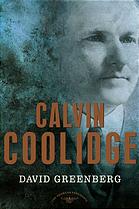
Calvin Coolidge by David Greenberg

President #30, C-SPAN Historians Ranking #26

The chief business of this blog is business

coolidgeCalvin Coolidge assumed the Presidency in 1923 as something of a cipher. But, by the time he left office in 1929, he was one of the most popular men in America. And, very quickly, that popularity vanished with the onset of the Great Depression. Just who was this taciturn man from New England?

David Greenberg, a Rutgers University history professor and a columnist for Slate.com, does an excellent job of putting the life and times of Calvin Coolidge into perspective. Greenberg doesn’t spare Coolidge from some blame for the Great Depression.  He does  provide a motive for Coolidge’s policies, however. Also, Greenberg delves into the public persona of one of the first Presidents who mastered the public relations game, and was able to capitalize on a new medium that was going to transform politics: radio.

Calvin Coolidge came into this world on July 4, 1872 as John Calvin Coolidge in Plymouth Notch, Vermont. His father was a farmer and store owner, and like many people in small towns, held a variety of elected offices. Calvin (who dropped John as a teenager) lost his mother in 1885 to tuberculosis that was complicated by injuries suffered in a horseback accident. His only sibling, a sister named Abigail, died five years later from appendicitis.

Without his mother around, Calvin became a shy and somewhat withdrawn child. His father sent him to a boarding school, where Coolidge had a hard time making friends at first.  Slowly, he came out of his shell and became a leader at his school. Speech and debate proved to be his specialties.

Coolidge would go on to study at Amherst. There he would meet two lifelong friends, and political allies, Dwight Morrow and Harlan Stone. After graduating Amherst, Coolidge studied law as an apprentice in Northampton, Massachusetts. And in 1898, Coolidge won a seat on the Northampton city council, kicking off a career in politics.

For a man who appeared to be very quiet and withdrawn, it would seem unlikely that Coolidge could propel himself into the highest office in the country. But, as Greenberg demonstrates, Coolidge was extraordinarily shrewd in grabbing opportunities to move up the political ladder, as well as presenting himself as a man who could be a leader.

By 1911, Coolidge had been elected to the Massachusetts State Senate. And in 1913, Coolidge became the President of the State Senate. From this position, Coolidge positioned himself with key Republican leaders in Massachusetts, some of whom would be key financiers in his campaigns for higher office.

In 1915, Coolidge was elected to his first of three one-year terms as lieutenant governor of Massachusetts. And in 1918, Coolidge reached what many thought would be the highest position a man like him could hope to obtain, governor of Massachusetts.

Coolidge’s term as governor was marked by reducing government spending and streamlining the bureaucracy of Massachusetts. But, Coolidge might have faded into obscurity if the police officers of Boston had not gone on strike in 1919.

This strike was no ordinary strike. Nearly the entire force walked off the job, leaving the streets of Boston open for roving gangs of thieves and looters.

At first Coolidge didn’t want to intervene, preferring Boston’s mayor to handle the situation. After two days of rioting, in which three people were killed, Coolidge fired the striking officers and sent off a telegram to Samuel Gompers, who was negotiating for the police men, that read, in part, “There is no right to strike against the public safety by anybody, anywhere, any time.”

Coolidge made sure the newspapers saw this telegram. And the public lauded Coolidge for his tough stance on the strike, and his visibility on the national stage increased. The Republicans put him on the ticket in 1920 as Vice President with Warren Harding.

Once Coolidge assumed the Vice Presidency, Harding had little use for him. Coolidge was rarely consulted on policy, and Coolidge spent much of his time trying to keep busy.

Being shut out of Harding’s scandal-ridden White House turned out to be a good thing for Coolidge. When Harding passed away in August of 1923, Coolidge was able to assume the Presidency without any of the baggage from the numerous scandals that were about to come to light.

No one was sure what to make of the new President. Some thought he would be a lightweight compared to Harding (and Harding was about as lightweight as Presidents come). But, Coolidge surprised people with his quiet and seemingly honest and forthright style.

Coolidge quickly appeared everywhere in the press. He held press conferences twice a week for nearly his entire Administration. He would appear in a photo with just about anyone. And he would wear anything photographers asked. (This link is to a particularly rare one.) He was the ideal man for that moment in history.

And what was happening during this time in America? Foremost, the country was prosperous. Wages were increasing. Productivity was up. People could buy and spend freely it seemed. The U.S. economy, bolstered by booming industries in automobiles and radios, looked to be in great shape.

Coolidge, advised by Secretary of Treasury Andrew Mellon, proposed a hefty tax cut, eliminating many surtaxes on the highest income brackets. These had been put in place to help the economy during World War I. But in peacetime, Coolidge and Mellon though that stimulating the economy with tax cuts would ultimately help out all income levels.

Congressional opposition kept Coolidge from getting all that he wanted in the tax bill, but there was enough left to satisfy him. And, according to Greenberg, left America with an economic model that would be adopted 57 years down the road by Ronald Reagan.

In 1924, Coolidge decided to run for President in his own right. This might have been a daunting task. No Vice President, with the exception of Theodore Roosevelt, who had assumed the Presidency after a death had been elected in his own right. And Coolidge was no Teddy Roosevelt.

But, Coolidge was no political innocent. His three principal opponents on the Republican side all were removed in expert ways.

Pennsylvania governor Gifford Pinchot, one of Roosevelt’s last disciples to hold a high office, was asked by Coolidge to help mediate a strike among coal miners in his state, but he had to follow White House directions, effectively taking Pinchot out of the race.

Henry Ford was another rival.  Coolidge offered to sell Ford the Federal hydroelectric plant at Muscle Shoals, Alabama.  After this, Ford decided against running against Coolidge. (The move was later blocked in Congress.)

The third Republican opponent was Wisconsin senator Robert La Follette, a Progressive. La Follette’s Progressive movement was shut out of decision making at the White House, and Coolidge’s people controlled the party regulars, who were needed to have any chance of gaining the nomination. La Follette would run as a third party candidate.

The Democrats provided even less opposition to Coolidge than his own party. With the resurgence of the Ku Klux Klan throughout the nation, the Democrats found themselves being identified as the party of the Klan because of their strength in the South. The Democrats took 103 ballots and 10 days before coming up with a nominee in 1924, as the party split over support for the Klan. It was a New York lawyer (although born in West Virginia) named John W. Davis who got the nomination.

Bruce Barton, a public relations man who worked in the White House and deftly crafted Coolidge’s image, had celebrities, such as Al Jolson, campaign for the President. (In 1924, Hollywood and Broadway were dominated by Republicans.) Coolidge also used the radio to deliver speeches, which allowed him to reach a much wider audience than ever before. Greenberg estimated that the crowds of people who showed up for Theodore Roosevelt’s speeches were about 13 million people. Coolidge could reach more than that with just one radio address. (You can listen to some of Coolidge’s speeches here.)

Coolidge, like Harding in 1920, won the election in a landslide. The Democrats won only in the states of the Confederacy, plus Oklahoma. Coolidge won 54.4% of the vote and Davis won only 28.8% of the popular vote, the lowest percentage for a Democratic nominee ever. Third party candidate La Follette won 16% of the vote and carried his home state of Wisconsin.

In his full term in office, Coolidge continued his pro-business policies. It was in January 1925 when Coolidge issued his famous statement “The principal business of America is business.”  Greenberg also points out that Coolidge followed up that statement with “The chief ideal of the American people is idealism.”

This means that either: 1) Coolidge truly had a pro-business agenda, 2) Coolidge’s idealism was about business’s ability to improve the nation, 3) Coolidge was just trying to sound smart or profound, 4) it was all an act. It was likely all four.

Coolidge’s election energized the stock markets. Millions of people who had never invested before turned to the stock market with the hope of quick riches. Real estate prices soared in some markets, especially in Florida. Few people believed that there would be any end in sight to this prosperity.

While the economy soared, America was faced with numerous internal conflicts. Women, now with the right to vote, were starting to assert their independence and sexuality during this time. Civil rights remained an issue that had to be confronted. American literature, music, and art were all undergoing rapid changes.

And what was Coolidge’s response to all this? Not much. He just kept quiet (an image he cultivated) and tried to present the image that he was taking care of things. He wanted Americans to believe that their president was a simple guy. He liked to go back to his farm to work. (Be sure to dress appropriately!)

Over in Europe, the situation was not as rosy. Nearly every European country had built up huge debts that they owed to the United States. Germany was also trying to pay off reparations as well. Germany ended up facing a hyperinflation scare where, at one time, one U.S. dollar was worth 4.2 TRILLION marks.

Coolidge, while trying to maintain an isolationist stance, did encourage some international agreements that were supposed to alleviate the debt problem, as well as reduce the chance of another world war. But, not much more was produced other than toothless agreements such as the Kellogg-Briand Pact, which was supposed to prohibit the use of war as an instrument of national policy. Its effectiveness proved to be limited, to put it kindly.

Although Coolidge did not wish to get involved in European matters, he had a different view toward Latin America. Coolidge and Morrow had to work hard behind the scenes to prop up the Mexican government of Alvaro Obregon. When Obregon was replaced by Plutarco Elias Calles in 1923, more problems followed, as Calles moved to nationalize businesses and the holdings of the Catholic Church.

Then in 1926, Coolidge ran into a problem in Nicaragua when he withdrew Marines who had been supporting the government there. With the Marines gone, civil war broke out in Nicaragua. And Coolidge had to send the Marines back.

Coolidge’s friend, Dwight Morrow, was able to negotiate a solution to the problem in Mexico. However, the problems of Nicaragua would be a thorn in the side of American presidents for the next 60 years.

In 1928, when Coolidge addressed the Pan-American Congress in Havana, he spoke of the region’s shared goals. But, Coolidge found few friends.  The Pan-American Congress almost adopted a resolution condemning the U.S. for intervening in the affairs of other countries in the region. At the last minute, American delegate Charles Evans Hughes was able to get the resolutuion withdrawn.

In August of 1927, Coolidge famously announced his intention not to run for a second full term in 1928 by handing reporters small slips of paper that read, “I do not choose to run for president in 1928.” Coolidge had felt that he had done enough as President and had little to gain by running for another term. Also, Coolidge had still never recovered psychologically from the death of his son, Calvin Jr., in 1924 from an infected blister.

And so, Coolidge departed the White House in March of 1929. His Secretary of Commerce, Herbert Hoover, took over. And, as most of us know, the stock markets crashed a few months after Hoover was sworn in. And soon after that, the Great Depression began.

The economic hard times made people look back at Coolidge and wonder if he was responsible for the calamity.

Greenberg gives Coolidge a mixed report card. He feels that Coolidge didn’t act to put any controls on the stock market or banking systems because he felt it wasn’t the Federal government’s role. No one had done so before, and it would be especially unlike Coolidge to have taken the lead in this field. But, Coolidge had to have known that the rise in the price of stocks couldn’t be sustained.  Greenberg writes that Coolidge’s tax cutting policies encouraged speculation in corporate stocks, instead of bonds, further inflating their prices, and screwing up (this is a technical term used by economists!) credit markets. (Since corporate taxes were lower, corporations paid out larger dividends.)

According to Greenberg, the difficult in assessing Coolidge is that he is evaluated by people who knew what the problems with the U.S. economy were. But, few people from 1923 through 1928 foresaw those problems. (Some people did, but no one who was in a policy making position did.)  Coolidge ran the country according to a political philosophy that got him from a job as a city councilman in Northampton, Massachusetts, all the way to the White House.

Franklin Roosevelt’s New Deal would make Coolidge’s laissez faire policies seem almost quaint. But, they would be revived in 1980 when Ronald Reagan was elected. And another Republican who knew how to manipulate his public image and get his programs through Congress would return to the White House.

When Coolidge passed away in January of 1933, he was already an afterthought to some. Dorothy Parker, upon being told that Coolidge had passed away, remarked, “How could they tell?”

Other stuff: Calvin Coolidge’s birthplace in Plymouth is an historic site operated by the State of Vermont. The Calvin Coolidge Presidential Library and Museum is in Northampton, Massachusetts. It is not operated by the National Archives, but rather by the Forbes Library, which is a public library established by Judge Charles E. Forbes in 1894.

Coolidge’s Vice President, Charles Dawes, began his term with a speech excoriating the Senate for having obsolete rules. Early in 1925, Coolidge faced a contentious nomination for his Attorney General candidate, Charles Warren. It appeared that the Senate was going to tie 40-40 on the nomination (ties don’t go to the nominee). Dawes, as President of the Senate, could have cast the deciding vote in favor of Sargent. However, when the vote came up, Dawes was taking a nap back at his hotel. The Senate voted without him present and rejected the nomination. Coolidge rarely spoke to Dawes again after that.

Add to FacebookAdd to DiggAdd to Del.icio.usAdd to StumbleuponAdd to RedditAdd to BlinklistAdd to TwitterAdd to TechnoratiAdd to FurlAdd to Newsvine