Of the nine Presidents who have been in office in my lifetime, none had the impact that Ronald Reagan has had. Ronald Reagan succeeded in transforming not just the office of the Presidency, but also the nature of how politics and government is viewed by the country overall. To the Republicans of today, he is revered like no one else in the party, at times outstripping Abraham Lincoln in fame. To the Democrats of today, he is mostly reviled, although sometimes begrudgingly respected.
For historians and biographers, Ronald Reagan is a popular, yet somewhat difficult subject. Edmund Morris lived with Reagan during almost all of his eight years in office. And yet, he could not truly figure out who Reagan was. So, Morris created a fictional character as the narrator for his biography of Reagan called Dutch.
Lou Cannon, a longtime reporter in Sacramento, had a career of covering Ronald Reagan. He wrote a two–volume biography of Reagan. And Cannon never came close to figuring just who Ronald Reagan was.
I opted for a shorter tome, written by San Francisco State University professor Jules Tygiel. Tygiel, who passed away in 2008, is best known for writing a history of Jackie Robinson’s experience with the Brooklyn Dodgers called Baseball’s Great Experiment. Tygiel also wrote a book on the Julian Oil scandal called The Great Los Angeles Swindle.
One of the reasons for choosing this book is that I actually had corresponded several times with Tygiel about baseball history, and found that he was very generous and giving of his time. He was always willing to help out a researcher if he could. So, since I had a gift card to a bookstore, I picked up his book, figuring that his family would get some royalties for this. (Also, I would finish this series a lot sooner.)
Tygiel’s book is, like nearly all of the others I’ve read for this blog, a synthesis of many other writers works. The book is actually intended to be used as a college textbook. Nevertheless, Tygiel injects his opinion of Reagan’s time as President frequently. To Tygiel, Reagan’s biggest contributions (as the title would indicate) were ideological, but his actual achievements may have been less than what his reputation merits. As an aside, I have found this to be the case with every President from George Washington on. The better job that a President did, the more people expect more to have been achieved.
The book takes a while to get to Reagan’s Presidency, but that is hard not to do for someone who was not inaugurated until he was 70. And Reagan’s journey through life gives insight into how he made what was an unlikely career path from studio contract actor to conservative political icon. Continue reading →
If you were alive on April 12, 1945 and learned that Harry S. Truman had become President of the United States after the death of Franklin Roosevelt, you likely would not have been filled with confidence.
Truman was a relatively unknown former Senator from Missouri. He was a product of a corrupt political machine in Kansas City. He did not have a college degree. He had not been overly successful in his private life.
In his first few months on the job, Truman had to figure out how to bring about a successful end to World War II, whether or not to unleash atomic weapons on the world, and deal with an ever-growing threat from the Soviet Union, a threat potentially more dangerous than the threat from Germany and Japan. Mao Tse-Tung was leading a Communist revolution in China.
Harry Truman seemed like he was ill-prepared to handle these challenges. His honeymoon from criticism barely lasted until the end of 1945. He was one of the least popular Presidents (in terms of approval ratings) in the 20th Century.
And yet, Truman pulled off one of the biggest upsets in American politics when he was elected in 1948. And after that, Truman’s popularity dropped even more.
Despite all of this, historians now rank Truman as one of the greatest Presidents not named Lincoln, Washington, or Roosevelt. How did Truman pull all this off? Robert Dallek, who appeared earlier here in a biography of John F. Kennedy, shows how Truman’s ability to quickly master the rapidly changing world situation, combined with an almost seeming disregard for what was politically popular, but confidence in knowing that he was doing what was best for the country, turned him into one of the most effective Presidents of the 20th Century.
On the other hand, Truman has to take responsibility for ordering the atomic bombs to be dropped on the cities of Hiroshima and Nagasaki. The nuclear arms race began while he was President. The United States fought a bloody war in Korea that is officially not over.
It was none other than Winston Churchill, who said of Truman, “The last time you and I sat across a conference table was at Potsdam. I must confess, sir, I held you in very low regard. I loathed your taking the place of Franklin Roosevelt. I misjudged you badly. Since that time, you, more than any other man, have saved Western civilization.”
Harry S. Truman (the S was not an initial it was just a letter as his parents could not agree which side of the family should be honored by the middle name) was born on May 8, 1884 in Lamar, Missouri. His parents moved around to various farms in Western Missouri before settling in Independence, just outside of Kansas City in 1890. Truman was a bright child, but did not get a chance to go to college for financial reasons. Truman worked in a series of odd jobs: mailroom clerk, railroad timekeeper, farm hand.
In 1917, Truman signed up with a Missouri National Guard unit that went to France to fight in World War I. (He had been a member earlier in his life, mainly in an attempt to meet more influential people.) Truman became an officer in the National Guard and won plaudits for his bravery in combat.
When Truman returned to the U.S., he felt comfortable enough with his station in life to marry his longtime sweetheart, Bess Wallace. That same year, Truman and a friend opened a haberdashery in Kansas City (I rarely ever see the word “haberdashery” written anywhere except Harry Truman biographies.) The business went bankrupt in 1921.
During his war service, Truman also became friends with the nephew of Kansas City’s political boss, Thomas Pendergast. Truman aspired to a career in politics. Pendergast was looking for someone who could run for a position as one of the judges of Jackson County, Missouri. (This was an administrative, not judicial position.) Jackson County is the largest of the four counties that make up Kansas City, Missouri.
Truman won the election in 1922, lost in 1924, and then was elected again in 1926, 1928, and 1930. Although Pendergast was a classic big city political boss who made his living on kickbacks, Truman worked hard and honestly at the job. He supervised road construction in the county. And, during the throes of the Great Depression, helped to coordinate aid to unemployed citizens as best he could.
By 1932, Truman wanted to run for higher office. He aspired to be governor of Missouri, or possibly win a seat in the House. But, Pendergast said no. It would not be until 1934, when fortune smiled upon Harry S. Truman.
Missouri had a Republican senator up for reelection in 1934. The leading Democratic challenger to him was a rival to Pendergast. So, Pendergast tapped on his friend Harry Truman to run in the primary. It turned out to be a three-way contest between Truman, the Kansas City candidate, a St. Louis-backed candidate, and a reform candidate both the St. Louis boss and Pendergast hated. Truman won the primary by 40,000 votes and had an easy win in the general election.
Truman was now going to Washington. At first, Truman felt overwhelmed by his new surroundings. But, he received a friendly bit of advice from Illinois Senator J. Hamilton Lewis, “For the first six months, you’ll wonder how the hell you got here, and after that, you’ll wonder how the hell the rest of us got here.” (Good words to live by if I don’t say so myself.)
The Democrats had a majority of 71 seats at one point during Truman’s first term. This was a problem for a freshman senator because it was hard to stand out when nearly every bill suggested by the White House sailed through the Senate easily. Truman would face a stiff primary challenge in his 1940 reelection bid by Missouri Governor Lloyd Stark. His patron, Tom Pendergast, was now serving a prison sentence for corruption.
Stark was considered a heavy favorite by political pundits in Missouri. However, Stark was also trying to get to be Franklin Roosevelt’s running mate in 1940. Truman jumped on this to point out that Stark was not fully committed to the people of Missouri. Also, Truman was able to portray himself as a strong defender of the New Deal. It proved to be just enough as Truman won the primary by 8000 votes. A general election victory followed.
World War II would give Truman a chance to show that he could be an effective senator. After touring numerous defense plants, Truman realized that the American war effort was hampered by widespread waste. Truman chaired a committee to investigate the matter.
Truman’s committee turned up millions of dollars wasted, contracts granted without bids, and price fixing. Publicly, Truman’s committee was a success because it managed to punish both labor and management.
In 1944, Roosevelt was going to run for a fourth term as President. His Vice President, Henry Wallace, was considered too liberal and too likely to run his mouth to be kept on the ticket. (The condition of Roosevelt’s health, which was very poor, did not seemingly enter into the decision.)
Roosevelt wanted a new VP, but he did not want to look like the bad guy. Wallace was sent off to visit China and Russia to be kept out of the picture. Roosevelt thought of asking two different Supreme Court justices, Thomas Byrnes and William O. Douglas, but both declined. Byrnes was also considered too conservative and Douglas too liberal.
In the end, Roosevelt and Democratic Party leaders settled on Truman. He was neither too liberal nor too conservative. He was considered loyal. He would do what he was told. And so Truman got the nomination.
Then came April 12, 1945. Truman said he felt as if “the moon, the stars, and the planets had all fallen on me.” Continue reading →
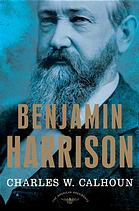
Benjamin Harrison ran for President twice and never got the most popular votes. Republicans chose him to run because he both a famous name (his grandfather was William Henry Harrison) and he came from an important swing state at the time (Indiana). Few of us would likely be able to name any of his accomplishments.
Charles W. Calhoun, a professor at East Carolina University (which is in North Carolina, unlike Coastal Carolina University which is in South Carolina) who is one of the most prominent historians who study the Gilded Age, manages to both humanize Harrison while also elevating his place in history.
Benjamin Harrison was President in a time when power shifted between Republicans and Democrats often. Populist political movements threatened to take down the establishments of both parties. There were violent strikes affecting crucial industries and widespread dissatisfaction with the nature of the economy. Harrison’s four years in office were far from tranquil.
The man in charge of the country during this time was a Born Again Christian Republican who favored a big government, a high tariff, and increased civil rights for African-Americans. He had majorities to work with in Congress for his first two years, but could only pass a portion of what he wanted. Harrison’s boldest ideas (in the area of civil rights) fell victim to Senate filibusters and political horse trading.
Benjamin Harrison was born on August 20, 1833 in North Bend, Ohio, the same city where his grandfather would be buried after a just a month as President in 1841. Harrison’s father, John Scott Harrison, was a member of the House of Representatives. After two years at Farmers College in Cincinnati (which is no longer in existence), Harrison enrolled at Miami University in Oxford, Ohio. (Graduates of this university do not like you to call it “Miami of Ohio” as they feel, quite rightly, that their school is far more distinguished than the University of Miami in Florida. It would help the case of the Ohioans if they had bothered to get the correct URL.)
After graduating in 1852, Harrison apprenticed with an another attorney to learn the law. He married Caroline Scott in 1853, passed the bar in 1854, and moved to Indianapolis to seek his fortune. Harrison wanted to move out of Ohio because he did not want to trade on his family name to get ahead.
Harrison quickly built a reputation as an excellent attorney, especially in criminal trials. In 1857, the people of Indianapolis chose him as the city attorney. In 1860, Harrison won the office of reporter of the Indiana Supreme Court. This job, which paid well, required Harrison to print, publish, and sell all the opinions of the state courts.
When the Civil War began, Harrison first declined to join the Union Army because of family obligations. But, in 1862, Harrison decided to enlist and he became a colonel in command of a regiment of Indiana volunteers. Harrison did not see much action until 1864 when his regiment joined in General William Sherman’s Georgia campaign. Calhoun believed that Harrison saw more battles during that Georgia campaign than his grandfather did in his nearly 30 years in the Army. Harrison was a Brigadier General when the war ended.
Harrison won another term as Supreme Court reporter for Indiana in 1864, despite his military obligations. While he received offers to run for higher office, Harrison declined them until 1872, when he tried to win the Republican nomination for governor of Indiana. However, Harrison did not prevail at the state convention.
In 1876, Harrison did get the nomination after the first nominee dropped out of the race. Harrison lost to the Democratic candidate, James Williams, by about 5,000 votes.
Harrison’s strong showing in the governor’s race started to get people talking about him as a Presidential candidate in 1880. Harrison’s time had not come though. James Garfield won the Republican nomination as a dark horse choice and, ultimately, the Presidency.
In 1881, Harrison finally got a chance to shine when he won a Senate seat. Harrison did not compile a distinguished legislative record, but he was still regarded as a possible contender in the 1884 Presidential race.
But, in 1884, perennial contender James G. Blaine of Maine won the nomination. Harrison and fellow Hoosier, Postmaster General Walter Q. Gresham, ended up in a bitter feud over whom the Indiana delegation should support. This ultimately took away any chance either man had of winning nomination as President or Vice President. Blaine lost to Democrat Grover Cleveland, the first Republican to lose a Presidential election since John C. Fremont in 1856.
Back in Indiana, the Democrats had managed to gain control of the Legislature through a redistricting measure. The Indiana legislature did not reelect Harrison in 1887, choosing Democrat David Turpie by one vote.
In 1888, President Cleveland appeared to be a vulnerable incumbent. Cleveland had shepherded a tariff reduction act that was extremely unpopular in the Northern states, which were dependent upon protective tariffs for their industries.
The Republican race for the nomination in 1888 was wide open after Blaine announced he would not run. Harrison and Ohio Senator John Sherman were the front-runners, but no one had a wide base of support.
Although Blaine was not running, it did not mean he was not working behind the scenes to pick a nominee he liked. Blaine decided that Harrison’s policies were the most in line with his, and after several ballots, Harrison won the nomination. New York banker Levi Morton was chosen as his running mate. Cleveland was renominated with a new running mate, Allen Thurman. (Vice President Thomas Hendricks had passed away after eight months on the job.)
Interest in the election was huge. The tariff was the main issue and that was causing the North and South to dig in deeply along partisan lines. It was likely that a few key swing states, such as Indiana, would be crucial.
The election had its seamy sides to it. A Republican partisan in California wrote a letter to the British minister to the United States, Sir Lionel Sackville-West, pretending to be a British subject with the name of Murchison. “Murchison” asked Sackville-West which candidate would be better for England. Sackville-West wrote back that Cleveland would be preferable. The letter was made public, stirring up a fury among Irish-Americans.
The Republicans would also be caught in a scandal known as the “Blocks of Five.” A Republican Party official instructed Indiana precinct captains to divide all undeclared voters into “blocks of five” and use an appropriate amount of money to buy their votes. It is generally believed that Harrison was ignorant of this scheme.
When the votes were all counted, Cleveland had won the most popular votes by a margin of 90,000 (48.6% to 47.8%). But, Harrison prevailed in the electoral vote by a margin of 233-168. Harrison won the crucial states of New York (36 electoral votes) and Indiana (15) by less than 1%. The vote broke along almost completely along sectional lines.
When Harrison formed his Cabinet, he made Blaine his Secretary of State and William Windom his Secretary of Treasury. Both men had held these positions while James Garfield was President, but had stepped down after Garfield’s assassination.
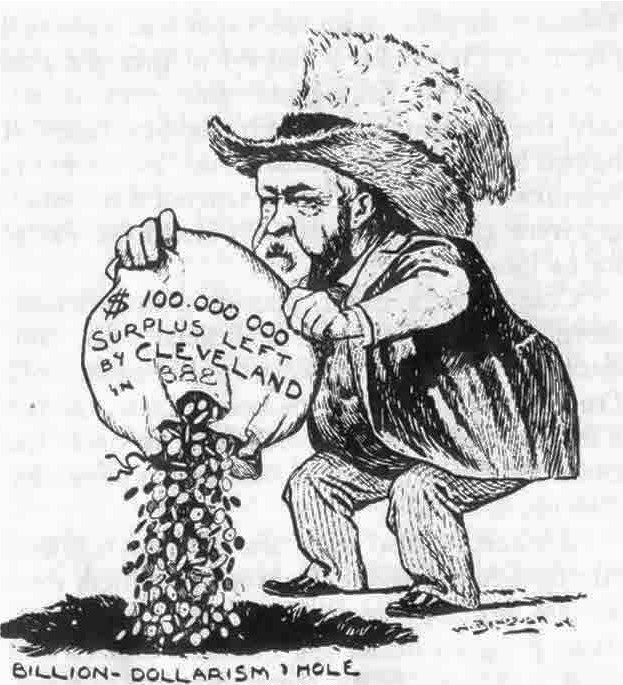
The Republicans in the new 51st Congress did not waste much time in trying to enact much of Harrison’s agenda. The government was running a large surplus at the time (about $100 million) and there was plenty of spending to go around. Civil War veterans pensions were extended. Tariffs were raised. In 1890, the Sherman Antitrust Law went into effect, the first Federal law enacted that to prohibit unfair business cartels and monopolies. Although Harrison’s Administration would not do much to enforce the act during his time in office, the Sherman Antitrust Law is the cornerstone of all antitrust law in the United States today.
John Sherman, besides the antitrust law, also gave his name to another important law dealing with the economy, the Sherman Silver Purchase Act. Western farmers wanted to increase the amount of silver used as legal tender because: 1) they were in debt and needed more money and 2) there was a lot of silver around in the West. Eastern financiers did not want silver in circulation for fear of it hurting the price of gold and creating inflation. Farmers did not mind inflation because their debts were not going to going up because of them.
The Silver Purchase Act required the government to buy some silver every year and issue bank certificates that could be exchanged for either gold or silver. This compromise was supposed to give Harrison and the Republicans some breathing room from a growing populist movement in the West. Ultimately, the plan would not work in any way.
Another law Harrison tried to get through Congress in 1890 was a Civil Rights Bill. Sponsored by Representative Henry Cabot Lodge of Massachusetts, the bill would have allowed the Federal government to supervise any Congressional election after receiving a petition from a specified number of citizens. Southern Democrats filibustered this bill and threatened to do the same to the Silver Purchase Act. The Republicans decided that silver trumped civil rights and backed off on the legislation.
The 51st Congress became known as the Billion Dollar Congress for the amount of spending it authorized. In the 1890 off-year elections, Democrats hammered the Republicans for the excessive spending. The Republicans, who had controlled the House by a 172-159 margin, found themselves in a 236-88 hole after the 1890 election. Because of new states joining the union (North and South Dakota, Montana, Washington, Idaho, and Wyoming), the Republicans did maintain a majority in the Senate.
With a hostile Congress making it impossible to accomplish anything on his domestic agenda, Harrison spent much of his final two years concentrating on foreign affairs. The United States ran into problems with Canada (and, by extension, Great Britain), Italy, and Chile.
The problem with Canada was the hot button issue of pelagic sealing. The United States had granted a company a limited license to hunt seals on the Pribilof Islands of Alaska. The company was not allowed to hunt the seals in the open ocean (pelagic sealing.) Canadian sealers believed that once the seals reached international waters, they were fair game, and part of the unique Canadian right to beat up baby seals.
In the 1890s, Canada’s foreign affairs were handled by Great Britain. Harrison used the pelagic sealing dispute to show the British that the United States was not going to back down to a European power. Harrison threatened military action to protect the seals. Eventually, the Canadians backed down and agreed to arbitration. And, in 1893, the Canadians prevailed and won the right to hunt seals to their hearts’ content. (Well, almost.)
The dispute with Italy involved a lynch mob in New Orleans. In 1891, some Mafia-connected men were acquitted of the murder of a New Orleans police lieutenant. A mob, led by the mayor of New Orleans himself, killed 11 Italian-Americans, three of them Italian nationals. (In New Orleans, there’s no better justice than mob justice.) Italy recalled its minister from the U.S., prohibited beef imports from the U.S., and demanded an indemnity. Harrison held the line and only gave the Italians a profound apology. (Harrison believed that the Federal government had no role to play in eliminating lynchings.)
The dispute with Chile was also in 1891 when some sailors from the U.S.S. Baltimore were attacked by a mob in Valparaiso while on shore leaves. Two sailors were killed. Harrison did get Chile to apologize and pay a small indemnity ($75,000).
Harrison ended up doing much of the work of Secretary of State James Blaine. The former Maine Senator was not a hard-worker, which rankled the industrious Harrison. Further complicating matters, Blaine was suffering from kidney disease. Blaine was openly contemptuous of Harrison’s performance as President, while Harrison found Blaine to be a lazy slugabed.
In June of 1892, Blaine resigned as Secretary of State to make one final run for President. However, there was little or no support for Blaine among Republican regulars. No one wanted to dump the incumbent Harrison from the ticket. (Blaine passed away in January of 1893.)
Harrison did want to dump his Vice President, Levi Morton. Morton had done little to advance Harrison’s legislative agenda in the Senate, especially the Civil Rights Bill. So, Morton was sent packing and New York newspaper publisher Whitelaw Reid was put on the ticket.
The Democrats decided to go with former President Grover Cleveland. He had won the popular vote in both of his earlier runs, so why mess with success? Adlai Stevenson was nominated for Vice President.
1892 was a turbulent year in the United States. A strike at an Andrew Carnegie-owned steel plant in Homestead, Pennsylvania, turned deadly when striking workers fired on Pinkerston agents hired as strikebreakers. Four people died in an exchange of gunfire. The Pennsylvania National Guard had to come to Homestead to restore order.
The growing populist movement among Western farmers had finally coalesced into an actual third party. The group named itself the People’s Party, but was more commonly called the Populist Party. James B. Weaver of Iowa would be its standard bearer in the Presidential Election of 1892.
The Silver Purchase Act was not having its desired effect. Nearly everyone given a greenback that they could exchange for either silver or gold, opted to take gold. This created a serious drain on gold reserves, as well as concentrating more wealth in the East.
Amidst the Presidential campaign and economic crises, Harrison’s wife, Caroline, was dying. At first doctors did not know what was causing her general weakness. Tuberculosis turned out to be the culprit. On October 25, 1892, two weeks before Election Day, Caroline Harrison passed away.
Out of respect, Cleveland ceased campaigning, so as not to take advantage of Harrison’s grief. The final days before the election were grim as Harrison faced a likely defeat to go along with his wife’s passing.
Cleveland won his rematch with Harrison. He edged him in the popular vote by about 400,000 votes nationwide. Cleveland won 277 electoral votes. Harrison won 145. Weaver won four Western states worth 22 electoral votes.
Soon after Cleveland took office, the economy collapsed. Cleveland’s economic policies were not much different from Harrison’s however. It would take the better part of four years for the economy to regain its strength.
In retirement, Harrison worked as a trustee for Purdue University. He also resumed his law practice on a limited basis. In 1896, Harrison remarried. His late wife’s niece, Mame Dinnick, was a 38-year old widow, who had long been a close family friend of both Benjamin and Caroline Harrison. Harrison’s daughter and son refused to attend the wedding of their father, accusing Mame Dinnick of carrying on an affair with their father while their mother was dying. (Calhoun does not put much stock in that accusation.) In 1897, Harrison fathered a child at the age of 63.
In 1900, Harrison traveled to The Hague to argue a border dispute for Venezuela against Great Britain. Harrison brought his new family along with him. The job was taxing. Harrison wrote nearly all of an 800-page brief for the arbitrators. Harrison and the Venezuelans lost the case.
In February of 1901, Harrison developed a cold. This turned into pneumonia, which proved fatal to him on March 13, 1901.
Benjamin Harrison’s story is one not often mentioned in history books. He is remembered more for being the last President to wear a beard. Harrison, like many politicians of the Gilded Age, owed much of his success to friends in high places. Politicans from this era are rarely judged on their ideas, but mostly on the company they kept.
Harrison was an honest man (especially by Gilded Age standards) who never had broad appeal to the rest of the United States. The nation was still not completely over the effects of the Civil War. Harrison made some effort to edge the United States into a more modern era of politics. But, it would take the next two Republican Presidents, William McKinley and Theodore Roosevelt, to revamp the American political system.
Other stuff: Benjamin Harrison’s birthplace was also the home of William Henry Harrison at the time. The home is not there anymore, but there is a marker. Harrison’s home in Indianapolis is now a museum run by the President Benjamin Harrison Foundation. Harrison is buried next to both of his wives at Crown Hill Cemetery in Indianapolis.
Harrison’s White House was the first to have electric lighting. In general, the Harrisons were afraid to touch any switches as they thought they would be electrocuted. They tended to leave the lights on.
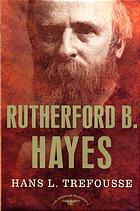
Rutherford Birchard Hayes was, by all accounts, an intelligent and honest man who made his way to the White House in the most controversial fashion of any President until George W. Bush. Despite his personal integrity, his reputation from historians has taken a beating.
Hayes is viewed as the man who gave up on the idea of Federal enforcement of civil rights for blacks in the South for a period that lasted past World War II. He accomplished little in his one term as he faced a Congress that was hostile toward him. That was just the members of his own party. The Democrats in Congress hated him more.
Hans L. Trefousse, one of the foremost experts on the Reconstruction Era, tries to do his part to rehabilitate Hayes’ image. However, Trefousse did a better job making Andrew Johnson look like a racist monster, than he does in making Rutherford Hayes look like an underappreciated Chief Executive.
Rutherford Birchard Hayes was born on October 4, 1822 in Delaware. Delaware, Ohio, that is. His father died before he was born. (Three presidents were born after their fathers had died: Andrew Jackson, Hayes, and Bill Clinton.) Hayes’ uncle, Sardis Birchard, helped raise young Rutherford along with his mother, Sophia.
From an early age, Sardis Birchard exposed to young Rutherford to classic works of literature and taught him Latin and Greek. Hayes graduated from Kenyon College in 1842, and later would attend Harvard Law School. Hayes returned home to Ohio and started a law practice in Cincinnati.
In 1852, Hayes married Lucy Webb, who was the love of his life. The two of them had eight children together and would be married for 37 years. Lucy had graduated from what is now Ohio Wesleyan University, and would be the first First Lady to have a college degree.
Hayes’ law practice was successful and he became well known in political circles. When the Republican Party began in 1856, Hayes joined it immediately. Already leaning toward the side of abolition, Lucy’s strong religious beliefs pushed Rutherford firmly into that camp.
When the Civil War began, Hayes signed up for the Army. Hayes took command of a group of Northern Ohio volunteers, and, after a lot of reading up on military affairs, became a respected commander in the field. In the early part of the war, Hayes saw action in West Virginia. He was wounded in a battle that was a preliminary to the bloodbath of Antietam (about 22,000 people died on one day in that battle, the most casualties on any one day in U.S. history.)
Hayes returned to the battlefield in December of 1862 and was now a Brigadier General. Another future President, William McKinley, was under Hayes’ command.
Even before Hayes left the Army, the voters of Ohio elected him to the House of Representatives. He finally took office in December of 1865. Hayes would be a strong supporter of Civil Rights and a vehement opponent of President Andrew Johnson. Hayes resigned his seat in July of 1867 to run for governor of Ohio.
Hayes barely won the election as governor, but the Democrats controlled both houses of the Ohio Legislature. This would prove to be a problem as the governor of Ohio had no veto power at the time. With little to do the first two years except give speeches and make suggestions that no one heeded, Hayes became more involved with Republican politics at the national level.
In 1870, Hayes won a second two-year term, eking out a win by a little over 7500 votes. Hayes toyed with the idea of a Senate run in 1872, but decided against it, thinking it better to retire from politics with his reputation unsullied.
Hayes could not stay away. Or, perhaps, the Ohio Republican Party could not stay away from Hayes. In 1875, Hayes ran for a third term as Governor of Ohio. He won and took a Republican majority into both houses of the Legislature with him. Hayes was now discussed as Presidential material.
For much of the American history, Ohio has been a popular place to find Presidential candidates. The state is both Midwest and East. It is both industrial and agricultural. And, it has always had a healthy number of electoral votes.
Maine Senator James Blaine was the favorite for the nomination going into the Republican Convention. Cincinnati would be the site.
Blaine was well-known, but he had his enemies within the party. The anti-Blaine forces managed to keep the “plumed knight of the Senate” (as some called Blaine) from ever gaining a majority of the delegates. On the seventh ballot, the anti-Blaine forces coalesced around Hayes and got him the nomination. William Wheeler of New York was nominated as Vice President. The Democrats nominated New York Governor Samuel Tilden for President and Indiana Governor Thomas Hendricks for Vice President.
1876 was expected to be a Democratic year. Tilden was known as an honest, reform-minded candidate. The country was in the midst of a terrible economic crisis. The Republicans had held a 199-88 majority in the House in 1873. After the 1875 election, the Democrats held a 182-103 majority.
Hayes did not expect to win and there was not much he could do personally to help himself. 1876 was still a time when it was considered unseemly for candidates to personally go out and campaign. It would all be a matter of which party could find ways to get as many people to the polls. Or, in the case of the Democrats in the South, how many black voters they could keep away through intimidation or legal shenanigans.
When the results came out on Election Day, there was no clear winner. The New York Times (then a distinctly Republican leaning publication) reported the results as 184 electoral votes for Tilden and 181 for Hayes. 185 was the magic number. There was one state that had not yet been decided. It was … wait for it … Florida! (Florida had just four electoral votes in that era.)
But, the 181 total for Hayes was not entirely clear. Aside from Florida not reporting, there were conflicting returns from Louisiana and South Carolina. Also, there was one elector in Oregon that was being contested. The New York Times had already given Louisiana, South Carolina, and the lone vote from Oregon to Hayes. However, nobody knew which set of returns was correct. Tilden was going to prevail in the popular vote regardless.
In the end, all the disputed states ended up sending in TWO sets of electoral ballots. If Congress would count the Democratic votes (and not even all of them), Tilden would win. If Congress counted all the Republican votes, Hayes would win.
The Constitution stipulates that electoral votes are to be counted in front of a joint session of Congress with the President of the Senate presiding. But, there was no provision to handle a disputed set of returns. The House was in control of the Democrats and the Senate was controlled by Republicans. The President of the Senate was Republican Senator Thomas Ferry of Michigan, who was the President Pro Tem. (Vice President Henry Wilson had passed away in 1874.)
There were negotiations back and forth between the Democrats and Republicans about how to count the votes. In January of 1877, a joint committee recommended the establishment of special panel to look at the disputed returns. It would consist of 15 people, five from the Senate, five from the House, and five from the Supreme Court. The Senators would be three Republicans and two Democrats and the Representatives would be three Democrats and two Republicans. The Supreme Court justices would hold the balance as there would be two Democrats, two Republicans, and one independent, David Davis.
Davis was from Illinois. The legislature there, controlled by Democrats, tried to buy off Davis by electing him to a vacant Senate seat for Illinois. Davis responded to this by resigning his seat on the Supreme Court. The Democrats had to settle for a Republican justice, Joseph Bradley. Democrats thought Bradley was the least partisan member of the Supreme Court left to choose.
As Congress counted the votes, (I’ve watched the process on C-SPAN and it is scintillating action), when the first set of disputed results came up, Florida’s, the matter was referred to the special Electoral Commission (as it was so called). The Commission voted along partisan lines 8-7 to approve the Republican returns. This was the case in all the disputed results. The count was not finished until 4:10 a.m. on March 2, 1877, less than two full days before the new President would be inaugurated. (Congress would quickly get to work to pass a new law to handle situations like this. It took only 10 years and basically stated that whichever set of returns is approved by the governor of a state counts.)
Outgoing President Grant had Hayes secretly sworn in as President in the White House on March 3. Since March 4 was a Sunday, the public ceremony would not be until March 5. Grant did not wish to risk Democrats disrupting the swearing in or getting some sort of injunction to prevent it.
Hayes, who did not like the way the matter was handled, nevertheless accepted the result. He believed that if the Southern Democrats had not intimidated black voters and illegally suppressed the turnout, he would have won easily. But, Hayes was branded “His Fraudulency” and “Old 8 to 7” in the press.
One of the first fallouts from the election was the removal of Federal troops from Louisiana, which allowed the Democrats to reclaim the political machinery of the state. The military reconstruction of the South was over. Any hope that African Americans had in those states of achieving any semblance of equality would have to be deferred for generations.
Hayes also named a Southerner to his Cabinet. David Key of Tennessee became Postmaster General. Historians still dispute if these two events were part of a deal struck by the Republicans to allow the election of Hayes. Trefousse believes that the true victor of the 1876 election will never be known. There was too much corruption on both sides.
The first two years for Hayes were extremely rocky. Democrats wanted to hold hearings into the election results, with the possible aim of reversing the result. The Republican in charge of counting the votes in Louisiana was prosecuted for fraud. Hayes remarked that he felt that the man would not have charged with any crime if he had just said that the Democrats had won.
Hayes tried to take on the cause of civil service reform as one of his first tasks. The first Federal job Hayes went after was Collector of the Port of New York. The man in charge there was Chester Arthur, an ally of powerful New York Senator Roscoe Conkling, who wanted no part of civil service reform.
Following the recommendations of a report by a commission looking into the subject, Hayes ordered Arthur and two other Conkling allies to resign. All three men refused to resign, so Hayes suspended them. Theodore Roosevelt, father of the future President, replaced Arthur. Fewer than six months on the job, Hayes had managed to alienate himself from one of the most powerful men in his own party in Conkling.
While the tempest over the Port of New York was brewing, Hayes faced another major domestic problem: railroad strikes. In July, railroad workers throughout the country went on strike. In some areas, miners joined the strike. Riots sprung up throughout the country. Hayes called in Federal troops to restore order, and, ultimately, get the trains running again.
Before Hayes sent his annual message to Congress, he had already used Federal force to support corporate interests, but withheld Federal force to uphold civil rights. These two actions probably accounted for his recent drop in historians’ rankings of Presidents.
Rutherford and Lucy Hayes did manage to make the White House one of the livelier places in Washington for social gatherings, despite the fact that Lucy did not allow alcohol to be served in her home. She was dubbed “Lemonade Lucy.” The Hayes family were not prudes. They just did not drink alcohol.
In 1878, Argentina and Paraguay turned to Hayes to arbitrate a dispute between the two countries over the Gran Chaco region that bordered the two countries. Paraguay had been at war from 1864 through 1870 against Brazil, Argentina, and Uruguay. The conflict was known as the War of the Triple Alliance. Paraguay suffered staggering losses in the conflict, with about 300,000 people (including civilians) killed. It is estimated that 90% of all adult males in Paraguay died in the war.
An area between two rivers, the Rio Verde and the Rio Pilcomayo was still in dispute between Argentina and Paraguay. Hayes decided to give the territory to Paraguay. The reason for this decision is still unclear. But, Paraguay was so pleased with the decision that a town was named in honor of Hayes, called Villa Hayes, and later an entire department (province) of Paraguay was named Presidente Hayes.
Hayes accomplished little else in office to overcome the controversy that surrounded his election. He had already promised before the election not to run for a second term. Hayes was a lame duck with the stain of fraud hanging over him. It was not a recipe for success.
Trefousse wants to make the point that Hayes was not a dishonest man. And, by all accounts, Hayes was one of the more honorable politicians around in one of the most corrupt eras in American politics. However, Hayes did not fully exercise all the powers of the Presidency. Perhaps he could not so because of political realities.
Hayes did leave office with the United States in better shape than he found it. The economic crisis of the Panic of 1873 had dissipated and Hayes had refused to solve the problem by simply printing more money. The United States had become a more important player on the world stage.
But, if you were a black citizen in the South, your situation would have gotten worse. The Federal government was not in the civil rights business anymore.
Hayes spent his retirement back in Ohio. He served on the Board of Trustees for Ohio State University, which opened when he was governor. He also spent time defending his record as President and his method of election. Hayes loved to point out that the Democratic Party did not renominate Tilden for the Presidency. (Nor would the Democrats renominate Al Gore in 2004.)
Rutherford Hayes passed away on January 17, 1893 in Fremont, Ohio, just six months after his wife Lucy passed away. His last words expressed happiness over going to rejoin her.
Overall, Rutherford Hayes was a good man who drew a bad hand as President. He was thrust into a political world seething with corruption, racial violence, and economic turmoil. Trefousse feels that Hayes did not get his due. Hayes may not have wanted to pull Federal troops from protecting blacks in the South, but, he had little choice in the matter. Nevertheless, the fact remains that under Hayes much of the gains in civil rights for African Americans gained from the Civil War disappeared for about 90 years.
At least the Election of 1876 and the trauma that the country went through ensured that the United States would never have to suffer from a questionable election result ever again. Or so I thought in 1999.
Other stuff: Rutherford Hayes’ birthplace in Delaware, Ohio was demolished in the 19th Century. He is buried in Fremont, Ohio. His grave is on the site of the Rutherford B. Hayes Presidential Center. The library on site has an extensive genealogical collection. Hayes was an avid genealogist himself.
Americans have never been shy about making their military heroes Presidents. They have ranged from the great (George Washington and Theodore Roosevelt) to pretty darn good (Andrew Jackson and Dwight Eisenhower) to the quickly dead (William Henry Harrison and Zachary Taylor).
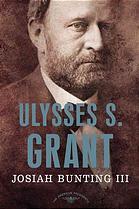
Ulysses S. Grant was undoubtedly one of America’s greatest generals, leading the Union Army to a victory in the nation’s bloodiest conflict, the Civil War. As a President, Grant is much harder to read. Back in 2000, historians ranked him #33. But, by 2009, Grant had risen ten spots in the rankings.
What had happened to Grant’s reputation in that time to pull him out of Herbert Hoover and Millard Fillmore territory? Grant’s Presidency was rife with scandals, including one where he had to dump his Vice President when running for re-election, only to replace him with a man who was caught up in the same scandal.
Josiah Bunting III, who served in the Army and also worked at the Virginia Military Institute as well as West Point in addition to writing novels, tries to present the case that Grant’s Presidency was more than just a series of scandals. He presents Grant as a leader, who while a bit too keen to delegate work to people who were not competent or honest, but also as a strong supporter of civil rights for the newly freed slaves. Grant also wins praise from Bunting for trying (although ultimately unsuccessfully) to reform government policy toward Native Americans.
Was Grant as good of a President as he was a general? No. But was he the 19th Century’s answer to Richard Nixon? No, far from that. Grant was not a paranoid man. He was not personally corrupt. He firmly believed he was always in the right. And, he never forgot his friends. Unfortunately, Grant could have benefited from having a higher class of friends.
Ulysses S. Grant was born Hiram Ulysses Grant on April 27, 1822 in Point Pleasant, Ohio. When he was 17, his father, Jesse, managed to get him a nomination to West Point. The Congressman writing the nomination, Thomas Hamer, thought Jesse’s son bore his mother’s maiden name as his middle name. So, Hamer nominated Ulysses Simpson Grant for an appoint to the United States Military Academy. Grant decided to stick with this name.
Grant’s West Point class had only 39 graduates. Grant ranked 21st in his class. He served as a quartermaster at the Jefferson Barracks in St. Louis. But, world events thrust Grant into much different duty.
The border between the United States and Mexico in Texas was becoming subject of a heated dispute between the two countries. Grant joined what became known as the Army of Observation, under the command of General Zachary Taylor. This group ultimately forced the start of the Mexican War by engaging Mexican forces in a disputed territory.
Grant enjoyed serving under Taylor. He liked Taylor’s “Rough and Ready” approach. Grant believed it was best to lead soldiers not by wearing fancy dress, but rather by just getting the job done. Grant would always be known for eschewing dress uniforms when he could. Grant won plaudits for his service during the war.
When the war was over, Grant married Julia Dent in 1848. He was soon dispatched to the West Coast as the population there boomed because of the California Gold Rush. During his long absences from Julia, Grant began to develop a drinking problem. Whether or not Grant was an alcoholic cannot be determined, but, Grant would be branded throughout his life as a drunkard by his enemies.
Regardless, Grant’s drinking caused him to resign his Army commission in 1854. He returned home to Jesse and his growing family in the St. Louis area. After a succession of dead-end jobs, Grant and his family moved to Galena, Illinois in 1860
And, as we should know, the Civil War began in April of 1861. Grant offered his services to the Governor of Illinois. He was named a colonel of a volunteer regiment. Then, he quickly moved up to brigadier general. In August of 1861, Grant was given command of all Union troops in Southern Illinois. When the Confederate Army took over the city of Columbus, Kentucky, Grant was ordered to retake the city.
Grant’s men engaged the Confederates across the river from Columbus in the town of Belmont, Missouri. The Union won a rousing success. Grant was supposedly the last man to leave the battlefield.
Now, the Union Army was taking aim on Confederate defenses in the Ohio Valley. In the battle for Fort Donelson, Grant faced an old friend of his Confederate General Simon Bolivar Buckner. Buckner realized that his men were outnumbered and sent a message asking Grant for what his conditions for surrender would be. Grant famously replied, “No terms except immediate and unconditional surrender can be accepted.” From then on, many believed that U.S. Grant stood for “Unconditional Surrender Grant.”
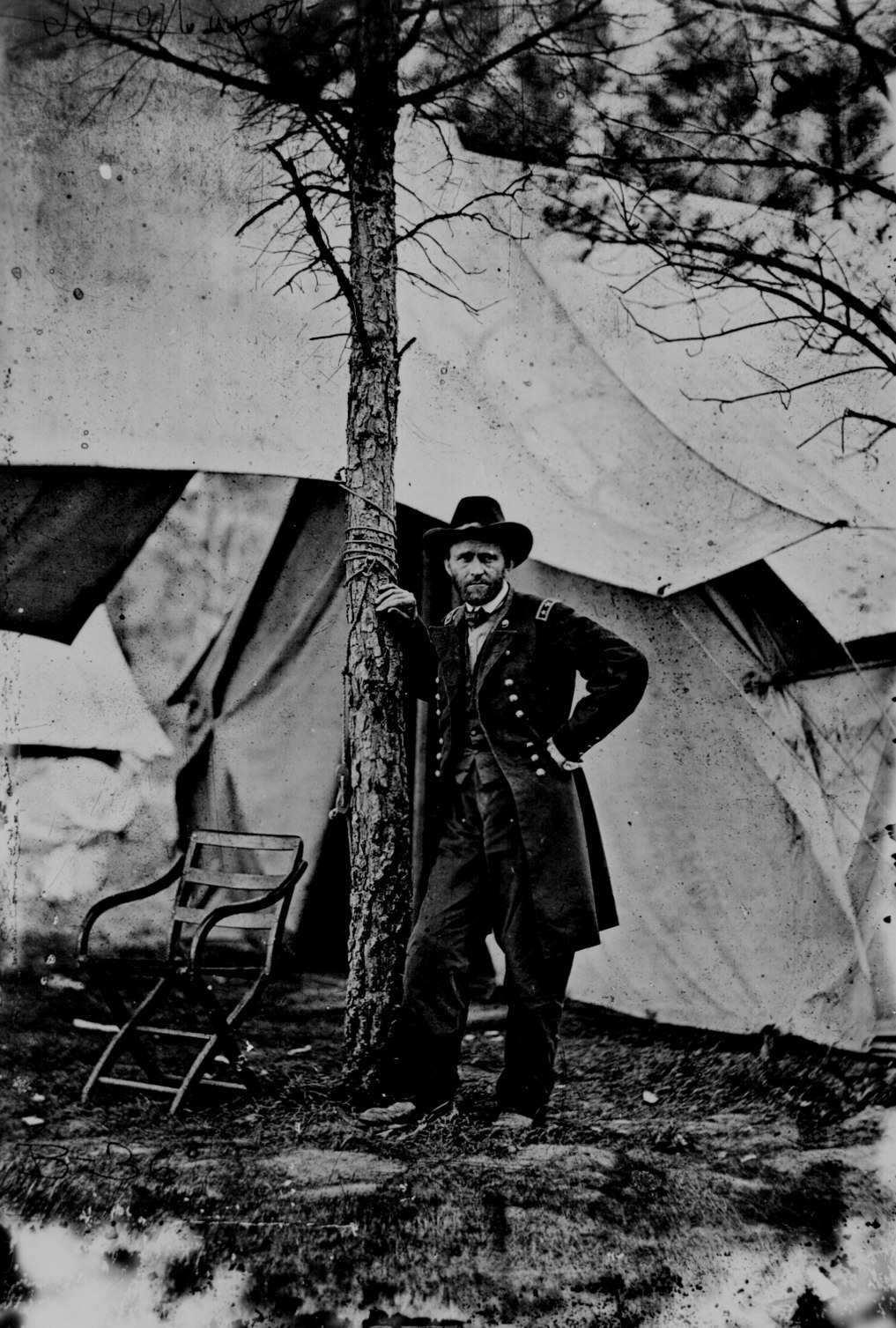
Matthew Brady's iconic photo of Gen. Ulysses S. Grant at Cold Harbor, Virginia
Grant’s victories were not for the faint of heart. He knew that numbers were on his side. Grant was denounced by his opponents as a “butcher.” However, President Lincoln firmly believed in Grant. As Lincoln reportedly said, “I can’t spare this man. He fights.” Grant rose to the rank of Lieutenant General, the first man to hold that title since George Washington.
Despite the high casualty rates, Grant’s men were extremely loyal to him. Grant did not enjoy the death toll, but, according to Bunting, Grant was certain that he was in the right. And Grant believed in “the certainty of victory.” Grant would push forward all the time. He would make the South pay for their actions.
When Confederate General Robert E. Lee surrendered the Army of Northern Virginia to Grant at Appomatox Court House, Grant no longer wished for unconditional surrender. Grant asked that Lee’s men simply surrender their arms and agree not to fight again. Lee’s men could then go home and try to rebuild their lives. Grant became General of the Army of the United States.
Lincoln had asked Grant and his wife to go with him to Ford’s Theater on that fateful April 14 of 1865. Grant declined, mostly because Julia did not wish to spend a night with Mary Todd Lincoln. After Lincoln’s death, Vice President Andrew Johnson took over the role of bringing the country back together.
The next four years would nearly ruin the nation again. Johnson wished to immediately bring the Southern States back into the Union with full voting rights in Congress. Johnson, although a firmly believer in abolition, had no desire to see the freed slaves attain any other basic civil rights. Republicans in Congress resisted Johnson at every turn. The Reconstruction of the United States would not be accomplished only by the powers of persuasion. It would take the United States Army.
Johnson opposed the 14th Amendment, which granted full citizenship to anyone born on United States soil. Grant supported it. Johnson wished to speak out against it, along with many other Radical Republican measures in Congress on a speaking tour through the Midwest by train. Grant came along for moral support, but quickly tried to distance himself from Johnson, who was often heckled by crowds, and Johnson would respond in kind.
In 1868, matters between Congress and President Johnson came to a head with the Tenure of Office Act. This act made it illegal for the President to remove from office without Congressional approval. Johnson wished to remove Secretary of War Edwin Stanton (who was leaking information to the Radicals) and replace him with Grant. At first, Grant accepted the job, but, realizing that he had a chance to become President later in the year, declined. Eventually, Stanton was replaced. The House impeached Johnson and he escaped conviction by one vote.
The Presidential Election of 1868 was perfectly set up for Ulysses Grant. No one else in the country had the stature to take over. Grant won the nomination without any opposition. Speaker of the House Schuyler Colfax was named as Grant’s running mate.
The Democrats nominated former New York Governor Horatio Seymour. Seymour was no match for the hugely popular Grant. With much of the white Democratic vote in the South suppressed by the Army, Grant won by a 214-80 margin in the Electoral Vote and had 52.7% of the popular vote.
While everyone knew of Grant’s military heroics, very little was known about how he would govern. Not many people seemed to care too much about that at the time.
Grant would not reveal the names of his choices for Cabinet posts until he forwarded them on to the Senate. Some of his choices were curious. For example, he chose an Ohio friend, Elihu Washburne for Secretary of State. But, Washburne resigned the post after 12 days to become Minister to France. Grant felt that Washburne would be considered a more prestigious emissary with “former Secretary of State” on his resumé. Hamilton Fish would replace Washburne for the next eight years.
Grant’s military chief of staff, John Rawlins, was supposed to head up the Army in the Southwest, but Rawlins told Grant that he would rather be Secretary of War. And Rawlins got the job. But, he died in September of 1869 of tuberculosis.
A quiet, but wealthy campaign contributor from Philadelphia, Adolph Borie, became Secretary of the Navy. However, Borie did not know anything about naval affairs. Grant just thought he would like the job. Borie resigned the position in June of 1869.
Grant also wanted to pick financier Alexander Stewart to be Secretary of the Treasury. However, Stewart’s vast wealth and many entanglements with Federal funds, made the Senate balk at his nomination. Grant withdrew Stewart and nominated George Boutwell, one of the House managers for the impeachment of Andrew Johnson.
Soon after taking office, Grant decided to tackle the issue of the national debt, which had ballooned to nearly $3 billion (about $46 trillion in today’s money, almost four times today’s national debt.) Grant had Congress pass a law requiring that the debt be repaid with gold and not paper money. Grant wished to avoid inflation at all costs.
The increased demand for gold led two New York speculators, Jay Gould and Jim Fisk, to try to corner the gold market. With inside knowledge from one of Grant’s brothers-in-law, the two men persuaded the Treasury to delay public sales of gold. Gould would buy large sums of gold, which served to drive up the price. The idea would be that when people tried to redeem their greenbacks for gold, they would reap even more money. The whole plan fell apart though when the Treasury sold a large amount of gold earlier than expected, which sent prices plummeting. Many people were ruined, although Gould and Fisk were not, and neither faced any criminal prosecution.
Grant’s response to this crisis gave people the impression that he was in the pocket of Wall Street, and likely in over his head in the job of President. Scandals would be a constant presence during Grant’s Administration.
Besides the national debt, one of the major crises for Grant was dealing with the problem of how to bring back the Southern states into the Union. Although the slaves were free, Southerners showed no inclination of allowing the freed slaves to vote. Methods ranging from legal chicanery (such as literacy tests) to blatant violence (from groups like the Ku Klux Klan) were employed to keep African-Americans from voting.
Grant was not afraid to use Federal force to maintain order and uphold civil rights. Under Grant’s watch, the Fifteenth Amendment, which explicitly granted the franchise to all adult male citizens regardless of race, was adopted. Grant also created the Justice Department, headed by the Attorney General, to enforce civil rights laws. Prior to 1871, the Attorney General was mostly a glorified White House counsel. Grant made the position into one of the most powerful jobs in the country. Nevertheless, Grant’s desire to use Federal force to enforce black voting rights in the South was often more of a political calculation than a moral one. Bunting admits that Grant would time Federal activities in the South to help with elections in various parts of the country.
Toward the end of Grant’s first term, a major scandal shook up his Administration. It would be known as the Credit Mobilier Scandal. Credit Mobilier was a construction company set up by the Union Pacific railway. Several members of Congress had taken bribes, usually in the form of stock, to give the Union Pacific favorable votes in Congress. Vice President Colfax was caught up in the scandal and dropped from the ticket in 1872.
The Democrats did not run an opponent against Grant in 1872. Instead, an odd coalition of government reformers who were opposed to the rampant use of political patronage jobs, as well as Northerners who objected to the continuation of military Reconstruction in the South, formed a group called the Liberal Republicans. They nominated newspaper publisher Horace Greeley.
Greeley had never held elective office before. His campaign never got very far as he proved to be a rather unusual character. He always wore a long coat and carried an umbrella regardless of the weather.
Grant had little trouble winning another term. He won with 286 electoral votes and 55.6% of the popular vote. Soon after the election, Greeley’s wife died. Bereft after her passing, Greeley soon died as well, leaving his 66 pledged electors to vote for whomever they wanted. (For those not scoring at home, here is how the voting went.)
The next four years for Grant would bring about even more scandal. His new Vice President, Henry Wilson, turned out to also be involved in the Credit Mobilier scandal. However, he passed away in 1874, before any final determination of his complicity.
In 1873, Congress passed a law doubling the President’s salary to $50,000. That did not bother people. What bothered people was that Congress voted itself a raise and made it retroactive for two years. And members of Congress would get a $5,000 bonus on top of that. Public opposition forced the repeal of this pay raise (but not Grant’s) in 1874.
Grant’s personal secretary had to resign in connection in a tax evasion scheme involving distillers. The Secretary of War extorted money to allow a trading post to stay open. The Attorney General took a bribe to stop the prosecution of a case against a customs house.
Adding to all this was a major financial crisis: the Panic of 1873. This crisis came about because of speculation in the railroad industry. Those stocks became over-valued and then collapsed in price. Banks began to fail. Unemployment shot up. Wages declined. Congress wanted to relieve the credit crisis by allowing more greenbacks into circulation. But, Grant vetoed the measure, keeping in line with his strong belief in the gold standard, as well as a fear of inflation. Although it did take time (until 1879 when Grant was out of office), the economy did right itself.
It might seem that Grant did little right. Bunting does not believe that to be the case. He believes that the domestic ills were the result of Grant’s military background and his belief that he could delegate authority correctly.
Bunting also gives Grant credit for foreign policy successes. Secretary of State Hamilton Fish negotiated a major treaty with Great Britain over a dispute that originally centered on a claim that the United States had against the British for helping the Confederate Navy build a steamer called the Alabama. Fish initially received monetary remuneration from Britain, but Senate Foreign Relations Chair Charles Sumner declared that to be inadequate. Sumner believed the Alabama extended the Civil War for two years. Sumner wanted Canada as payback.
Fish ultimately got the British (and Sumner) to come to an agreement to have the matter sent to binding arbitration. Fish would also negotiate a sticky border dispute between the U.S. and Canada in the newly acquired Alaska Territory.
Bunting makes a case that Grant had the most humane policy toward Native Americans of any President. Grant wanted to smooth relations between the various Native American nations and the United States. He wanted to establish schools. He appointed Native Americans to administer the programs. Grant wanted to complete Jefferson’s dream of making the original inhabitants of the United States Americans on equal standing with those who came later.
Sadly, this was not to be. Toward the end of Grant’s administration in 1876, when an Army Cavalry regiment under the command of Colonel George Armstrong Custer, was wiped out by a Lakota-Cheyenne force at the Little Bighorn River. Public opinion no longer favored giving the Native Americans any more aid.
After leaving the White House, Ulysses and Julia Grant took a tour of Europe that lasted over two years. They were celebrities wherever they went, but, to Grant’s disappointment, he was mostly honored as a general, not a President. He came back to the United States hoping to reenter the political fray in 1880 as a candidate for President.
The Republican Convention could not decide between Grant and James Blaine of Maine. James Garfield was nominated as a compromise choice. Grant had to leave the arena.
Unfortunately, a bad investment left Grant nearly penniless. Wealthy benefactors helped out as much as they could. Around this time, Grant developed a sharp pain in his throat. It turned out to be throat cancer.
With little time to live, Grant opted to sign with a publisher to write his memoirs. Despite being in tremendous pain, Grant produced a two-volume work. He finished writing the manuscript on July 18, 1885. He died on July 23, 1885 in Mount McGregor, New York. (Grant is the only President known to have died from cancer.) The memoirs earned his estate over $450,000 in royalties.
Bunting’s book does not make the most persuasive case that Grant was anything but a mediocre to terrible President. Grant should be credited for his strong stance on civil rights and his relatively enlightened attitude toward Native Americans. Ulysses S. Grant as President probably seemed like a good idea at the time for the United States. But, the United States did not have the brilliant military strategist as President. Instead, the country got the ne’er-do-well who could not hold a job before the Civil War. We all have some job that we are best suited for. For Ulysses S. Grant, that job was in the military, not in civilian life.
Other stuff: Grant was 46 years old at the time of his inauguration, making him the youngest man to hold the office at the time. Vice President Schuyler Colfax was just 45.
Grant’s birthplace in Point Pleasant, Ohio is open to visitors. It is operated by the Ohio Historical Society. Grant and his wife Julia are entombed at the General Grant National Memorial in New York City at 122nd and Riverside. It is familiarly called Grant’s Tomb. It is operated by the National Park Service.
 Of the nine Presidents who have been in office in my lifetime, none had the impact that Ronald Reagan has had. Ronald Reagan succeeded in transforming not just the office of the Presidency, but also the nature of how politics and government is viewed by the country overall. To the Republicans of today, he is revered like no one else in the party, at times outstripping Abraham Lincoln in fame. To the Democrats of today, he is mostly reviled, although sometimes begrudgingly respected.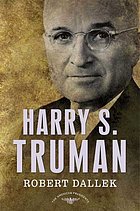




 One through Forty-Two or Forty-Three